
BHow to Be a WinnerSir Steven RedgraveWinner of 5 Olympic Gold Medals“In 1997 I was found to have developed diabetes (糖尿病) . Believing my career (职业生涯)was over, I felt extremely low. Then one of the specialists said there was no reason why I should stop t
题目
B
How to Be a Winner
Sir Steven Redgrave
Winner of 5 Olympic Gold Medals
“In 1997 I was found to have developed diabetes (糖尿病) . Believing my career (职业生涯)was over, I felt extremely low. Then one of the specialists said there was no reason why I should stop training and competing. That was it----the encouragement I needed. I could still be a winner if I believed in myself. I am not saying that it isn’t difficult sometimes. But I wanted to prove to myself that I wasn’t finished yet. Nothing is to stand in my way.”
Karen Pickering
Swimming World Champion
“I swim 4 hours a day, 6 days a week. I manage that sort of workload by putting it on top of my diary. This is the key to success—you can’t follow a career in any field without being well-organized. List what you believe you can achieve. “Trust yourself, write down your goals for the day, however small they are, and you’ll be a step closer to achieving them.”
Kirsten Best
Poet & Writer
“When things are getting hard, a voice inside my head tells me that I can’t achieve something. Then, there are other distractions, such as family or hobbies. The key is to concentrate. When I feel tense, it helps a lot to repeat words such as ‘calm’, ‘peace’ or ‘focus’, either out loud or silently in my mind. It makes me feel more in control and increases my confidence. This is a habit that can become second nature quite easily and is a powerful psychological (心理的) tool.”
60. What does Sir Steven Redgrave mainly talk about?
A. Difficulties influenced his career.
B. Specialists offered him medical advice.
C. Training helped him defeat his disease.
D. He overcame the shadow of illness to win.
相似考题
更多“BHow to Be a WinnerSir Steven RedgraveWinner of 5 Olympic Gold Medals“In 1997 I was found ”相关问题
-
第1题:
下列语句组中,不正确的是( )。
A.char *s;s="Olympic";
B.char s[]="Olympic";
C.char *s;s={"Olympic"};
D.char s[]={"Olympic"};
正确答案:C
-
第2题:
阅读以下说明及Visual Basic程序代码,将应填入(n)处的字句写在对应栏内。
[说明]
下面的程序演示了根据随机产生的奖牌数,生成金银奖牌榜的过程。程序使用的排序法是简单排序法。以金牌得数为例,其思想是选择最大的元素,将它交换到最前面;然后对剩下的部分采用同样的方法,直到全部排序完成。
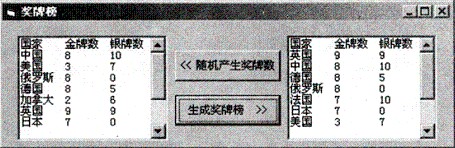
程序界面中,左右两个文本框分别用于存放随机产生的奖牌数以及生成的奖牌榜,名为Text1和Text2,上下两个按钮分别名为Command1和Command2。代码中使用的量主要有:一维数组 cntries,用于存储10个国家的名称,二维数组medals,其元素medals(i,0)和medals(i,1)分别用于存放第i个(i从0开始)国家的金、银牌数目。
[Visual Basic代码]
Dim cntries(10) As String, medals(10,2) As Integer
’随机产生奖牌数
Sub newMedals()
…… ’为数组cntries和medals赋值
End Sub
’输出奖牌榜
Sub printOut(txt As (1) )
Dim strResuh As String, i As Integer
strResult=“国家”& Chr(9) &“金牌数”& Chr(9) &“银牌数”& vbCrLf
For i=0 To 9
strResult = strResult & cntries(i) & Chr(9) & medals(i,0) & Chr(9) & medals(i,1) & vbCrLf
Next
txt.Text = strResult
End Sub
’交换两变量的值
Sub exchange( (2) a As Variant, (2) b As Variant)
Dim temp As Variant
temp = a: a = b: b = temp
End Sub
’随机产生并输出奖牌数
Private Sub Command1_Click()
newMedals
printOut Text1
End Sub
’生成并输出奖牌榜
Private Sub Command2_Click()
Dim i,j, k As Integer, temp As String
For i = 0 To 9 ’按金牌数排序
j = i ’找到自第i个位置起全部数据中金牌得数最多者,记其下标为j
For k = i + 1 To 9
If (3) Then j=k
Next
If i < > j Then ’若i,j不等,则交换对应位置的国家名、金银牌数目
exchange cntnes(i), entries(j)
exchange medals(i, 0), medals(j, 0)
exchange medals(i, 1), medals(j, 1)
End If
Next
For i = 0 To 9 ’按银牌数进行二次排序
j = i
For k = i + 1 To 9
If medals(k,0) <> medals(j, 0) Then (4)
If (5) Then j = k
Next
If i < > j Then
exchange cntries(i), cntries(j)
exchange medals(i, 1), medals(j, 1)
End If
Next
printOut Text2
End Sub
正确答案:(1) TextBox (2) ByRef (3) medals(k0) > medals(j0) (4) Exit For (5) medals(k1)>medals(j1)
(1) TextBox (2) ByRef (3) medals(k,0) > medals(j,0) (4) Exit For (5) medals(k,1)>medals(j,1) 解析:(1)由printOut过程中“txt.Text”及按钮单击事件中调用语句“printOut Text1”可知,txt是一个文本框控件(TextBox)类型的参数;
(2)过程exchange的作用是交换两个参数的值,因此参数调用方式应为传址调用;
(3)此处,仅当第k个国家金牌数大于第j个国家金牌数,即medals(k,0)>medals(j,0)时,才需要更新j的值;
(4)由于金牌数已按降序排列,medals(k,0)>medals(j,0)表明第k个位置及以后各国家的金牌数都小于第j个国家金牌数。而对银牌二次排序时,只需要考虑金牌数相同的情形,因此此处应即刻退出For循环;(5)参考(3),此处是比较银牌数,仅当第k个国家银牌数人于第j个国家银牌数,即medals(k,1)>medals (j,1)时,才需要更新j的值。 -
第3题:
下列语句组中,正确的是( )。
A.char*s;s=”Olympic”;
B.char s[7];s=”Olympic”;
C.char*s;s={¨Olympic”};
D.char s[7];s={"Olympic”};
正确答案:A
字符型指针变量可以用选项A的赋值方法:char$s;s=”Olympic”,选项C的写法:char$s。s={¨Olympic”};是错误的。字符数组可以在定义的时候初始化:chars[]={¨Olympic”};?或者chars[]=”Olympic”,都是正确的。但是不可以在定义字符数组后,对数组名赋值。(数组名是常量,代表数组首地址)所以选项8和选项D都是错误的。对于本例,选项B、D中字符数组s的大小至少为8,才能存放下字符串。(字符串的末尾都有结束标识‘、0’)。 -
第4题:
下列语句组中,正确的是
A.char*s;s="Olympic";
B.char s[7];s="Olympic";
C.char*s;s={"Olympic"};
D.char s[7];s={"Olympic"};
正确答案:A
解析:若s被定义为指针,选项A表示将指针s指向一个字符串,选项C表示为指针s赋一个字符串的值,显然选项A正确,选项C错误;若s被定义为数组,且要为该数组直接赋值,则必须在定义时进行,因此选项B和选项D都错误。 -
第5题:
下列语句组中,正确的是( )。
A.char*s;s="Olympic";
B.char sE73;s="Olympic";
C.char*S;s={¨Olympic"};
D.char sET3;s={"Olympic"};
正确答案:A
给字符串数组赋值时,要先定义数组长度,然后再赋值。可以只给部分元素赋初值,当中值的个数少于元素个数时,只给前面部分元素赋值。数组的下标是从0开始的,所以s[7]代表从s[0]到s[6]七个元素。其格式可以写成:char数组名[常量]={字符,字符,…);,也可写为char数组名[常量]={"字符串"};,或去掉{)写为:char数组名[常量]="字符串"。所以本题应选择A选项。 -
第6题:
下列语句组中,不正确的是( )。
A)char*s;s-"Olympic";
B)char s口="Olympic";
C)char*s;s={"Olympic"};
D)char s口={"Olympic"};
正确答案:C