
运用产品/市场机遇矩阵(product/market opportunity matrix)分析,对于是保持或增加新的业务单位,有四种不同发展战略可供选择()。A、市场渗透战略B、产品开发战略C、市场开发战略D、密集型成长战略E、多元化成长战略
题目
运用产品/市场机遇矩阵(product/market opportunity matrix)分析,对于是保持或增加新的业务单位,有四种不同发展战略可供选择()。
- A、市场渗透战略
- B、产品开发战略
- C、市场开发战略
- D、密集型成长战略
- E、多元化成长战略
相似考题
更多“运用产品/市场机遇矩阵(product/market oppor”相关问题
-
第1题:
—I wonder if you are able to offer market exclusivity for all of China?— ()A. I’d love to go to the supermarket with you if I have the time.
B. I’m not surprised to hear that about the huge market in China.
C. Thank you for your interest in representing our product.
参考答案:C
-
第2题:
确定最佳房地产目标市场的方式是( )。A:价格一产品矩阵图
B:产品一渠道矩阵图
C:产品一市场矩阵图
D:产品一营销矩阵图答案:C解析: -
第3题:

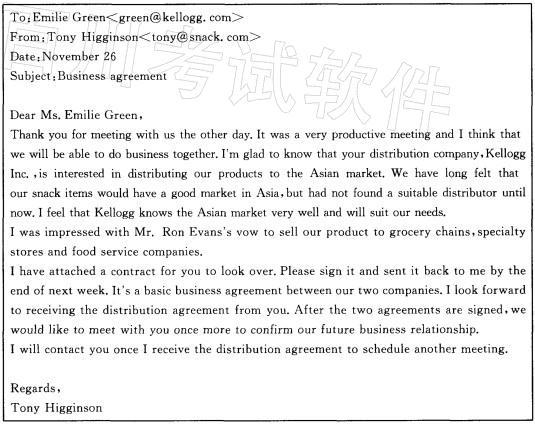
What has Ron Evans promised to do?
A. Sign an agreement
B. Buy the product from grocery chains
C. Sell the product to various outlets
D. Introduce market segments答案:C解析:首先在文章中找出与Ron Evans有关的句子,然后与选项的内容作比较,会发现A、B、D项并 不是Ron Evants所许诺要做的事,正确答案是C项。 -
第4题:
制定市场营销计划的一种方法就是从市场的四个方面着手,即通常称的“4P方法”,分别是()
- A、产地(product)价格(pricE.销售地(placE.促销(promotion)
- B、产品(product)价格(pricE.地点(placE.促销(promotion)
- C、产品来源(product)价格(pricE.地点(placE.销售方式(promotion)
正确答案:B -
第5题:
战略机遇不包括()
- A、产品定位
- B、人力资源
- C、市场营销
- D、市场调查
正确答案:D -
第6题:
4P’s市场营销组合是指()。
- A、产品(Product)、促销(Promotion)、人员(PeoplE.、有形展示(PhysicalEvidencE.
- B、分销(PlacE.、产品(Product)、价格(PricE.、过程(Process)
- C、产品(Product)、价格(PricE.、分销(PlacE.、促销(Promotion)
- D、产品(Product)、价格(PricE.、人员(PeoplE.、过程(Process)
正确答案:C -
第7题:
试进行产品——市场演变矩阵模型分析。
正确答案: 1)业务单位A。看起来是一个潜在的明星,他的相对较大的市场份额,加上它处于产品——市场发展的开发阶段以及它所具有的获得一个较强的竞争地位的潜力,使它称为接受公司资源支持的一个很有希望的候选者。
2)业务单位B。在某种程度上有点像A,然而,对B单位投资的多少将取决于为什么B部门相对于其强大的竞争地位竟然具有如此低的市场份额这一问题的答案。为此,单位B应当实施能够改变它的这一较低的市场份额的战略,以便为争取更多的投资提供依据。
3)业务单位C。在一个增长相对较小的行业中,占有一个较小的市场份额并拥有一个较弱的竞争地位,必须实行一种能够克服其低市场份额和弱竞争地位的战略,以争取未来的投资。单位C很可能是一个有待脱身的对象,以便将其资源运用于单位A或B。
4)业务单位D。处于一个拓展的阶段,占有一个相对大的市场份额,并处于一个相对强的竞争地位。对D单位应当进行必要的投资以保持其相对强的竞争地位。从长期来看,D应当成为一头“现金牛”。
5)业务单位E和F是“现金牛”,应当用来创造现金。
6)业务单位G。看起来像是波士顿局郑重的一条“瘦狗”,在短期内,它应当被监控着勇于创造现金——如果可能的话;然而,就长期而言,他更有可能被是以脱身战略或清算战略。 -
第8题:
We have received orders()US$1,000,000 since the new product was introduced to the market.
- A、amountfor
- B、amountto
- C、accountfor
- D、amountingto
正确答案:D -
第9题:
单选题制定市场营销计划的一种方法就是从市场的四个方面着手,即通常称的“4P方法”,分别是()A产地(product)价格(pricE.销售地(placE.促销(promotion)
B产品(product)价格(pricE.地点(placE.促销(promotion)
C产品来源(product)价格(pricE.地点(placE.销售方式(promotion)
正确答案: A解析: 暂无解析 -
第10题:
单选题Bob is()the market for your new product,why don’t you call him right now?Aat
Bin
Cseeking
Dentering
正确答案: A解析: 暂无解析 -
第11题:
填空题产品-市场战略2×2矩阵中,新产品与现有市场的结合而成()战略。正确答案: 产品开发解析: 暂无解析 -
第12题:
单选题在安索夫产品/市场矩阵中,()即市场渗透。A现有市场——新产品
B新市场——新产品
C现有市场——现有产品
D新市场——现有产品
正确答案: D解析: 暂无解析 -
第13题:
_______________ is when a country or company exports a product at a price that is lower in the foreign importing market than the price in the exporter's domestic market.A、trade barrier
B、dumping
C、tariff
D、open border
参考答案:C
-
第14题:
企业在评估选择最有吸引力的细分市场作为自己的目标市场时,通常采用的方法是( )。A:产品—市场矩阵图
B:产品—机会矩阵图
C:机会—威胁矩阵图
D:市场—威胁矩阵图答案:A解析: -
第15题:
Please()me how to do the market research for a new product.
A take
B have
C show
D give
C
略 -
第16题:
市场营销组合包括()
- A、经销策略促销promotion
- B、价格策略price
- C、渠道策略place
- D、产品策略product
正确答案:B,C,D -
第17题:
在安索夫产品/市场矩阵中,()即市场渗透。
- A、现有市场——新产品
- B、新市场——新产品
- C、现有市场——现有产品
- D、新市场——现有产品
正确答案:C -
第18题:
简述如何运用波士顿矩阵法分析和调整产品组合。
正确答案: 1)指标分析:市场占有率于销售增长率。
2)产品分类:明星、金牛、问题、瘦狗。
3)采取对策:建立、维持、收获、放弃。 -
第19题:
In general, factors influencing transportation costs can be grouped into 2 major categories---product-related factors and market-related factors. Please find below, ()is not belong to the market-related factors.
- A、Transport distance
- B、Location of markets
- C、Freight traffic in a region
- D、Seasonality of product movements
正确答案:A -
第20题:
单选题Please()me how to do the market research for a new product.Atake
Bhave
Cshow
Dgive
正确答案: C解析: 暂无解析 -
第21题:
单选题4P’s市场营销组合是指()。A产品(Product)、促销(Promotion)、人员(PeoplE.、有形展示(PhysicalEvidencE.
B分销(PlacE.、产品(Product)、价格(PricE.、过程(Process)
C产品(Product)、价格(PricE.、分销(PlacE.、促销(Promotion)
D产品(Product)、价格(PricE.、人员(PeoplE.、过程(Process)
正确答案: C解析: 暂无解析 -
第22题:
单选题In order to recover their share of the world market, U.S. auto-makers’ are _____.Aimproving product quality
Bincreasing product features
Cmodernizing product style
Drepositioning their product in the market
正确答案: A解析:
细节推断题。文章末尾说,美国汽车制造商正采用提高质量,作为重新夺回世界市场的一种方法。这与A项同义,故A为答案。 -
第23题:
多选题运用产品/市场机遇矩阵(product/market opportunity matrix)分析,对于是保持或增加新的业务单位,有四种不同发展战略可供选择()。A市场渗透战略
B产品开发战略
C市场开发战略
D密集型成长战略
E多元化成长战略
正确答案: A,C解析: 暂无解析