
(b) Historically, all owned premises have been measured at cost depreciated over 10 to 50 years. The managementboard has decided to revalue these premises for the year ended 30 September 2005. At the balance sheet datetwo properties had been revalued by a
题目
(b) Historically, all owned premises have been measured at cost depreciated over 10 to 50 years. The management
board has decided to revalue these premises for the year ended 30 September 2005. At the balance sheet date
two properties had been revalued by a total of $1·7 million. Another 15 properties have since been revalued by
$5·4 million and there remain a further three properties which are expected to be revalued during 2006. A
revaluation surplus of $7·1 million has been credited to equity. (7 marks)
Required:
For each of the above issues:
(i) comment on the matters that you should consider; and
(ii) state the audit evidence that you should expect to find,
in undertaking your review of the audit working papers and financial statements of Albreda Co for the year ended
30 September 2005.
NOTE: The mark allocation is shown against each of the three issues.
相似考题
更多“(b) Historically, all owned premises have been measured at cost depreciated over 10 to 50 years. The managementboard has decided to revalue these premises for the year ended 30 September 2005. At the balance sheet datetwo properties had been revalued by a”相关问题
-
第1题:
2 The draft financial statements of Choctaw, a limited liability company, for the year ended 31 December 2004 showed
a profit of $86,400. The trial balance did not balance, and a suspense account with a credit balance of $3,310 was
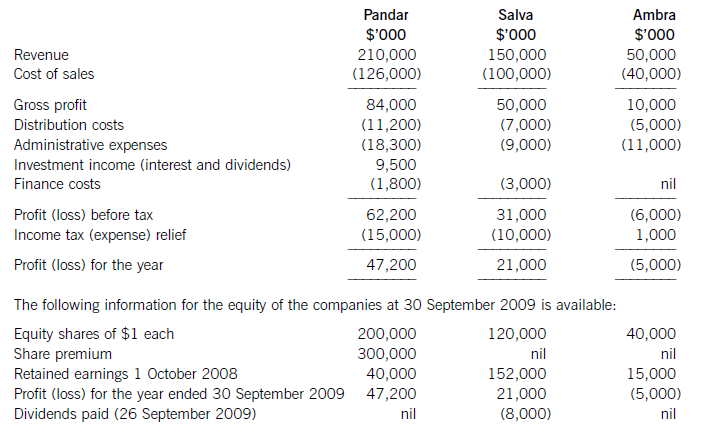
included in the balance sheet.
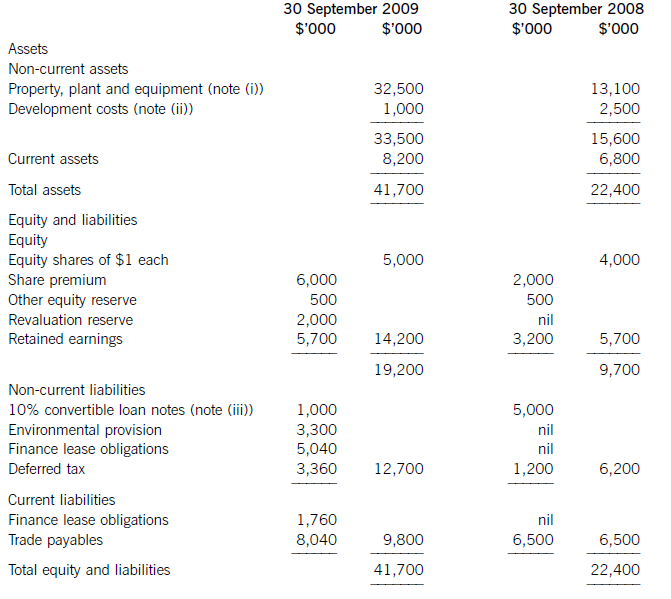
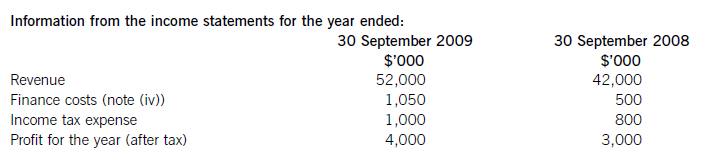
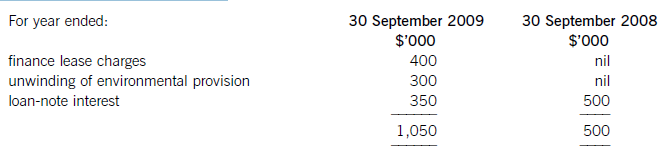
In subsequent checking the following errors were found:
(a) Depreciation of motor vehicles at 25 per cent was calculated for the year ended 31 December 2004 on the
reducing balance basis, and should have been calculated on the straight-line basis at 25 per cent.
Relevant figures:
Cost of motor vehicles $120,000, net book value at 1 January 2004, $88,000
(b) Rent received from subletting part of the office accommodation $1,200 had been put into the petty cash box.
No receivable balance had been recognised when the rent fell due and no entries had been made in the petty
cash book or elsewhere for it. The petty cash float in the trial balance is the amount according to the records,
which is $1,200 less than the actual balance in the box.
(c) Bad debts totalling $8,400 are to be written off.
(d) The opening accrual on the motor repairs account of $3,400, representing repair bills due but not paid at
31 December 2003, had not been brought down at 1 January 2004.
(e) The cash discount totals for December 2004 had not been posted to the discount accounts in the nominal ledger.
The figures were:
$
Discount allowed 380
Discount received 290
After the necessary entries, the suspense account balanced.
Required:
Prepare journal entries, with narratives, to correct the errors found, and prepare a statement showing the
necessary adjustments to the profit.
(10 marks)
正确答案: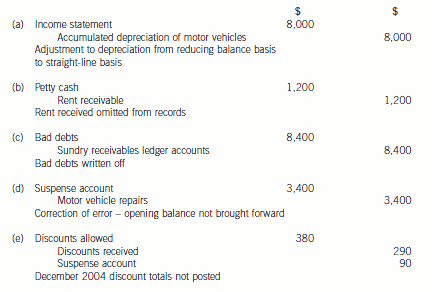
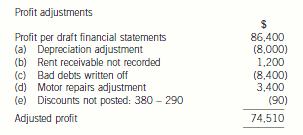
-
第2题:
17 Which of the following statements are correct?
(1) All non-current assets must be depreciated.
(2) If goodwill is revalued, the revaluation surplus appears in the statement of changes in equity.
(3) If a tangible non-current asset is revalued, all tangible assets of the same class should be revalued.
(4) In a company’s published balance sheet, tangible assets and intangible assets must be shown separately.
A 1 and 2
B 2 and 3
C 3 and 4
D 1 and 4
正确答案:C
-
第3题:
(ii) Audit work on after-date bank transactions identified a transfer of cash from Batik Co. The audit senior has
documented that the finance director explained that Batik commenced trading on 7 October 2005, after
being set up as a wholly-owned foreign subsidiary of Jinack. No other evidence has been obtained.
(4 marks)
Required:
Identify and comment on the implications of the above matters for the auditor’s report on the financial
statements of Jinack Co for the year ended 30 September 2005 and, where appropriate, the year ending
30 September 2006.
NOTE: The mark allocation is shown against each of the matters.
正确答案:
(ii) Wholly-owned foreign subsidiary
■ The cash transfer is a non-adjusting post balance sheet event. It indicates that Batik was trading after the balance
sheet date. However, that does not preclude Batik having commenced trading before the year end.
■ The finance director’s oral representation is wholly insufficient evidence with regard to the existence (or otherwise)
of Batik at 30 September 2005. If it existed at the balance sheet date its financial statements should have been
consolidated (unless immaterial).
■ The lack of evidence that might reasonably be expected to be available (e.g. legal papers, registration payments,
etc) suggests a limitation on the scope of the audit.
■ If such evidence has been sought but not obtained then the limitation is imposed by the entity (rather than by
circumstances).
■ Whilst the transaction itself may not be material, the information concerning the existence of Batik may be material
to users and should therefore be disclosed (as a non-adjusting event). The absence of such disclosure, if the
auditor considered necessary, would result in a qualified ‘except for’, opinion.
Tutorial note: Any matter that is considered sufficiently material to be worthy of disclosure as a non-adjusting
event must result in such a qualified opinion if the disclosure is not made.
■ If Batik existed at the balance sheet date and had material assets and liabilities then its non-consolidation would
have a pervasive effect. This would warrant an adverse opinion.
■ Also, the nature of the limitation (being imposed by the entity) could have a pervasive effect if the auditor is
suspicious that other audit evidence has been withheld. In this case the auditor should disclaim an opinion. -
第4题:
3 You are the manager responsible for the audit of Seymour Co. The company offers information, proprietary foods and
medical innovations designed to improve the quality of life. (Proprietary foods are marketed under and protected by
registered names.) The draft consolidated financial statements for the year ended 30 September 2006 show revenue
of $74·4 million (2005 – $69·2 million), profit before taxation of $13·2 million (2005 – $15·8 million) and total
assets of $53·3 million (2005 – $40·5 million).
The following issues arising during the final audit have been noted on a schedule of points for your attention:
(a) In 2001, Seymour had been awarded a 20-year patent on a new drug, Tournose, that was also approved for
food use. The drug had been developed at a cost of $4 million which is being amortised over the life of the
patent. The patent cost $11,600. In September 2006 a competitor announced the successful completion of
preliminary trials on an alternative drug with the same beneficial properties as Tournose. The alternative drug is
expected to be readily available in two years time. (7 marks)
Required:
For each of the above issues:
(i) comment on the matters that you should consider; and
(ii) state the audit evidence that you should expect to find,
in undertaking your review of the audit working papers and financial statements of Seymour Co for the year ended
30 September 2006.
NOTE: The mark allocation is shown against each of the three issues.
正确答案: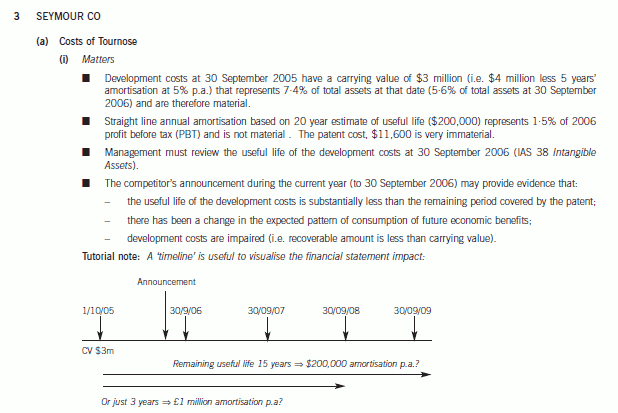
■ A change in the estimated useful life should be accounted for as a change in accounting estimate in accordance
with IAS 8 Accounting Policies, Changes in Accounting Estimates and Errors. For example, if the development
costs have little, if any, useful life after the introduction of the alternative drug (‘worst case’ scenario), the carrying
value ($3 million) should be written off over the current and remaining years, i.e. $1 million p.a. The increase in
amortisation/decrease in carrying value ($800,000) is material to PBT (6%) and total assets (1·5%).
■ Similarly a change in the expected pattern of consumption of the future economic benefits should be accounted for
as a change in accounting estimate (IAS 8). For example, it may be that the useful life is still to 2020 but that
the economic benefits may reduce significantly in two years time.
■ After adjusting the carrying amount to take account of the change in accounting estimate(s) management should
have tested it for impairment and any impairment loss recognised in profit or loss.
(ii) Audit evidence
■ $3 million carrying amount of development costs brought forward agreed to prior year working papers and financial
statements.
■ A copy of the press release announcing the competitor’s alternative drug.
■ Management’s projections of future cashflows from Tournose-related sales as evidence of the useful life of the
development costs and pattern of consumption.
■ Reperformance of management’s impairment test on the development costs: Recalculation of management’s
calculation of the carrying amount after revising estimates of useful life and/or consumption of benefits compared
with management’s calculation of value in use.
■ Sensitivity analysis on management’s key assumptions (e.g. estimates of useful life, discount rate).
■ Written management representation on the key assumptions concerning the future that have a significant risk of
causing material adjustment to the carrying amount of the development costs. (These assumptions should be
disclosed in accordance with IAS 1 Presentation of Financial Statements.) -
第5题:
(b) You are an audit manager in a firm of Chartered Certified Accountants currently assigned to the audit of Cleeves
Co for the year ended 30 September 2006. During the year Cleeves acquired a 100% interest in Howard Co.
Howard is material to Cleeves and audited by another firm, Parr & Co. You have just received Parr’s draft
auditor’s report for the year ended 30 September 2006. The wording is that of an unmodified report except for
the opinion paragraph which is as follows:
Audit opinion
As more fully explained in notes 11 and 15 impairment losses on non-current assets have not been
recognised in profit or loss as the directors are unable to quantify the amounts.
In our opinion, provision should be made for these as required by International Accounting Standard 36
(Impairment). If the provision had been so recognised the effect would have been to increase the loss before
and after tax for the year and to reduce the value of tangible and intangible non-current assets. However,
as the directors are unable to quantify the amounts we are unable to indicate the financial effect of such
omissions.
In view of the failure to provide for the impairments referred to above, in our opinion the financial statements
do not present fairly in all material respects the financial position of Howard Co as of 30 September 2006
and of its loss and its cash flows for the year then ended in accordance with International Financial Reporting
Standards.
Your review of the prior year auditor’s report shows that the 2005 audit opinion was worded identically.
Required:
(i) Critically appraise the appropriateness of the audit opinion given by Parr & Co on the financial
statements of Howard Co, for the years ended 30 September 2006 and 2005. (7 marks)
正确答案:(b) (i) Appropriateness of audit opinion given
Tutorial note: The answer points suggested by the marking scheme are listed in roughly the order in which they might
be extracted from the information presented in the question. The suggested answer groups together some of these
points under headings to give the analysis of the situation a possible structure.
Heading
■ The opinion paragraph is not properly headed. It does not state the form. of the opinion that has been given nor
the grounds for qualification.
■ The opinion ‘the financial statements do not give a true and fair view’ is an ‘adverse’ opinion.
■ That ‘provision should be made’, but has not, is a matter of disagreement that should be clearly stated as noncompliance
with IAS 36. The title of IAS 36 Impairment of Assets should be given in full.
■ The opinion should be headed ‘Disagreement on Accounting Policies – Inappropriate Accounting Method – Adverse
Opinion’.
1 ISA 250 does not specify with whom agreement should be reached but presumably with those charged with corporate governance (e.g audit committee or
2 other supervisory board).
20
6D–INTBA
Paper 3.1INT
Content
■ It is appropriate that the opinion paragraph should refer to the note(s) in the financial statements where the matter
giving rise to the modification is more fully explained. However, this is not an excuse for the audit opinion being
‘light’ on detail. For example, the reason for impairment could be summarised in the auditor’s report.
■ The effects have not been quantified, but they should be quantifiable. The maximum possible loss would be the
carrying amount of the non-current assets identified as impaired.
■ It is not clear why the directors have been ‘unable to quantify the amounts’. Since impairments should be
quantifiable any ‘inability’ suggest a limitation in scope of the audit, in which case the opinion should be disclaimed
(or ‘except for’) on grounds of lack of evidence rather than disagreement.
■ The wording is confusing. ‘Failure to provide’ suggests disagreement. However, there must be sufficient evidence
to support any disagreement. Although the directors cannot quantify the amounts it seems the auditors must have
been able to (estimate at least) in order to form. an opinion that the amounts involved are sufficiently material to
warrant a qualification.
■ The first paragraph refers to ‘non-current assets’. The second paragraph specifies ‘tangible and intangible assets’.
There is no explanation why or how both tangible and intangible assets are impaired.
■ The first paragraph refers to ‘profit or loss’ and the second and third paragraphs to ‘loss’. It may be clearer if the
first paragraph were to refer to recognition in the income statement.
■ It is not clear why the failure to recognise impairment warrants an adverse opinion rather than ‘except for’. The
effects of non-compliance with IAS 36 are to overstate the carrying amount(s) of non-current assets (that can be
specified) and to understate the loss. The matter does not appear to be pervasive and so an adverse opinion looks
unsuitable as the financial statements as a whole are not incomplete or misleading. A loss is already being reported
so it is not that a reported profit would be turned into a loss (which is sometimes judged to be ‘pervasive’).
Prior year
■ As the 2005 auditor’s report, as previously issued, included an adverse opinion and the matter that gave rise to
the modification:
– is unresolved; and
– results in a modification of the 2006 auditor’s report,
the 2006 auditor’s report should also be modified regarding the corresponding figures (ISA 710 Comparatives).
■ The 2006 auditor’s report does not refer to the prior period modification nor highlight that the matter resulting in
the current period modification is not new. For example, the report could say ‘As previously reported and as more
fully explained in notes ….’ and state ‘increase the loss by $x (2005 – $y)’. -
第6题:
(b) You are the manager responsible for the audit of Poppy Co, a manufacturing company with a year ended
31 October 2008. In the last year, several investment properties have been purchased to utilise surplus funds
and to provide rental income. The properties have been revalued at the year end in accordance with IAS 40
Investment Property, they are recognised on the statement of financial position at a fair value of $8 million, and
the total assets of Poppy Co are $160 million at 31 October 2008. An external valuer has been used to provide
the fair value for each property.
Required:
(i) Recommend the enquiries to be made in respect of the external valuer, before placing any reliance on their
work, and explain the reason for the enquiries; (7 marks)
正确答案:
(b) (i) Enquiries in respect of the external valuer
Enquiries would need to be made for two main reasons, firstly to determine the competence, and secondly the objectivity
of the valuer. ISA 620 Using the Work of an Expert contains guidance in this area.
Competence
Enquiries could include:
– Is the valuer a member of a recognised professional body, for example a nationally or internationally recognised
institute of registered surveyors?
– Does the valuer possess any necessary licence to carry out valuations for companies?
– How long has the valuer been a member of the recognised body, or how long has the valuer been licensed under
that body?
– How much experience does the valuer have in providing valuations of the particular type of investment properties
held by Poppy Co?
– Does the valuer have specific experience of evaluating properties for the purpose of including their fair value within
the financial statements?
– Is there any evidence of the reputation of the valuer, e.g. professional references, recommendations from other
companies for which a valuation service has been provided?
– How much experience, if any, does the valuer have with Poppy Co?
Using the above enquiries, the auditor is trying to form. an opinion as to the relevance and reliability of the valuation
provided. ISA 500 Audit Evidence requires that the auditor gathers evidence that is both sufficient and appropriate. The
auditor needs to ensure that the fair values provided by the valuer for inclusion in the financial statements have been
arrived at using appropriate knowledge and skill which should be evidenced by the valuer being a member of a
professional body, and, if necessary, holding a licence under that body.
It is important that the fair values have been arrived at using methods allowed under IAS 40 Investment Property. If any
other valuation method has been used then the value recognised in the statement of financial position may not be in
accordance with financial reporting standards. Thus it is important to understand whether the valuer has experience
specifically in providing valuations that comply with IAS 40, and how many times the valuer has appraised properties
similar to those owned by Poppy Co.
In gauging the reliability of the fair value, the auditor may wish to consider how Poppy Co decided to appoint this
particular valuer, e.g. on the basis of a recommendation or after receiving references from companies for which
valuations had previously been provided.
It will also be important to consider how familiar the valuer is with Poppy Co’s business and environment, as a way to
assess the reliability and appropriateness of any assumptions used in the valuation technique.
Objectivity
Enquiries could include:
– Does the valuer have any financial interest in Poppy Co, e.g. shares held directly or indirectly in the company?
– Does the valuer have any personal relationship with any director or employee of Poppy Co?
– Is the fee paid for the valuation service reasonable and a fair, market based price?
With these enquiries, the auditor is gaining assurance that the valuer will perform. the valuation from an independent
point of view. If the valuer had a financial interest in Poppy Co, there would be incentive to manipulate the valuation in
a way best suited to the financial statements of the company. Equally if the valuer had a personal relationship with a
senior member of staff at Poppy Co, the valuer may feel pressured to give a favourable opinion on the valuation of the
properties.
The level of fee paid is important. It should be commensurate with the market rate paid for this type of valuation. If the
valuer was paid in excess of what might be considered a normal fee, it could indicate that the valuer was encouraged,
or even bribed, to provide a favourable valuation. -
第7题:
His sister ______her hometown for three years. She'll return next year.
A. left
B. has left
C. has been away
D. has been away from
正确答案:D14.答案为D 他的姐姐已经离开家乡三年了。她明年将要回来。该句表示到现在为止一直发生的动作,因此要用现在完成式,away表示离开某地时应加from。
-
第8题:
John and I ______ friends for eight years. We first went to know each other at a Christmas party. But we ______ each other a couple of times before that.A had been; have seen
B have been; have seen
C had been; had seen
D have been; had seen
参考答案:D
-
第9题:
The following trial balance relates to Sandown at 30 September 2009:
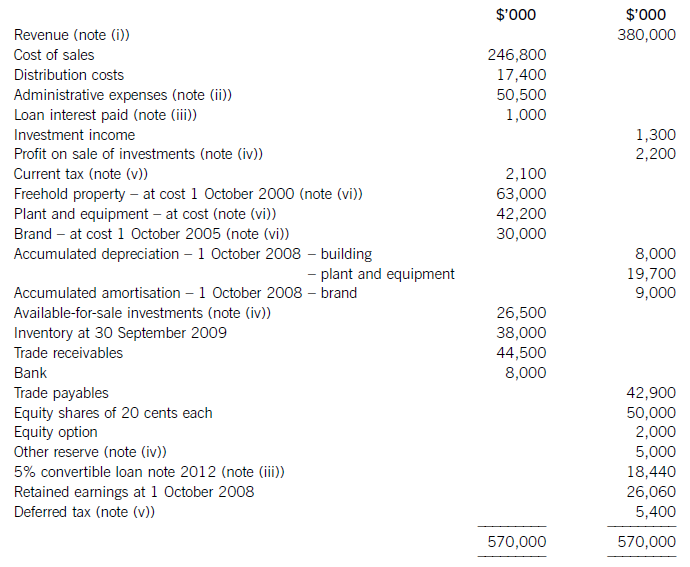
The following notes are relevant:
(i) Sandown’s revenue includes $16 million for goods sold to Pending on 1 October 2008. The terms of the sale are that Sandown will incur ongoing service and support costs of $1·2 million per annum for three years after the sale. Sandown normally makes a gross profit of 40% on such servicing and support work. Ignore the time value of money.
(ii) Administrative expenses include an equity dividend of 4·8 cents per share paid during the year.
(iii) The 5% convertible loan note was issued for proceeds of $20 million on 1 October 2007. It has an effective interest rate of 8% due to the value of its conversion option.
(iv) During the year Sandown sold an available-for-sale investment for $11 million. At the date of sale it had a
carrying amount of $8·8 million and had originally cost $7 million. Sandown has recorded the disposal of the
investment. The remaining available-for-sale investments (the $26·5 million in the trial balance) have a fair value of $29 million at 30 September 2009. The other reserve in the trial balance represents the net increase in the value of the available-for-sale investments as at 1 October 2008. Ignore deferred tax on these transactions.
(v) The balance on current tax represents the under/over provision of the tax liability for the year ended 30 September 2008. The directors have estimated the provision for income tax for the year ended 30 September 2009 at $16·2 million. At 30 September 2009 the carrying amounts of Sandown’s net assets were $13 million in excess of their tax base. The income tax rate of Sandown is 30%.
(vi) Non-current assets:
The freehold property has a land element of $13 million. The building element is being depreciated on a
straight-line basis.
Plant and equipment is depreciated at 40% per annum using the reducing balance method.
Sandown’s brand in the trial balance relates to a product line that received bad publicity during the year which led to falling sales revenues. An impairment review was conducted on 1 April 2009 which concluded that, based on estimated future sales, the brand had a value in use of $12 million and a remaining life of only three years.
However, on the same date as the impairment review, Sandown received an offer to purchase the brand for
$15 million. Prior to the impairment review, it was being depreciated using the straight-line method over a
10-year life.
No depreciation/amortisation has yet been charged on any non-current asset for the year ended 30 September
2009. Depreciation, amortisation and impairment charges are all charged to cost of sales.
Required:
(a) Prepare the statement of comprehensive income for Sandown for the year ended 30 September 2009.
(13 marks)
(b) Prepare the statement of financial position of Sandown as at 30 September 2009. (12 marks)
Notes to the financial statements are not required.
A statement of changes in equity is not required.
正确答案:
(i)IAS18Revenuerequiresthatwheresalesrevenueincludesanamountforaftersalesservicingandsupportcoststhenaproportionoftherevenueshouldbedeferred.Theamountdeferredshouldcoverthecostandareasonableprofit(inthiscaseagrossprofitof40%)ontheservices.Astheservicingandsupportisforthreeyearsandthedateofthesalewas1October2008,revenuerelatingtotwoyears’servicingandsupportprovisionmustbedeferred:($1·2millionx2/0·6)=$4million.Thisisshownas$2millioninbothcurrentandnon-currentliabilities. -
第10题:
(a) An assistant of yours has been criticised over a piece of assessed work that he produced for his study course for giving the definition of a non-current asset as ‘a physical asset of substantial cost, owned by the company, which will last longer than one year’.
Required:
Provide an explanation to your assistant of the weaknesses in his definition of non-current assets when
compared to the International Accounting Standards Board’s (IASB) view of assets. (4 marks)
(b) The same assistant has encountered the following matters during the preparation of the draft financial statements of Darby for the year ending 30 September 2009. He has given an explanation of his treatment of them.
(i) Darby spent $200,000 sending its staff on training courses during the year. This has already led to an
improvement in the company’s efficiency and resulted in cost savings. The organiser of the course has stated that the benefits from the training should last for a minimum of four years. The assistant has therefore treated the cost of the training as an intangible asset and charged six months’ amortisation based on the average date during the year on which the training courses were completed. (3 marks)
(ii) During the year the company started research work with a view to the eventual development of a new
processor chip. By 30 September 2009 it had spent $1·6 million on this project. Darby has a past history
of being particularly successful in bringing similar projects to a profitable conclusion. As a consequence the
assistant has treated the expenditure to date on this project as an asset in the statement of financial position.
Darby was also commissioned by a customer to research and, if feasible, produce a computer system to
install in motor vehicles that can automatically stop the vehicle if it is about to be involved in a collision. At
30 September 2009, Darby had spent $2·4 million on this project, but at this date it was uncertain as to
whether the project would be successful. As a consequence the assistant has treated the $2·4 million as an
expense in the income statement. (4 marks)
(iii) Darby signed a contract (for an initial three years) in August 2009 with a company called Media Today to
install a satellite dish and cabling system to a newly built group of residential apartments. Media Today will
provide telephone and television services to the residents of the apartments via the satellite system and pay
Darby $50,000 per annum commencing in December 2009. Work on the installation commenced on
1 September 2009 and the expenditure to 30 September 2009 was $58,000. The installation is expected
to be completed by 31 October 2009. Previous experience with similar contracts indicates that Darby will
make a total profit of $40,000 over the three years on this initial contract. The assistant correctly recorded
the costs to 30 September 2009 of $58,000 as a non-current asset, but then wrote this amount down to
$40,000 (the expected total profit) because he believed the asset to be impaired.
The contract is not a finance lease. Ignore discounting. (4 marks)
Required:
For each of the above items (i) to (iii) comment on the assistant’s treatment of them in the financial
statements for the year ended 30 September 2009 and advise him how they should be treated under
International Financial Reporting Standards.
Note: the mark allocation is shown against each of the three items above.
正确答案:
(a)Therearefourelementstotheassistant’sdefinitionofanon-currentassetandheissubstantiallyincorrectinrespectofallofthem.Thetermnon-currentassetswillnormallyincludeintangibleassetsandcertaininvestments;theuseoftheterm‘physicalasset’wouldbespecifictotangibleassetsonly.Whilstitisusuallythecasethatnon-currentassetsareofrelativelyhighvaluethisisnotadefiningaspect.Awastepaperbinmayexhibitthecharacteristicsofanon-currentasset,butonthegroundsofmaterialityitisunlikelytobetreatedassuch.Furthermorethepastcostofanassetmaybeirrelevant;nomatterhowmuchanassethascost,itistheexpectationoffutureeconomicbenefitsflowingfromaresource(normallyintheform.offuturecashinflows)thatdefinesanassetaccordingtotheIASB’sFrameworkforthepreparationandpresentationoffinancialstatements.Theconceptofownershipisnolongeracriticalaspectofthedefinitionofanasset.Itisprobablythecasethatmostnoncurrentassetsinanentity’sstatementoffinancialpositionareownedbytheentity;however,itistheabilityto‘control’assets(includingpreventingothersfromhavingaccesstothem)thatisnowadefiningfeature.Forexample:thisisanimportantcharacteristicintreatingafinanceleaseasanassetofthelesseeratherthanthelessor.Itisalsotruethatmostnon-currentassetswillbeusedbyanentityformorethanoneyearandapartofthedefinitionofproperty,plantandequipmentinIAS16Property,plantandequipmentreferstoanexpectationofuseinmorethanoneperiod,butthisisnotnecessarilyalwaysthecase.Itmaybethatanon-currentassetisacquiredwhichprovesunsuitablefortheentity’sintendeduseorisdamagedinanaccident.Inthesecircumstancesassetsmaynothavebeenusedforlongerthanayear,butneverthelesstheywerereportedasnon-currentsduringthetimetheywereinuse.Anon-currentassetmaybewithinayearoftheendofitsusefullifebut(unlessasaleagreementhasbeenreachedunderIFRS5Non-currentassetsheldforsaleanddiscontinuedoperations)wouldstillbereportedasanon-currentassetifitwasstillgivingeconomicbenefits.Anotherdefiningaspectofnon-currentassetsistheirintendedusei.e.heldforcontinuinguseintheproduction,supplyofgoodsorservices,forrentaltoothersorforadministrativepurposes.(b)(i)TheexpenditureonthetrainingcoursesmayexhibitthecharacteristicsofanassetinthattheyhaveandwillcontinuetobringfutureeconomicbenefitsbywayofincreasedefficiencyandcostsavingstoDarby.However,theexpenditurecannotberecognisedasanassetonthestatementoffinancialpositionandmustbechargedasanexpenseasthecostisincurred.Themainreasonforthislieswiththeissueof’control’;itisDarby’semployeesthathavethe‘skills’providedbythecourses,buttheemployeescanleavethecompanyandtaketheirskillswiththemor,throughaccidentorinjury,maybedeprivedofthoseskills.AlsothecapitalisationofstafftrainingcostsisspecificallyprohibitedunderInternationalFinancialReportingStandards(specificallyIAS38Intangibleassets).(ii)Thequestionspecificallystatesthatthecostsincurredtodateonthedevelopmentofthenewprocessorchipareresearchcosts.IAS38statesthatresearchcostsmustbeexpensed.Thisismainlybecauseresearchistherelativelyearlystageofanewprojectandanyfuturebenefitsaresofarinthefuturethattheycannotbeconsideredtomeetthedefinitionofanasset(probablefutureeconomicbenefits),despitethegoodrecordofsuccessinthepastwithsimilarprojects.Althoughtheworkontheautomaticvehiclebrakingsystemisstillattheresearchstage,thisisdifferentinnaturefromthepreviousexampleastheworkhasbeencommissionedbyacustomer,Assuch,fromtheperspectiveofDarby,itisworkinprogress(acurrentasset)andshouldnotbewrittenoffasanexpense.Anoteofcautionshouldbeaddedhereinthatthequestionsaysthatthesuccessoftheprojectisuncertainwhichpresumablymeansitmaynotbecompleted.ThisdoesnotmeanthatDarbywillnotreceivepaymentfortheworkithascarriedout,butitshouldbecheckedtothecontracttoensurethattheamountithasspenttodate($2·4million)willberecoverable.Intheeventthatsay,forexample,thecontractstatedthatonly$2millionwouldbeallowedforresearchcosts,thiswouldplacealimitonhowmuchDarbycouldtreatasworkinprogress.Ifthiswerethecasethen,forthisexample,Darbywouldhavetoexpense$400,000andtreatonly$2millionasworkinprogress.(iii)Thequestionsuggeststhecorrecttreatmentforthiskindofcontractistotreatthecostsoftheinstallationasanon-currentassetand(presumably)depreciateitoveritsexpectedlifeof(atleast)threeyearsfromwhenitbecomesavailableforuse.Inthiscasetheassetwillnotcomeintouseuntilthenextfinancialyear/reportingperiodandnodepreciationneedstobeprovidedat30September2009.Thecapitalisedcoststodateof$58,000shouldonlybewrittendownifthereisevidencethattheassethasbecomeimpaired.Impairmentoccurswheretherecoverableamountofanassetislessthanitscarryingamount.Theassistantappearstobelievethattherecoverableamountisthefutureprofit,whereas(inthiscase)itisthefuture(net)cashinflows.Thusanyimpairmenttestat30September2009shouldcomparethecarryingamountof$58,000withtheexpectednetcashflowfromthesystemof$98,000($50,000perannumforthreeyearslessfuturecashoutflowstocompletiontheinstallationof$52,000(seenotebelow)).Asthefuturenetcashflowsareinexcessofthecarryingamount,theassetisnotimpairedanditshouldnotbewrittendownbutshownasanon-currentasset(underconstruction)atcostof$58,000.Note:asthecontractisexpectedtomakeaprofitof$40,000onincomeof$150,000,thetotalcostsmustbe$110,000,withcoststodateat$58,000thisleavescompletioncostsof$52,000. -
第11题:
All that can be done.A.have been done
B.have done
C.has been done
D.has done答案:C解析: -
第12题:
单选题______,everything would have been all right.AHe had been there
BHere he had been
CBeen here he had
DHad he been here
正确答案: A解析: -
第13题:
The following information is relevant for questions 9 and 10
A company’s draft financial statements for 2005 showed a profit of $630,000. However, the trial balance did not agree,
and a suspense account appeared in the company’s draft balance sheet.
Subsequent checking revealed the following errors:
(1) The cost of an item of plant $48,000 had been entered in the cash book and in the plant account as $4,800.
Depreciation at the rate of 10% per year ($480) had been charged.
(2) Bank charges of $440 appeared in the bank statement in December 2005 but had not been entered in the
company’s records.
(3) One of the directors of the company paid $800 due to a supplier in the company’s payables ledger by a personal
cheque. The bookkeeper recorded a debit in the supplier’s ledger account but did not complete the double entry
for the transaction. (The company does not maintain a payables ledger control account).
(4) The payments side of the cash book had been understated by $10,000.
9 Which of the above items would require an entry to the suspense account in correcting them?
A All four items
B 3 and 4 only
C 2 and 3 only
D 1, 2 and 4 only
正确答案:B
-
第14题:
3 You are the manager responsible for the audit of Albreda Co, a limited liability company, and its subsidiaries. The
group mainly operates a chain of national restaurants and provides vending and other catering services to corporate
clients. All restaurants offer ‘eat-in’, ‘take-away’ and ‘home delivery’ services. The draft consolidated financial
statements for the year ended 30 September 2005 show revenue of $42·2 million (2004 – $41·8 million), profit
before taxation of $1·8 million (2004 – $2·2 million) and total assets of $30·7 million (2004 – $23·4 million).
The following issues arising during the final audit have been noted on a schedule of points for your attention:
(a) In September 2005 the management board announced plans to cease offering ‘home delivery’ services from the
end of the month. These sales amounted to $0·6 million for the year to 30 September 2005 (2004 – $0·8
million). A provision of $0·2 million has been made as at 30 September 2005 for the compensation of redundant
employees (mainly drivers). Delivery vehicles have been classified as non-current assets held for sale as at 30
September 2005 and measured at fair value less costs to sell, $0·8 million (carrying amount,
$0·5 million). (8 marks)
Required:
For each of the above issues:
(i) comment on the matters that you should consider; and
(ii) state the audit evidence that you should expect to find,
in undertaking your review of the audit working papers and financial statements of Albreda Co for the year ended
30 September 2005.
NOTE: The mark allocation is shown against each of the three issues.
正确答案:3 ALBREDA CO
(a) Cessation of ‘home delivery’ service
(i) Matters
■ $0·6 million represents 1·4% of reported revenue (prior year 1·9%) and is therefore material.
Tutorial note: However, it is clearly not of such significance that it should raise any doubts whatsoever regarding
the going concern assumption. (On the contrary, as revenue from this service has declined since last year.)
■ The home delivery service is not a component of Albreda and its cessation does not classify as a discontinued
operation (IFRS 5 ‘Non-current Assets Held for Sale and Discontinued Operations’).
? It is not a cash-generating unit because home delivery revenues are not independent of other revenues
generated by the restaurant kitchens.
? 1·4% of revenue is not a ‘major line of business’.
? Home delivery does not cover a separate geographical area (but many areas around the numerous
restaurants).
■ The redundancy provision of $0·2 million represents 11·1% of profit before tax (10% before allowing for the
provision) and is therefore material. However, it represents only 0·6% of total assets and is therefore immaterial
to the balance sheet.
■ As the provision is a liability it should have been tested primarily for understatement (completeness).
■ The delivery vehicles should be classified as held for sale if their carrying amount will be recovered principally
through a sale transaction rather than through continuing use. For this to be the case the following IFRS 5 criteria
must be met:
? the vehicles must be available for immediate sale in their present condition; and
? their sale must be highly probable.
Tutorial note: Highly probable = management commitment to a plan + initiation of plan to locate buyer(s) +
active marketing + completion expected in a year.
■ However, even if the classification as held for sale is appropriate the measurement basis is incorrect.
■ Non-current assets classified as held for sale should be carried at the lower of carrying amount and fair value less
costs to sell.
■ It is incorrect that the vehicles are being measured at fair value less costs to sell which is $0·3 million in excess
of the carrying amount. This amounts to a revaluation. Wherever the credit entry is (equity or income statement)
it should be reversed. $0·3 million represents just less than 1% of assets (16·7% of profit if the credit is to the
income statement).
■ Comparison of fair value less costs to sell against carrying amount should have been made on an item by item
basis (and not on their totals).
(ii) Audit evidence
■ Copy of board minute documenting management’s decision to cease home deliveries (and any press
releases/internal memoranda to staff).
■ An analysis of revenue (e.g. extracted from management accounts) showing the amount attributed to home delivery
sales.
■ Redundancy terms for drivers as set out in their contracts of employment.
■ A ‘proof in total’ for the reasonableness/completeness of the redundancy provision (e.g. number of drivers × sum
of years employed × payment per year of service).
■ A schedule of depreciated cost of delivery vehicles extracted from the non-current asset register.
■ Checking of fair values on a sample basis to second hand market prices (as published/advertised in used vehicle
guides).
■ After-date net sale proceeds from sale of vehicles and comparison of proceeds against estimated fair values.
■ Physical inspection of condition of unsold vehicles.
■ Separate disclosure of the held for sale assets on the face of the balance sheet or in the notes.
■ Assets classified as held for sale (and other disposals) shown in the reconciliation of carrying amount at the
beginning and end of the period.
■ Additional descriptions in the notes of:
? the non-current assets; and
? the facts and circumstances leading to the sale/disposal (i.e. cessation of home delivery service). -
第15题:
(b) You are the audit manager of Johnston Co, a private company. The draft consolidated financial statements for
the year ended 31 March 2006 show profit before taxation of $10·5 million (2005 – $9·4 million) and total
assets of $55·2 million (2005 – $50·7 million).
Your firm was appointed auditor of Tiltman Co when Johnston Co acquired all the shares of Tiltman Co in March
2006. Tiltman’s draft financial statements for the year ended 31 March 2006 show profit before taxation of
$0·7 million (2005 – $1·7 million) and total assets of $16·1 million (2005 – $16·6 million). The auditor’s
report on the financial statements for the year ended 31 March 2005 was unmodified.
You are currently reviewing two matters that have been left for your attention on the audit working paper files for
the year ended 31 March 2006:
(i) In December 2004 Tiltman installed a new computer system that properly quantified an overvaluation of
inventory amounting to $2·7 million. This is being written off over three years.
(ii) In May 2006, Tiltman’s head office was relocated to Johnston’s premises as part of a restructuring.
Provisions for the resulting redundancies and non-cancellable lease payments amounting to $2·3 million
have been made in the financial statements of Tiltman for the year ended 31 March 2006.
Required:
Identify and comment on the implications of these two matters for your auditor’s reports on the financial
statements of Johnston Co and Tiltman Co for the year ended 31 March 2006. (10 marks)
正确答案:
(b) Tiltman Co
Tiltman’s total assets at 31 March 2006 represent 29% (16·1/55·2 × 100) of Johnston’s total assets. The subsidiary is
therefore material to Johnston’s consolidated financial statements.
Tutorial note: Tiltman’s profit for the year is not relevant as the acquisition took place just before the year end and will
therefore have no impact on the consolidated income statement. Calculations of the effect on consolidated profit before
taxation are therefore inappropriate and will not be awarded marks.
(i) Inventory overvaluation
This should have been written off to the income statement in the year to 31 March 2005 and not spread over three
years (contrary to IAS 2 ‘Inventories’).
At 31 March 2006 inventory is overvalued by $0·9m. This represents all Tiltmans’s profit for the year and 5·6% of
total assets and is material. At 31 March 2005 inventory was materially overvalued by $1·8m ($1·7m reported profit
should have been a $0·1m loss).
Tutorial note: 1/3 of the overvaluation was written off in the prior period (i.e. year to 31 March 2005) instead of $2·7m.
That the prior period’s auditor’s report was unmodified means that the previous auditor concurred with an incorrect
accounting treatment (or otherwise gave an inappropriate audit opinion).
As the matter is material a prior period adjustment is required (IAS 8 ‘Accounting Policies, Changes in Accounting
Estimates and Errors’). $1·8m should be written off against opening reserves (i.e. restated as at 1 April 2005).
(ii) Restructuring provision
$2·3m expense has been charged to Tiltman’s profit and loss in arriving at a draft profit of $0·7m. This is very material.
(The provision represents 14·3% of Tiltman’s total assets and is material to the balance sheet date also.)
The provision for redundancies and onerous contracts should not have been made for the year ended 31 March 2006
unless there was a constructive obligation at the balance sheet date (IAS 37 ‘Provisions, Contingent Liabilities and
Contingent Assets’). So, unless the main features of the restructuring plan had been announced to those affected (i.e.
redundancy notifications issued to employees), the provision should be reversed. However, it should then be disclosed
as a non-adjusting post balance sheet event (IAS 10 ‘Events After the Balance Sheet Date’).
Given the short time (less than one month) between acquisition and the balance sheet it is very possible that a
constructive obligation does not arise at the balance sheet date. The relocation in May was only part of a restructuring
(and could be the first evidence that Johnston’s management has started to implement a restructuring plan).
There is a risk that goodwill on consolidation of Tiltman may be overstated in Johnston’s consolidated financial
statements. To avoid the $2·3 expense having a significant effect on post-acquisition profit (which may be negligible
due to the short time between acquisition and year end), Johnston may have recognised it as a liability in the
determination of goodwill on acquisition.
However, the execution of Tiltman’s restructuring plan, though made for the year ended 31 March 2006, was conditional
upon its acquisition by Johnston. It does not therefore represent, immediately before the business combination, a
present obligation of Johnston. Nor is it a contingent liability of Johnston immediately before the combination. Therefore
Johnston cannot recognise a liability for Tiltman’s restructuring plans as part of allocating the cost of the combination
(IFRS 3 ‘Business Combinations’).
Tiltman’s auditor’s report
The following adjustments are required to the financial statements:
■ restructuring provision, $2·3m, eliminated;
■ adequate disclosure of relocation as a non-adjusting post balance sheet event;
■ current period inventory written down by $0·9m;
■ prior period inventory (and reserves) written down by $1·8m.
Profit for the year to 31 March 2006 should be $3·9m ($0·7 + $0·9 + $2·3).
If all these adjustments are made the auditor’s report should be unmodified. Otherwise, the auditor’s report should be
qualified ‘except for’ on grounds of disagreement. If none of the adjustments are made, the qualification should still be
‘except for’ as the matters are not pervasive.
Johnston’s auditor’s report
If Tiltman’s auditor’s report is unmodified (because the required adjustments are made) the auditor’s report of Johnston
should be similarly unmodified. As Tiltman is wholly-owned by Johnston there should be no problem getting the
adjustments made.
If no adjustments were made in Tiltman’s financial statements, adjustments could be made on consolidation, if
necessary, to avoid modification of the auditor’s report on Johnston’s financial statements.
The effect of these adjustments on Tiltman’s net assets is an increase of $1·4m. Goodwill arising on consolidation (if
any) would be reduced by $1·4m. The reduction in consolidated total assets required ($0·9m + $1·4m) is therefore
the same as the reduction in consolidated total liabilities (i.e. $2·3m). $2·3m is material (4·2% consolidated total
assets). If Tiltman’s financial statements are not adjusted and no adjustments are made on consolidation, the
consolidated financial position (balance sheet) should be qualified ‘except for’. The results of operations (i.e. profit for
the period) should be unqualified (if permitted in the jurisdiction in which Johnston reports).
Adjustment in respect of the inventory valuation may not be required as Johnston should have consolidated inventory
at fair value on acquisition. In this case, consolidated total liabilities should be reduced by $2·3m and goodwill arising
on consolidation (if any) reduced by $2·3m.
Tutorial note: The effect of any possible goodwill impairment has been ignored as the subsidiary has only just been
acquired and the balance sheet date is very close to the date of acquisition. -
第16题:
(b) Seymour offers health-related information services through a wholly-owned subsidiary, Aragon Co. Goodwill of
$1·8 million recognised on the purchase of Aragon in October 2004 is not amortised but included at cost in the
consolidated balance sheet. At 30 September 2006 Seymour’s investment in Aragon is shown at cost,
$4·5 million, in its separate financial statements.
Aragon’s draft financial statements for the year ended 30 September 2006 show a loss before taxation of
$0·6 million (2005 – $0·5 million loss) and total assets of $4·9 million (2005 – $5·7 million). The notes to
Aragon’s financial statements disclose that they have been prepared on a going concern basis that assumes that
Seymour will continue to provide financial support. (7 marks)
Required:
For each of the above issues:
(i) comment on the matters that you should consider; and
(ii) state the audit evidence that you should expect to find,
in undertaking your review of the audit working papers and financial statements of Seymour Co for the year ended
30 September 2006.
NOTE: The mark allocation is shown against each of the three issues.
正确答案:
(b) Goodwill
(i) Matters
■ Cost of goodwill, $1·8 million, represents 3·4% consolidated total assets and is therefore material.
Tutorial note: Any assessments of materiality of goodwill against amounts in Aragon’s financial statements are
meaningless since goodwill only exists in the consolidated financial statements of Seymour.
■ It is correct that the goodwill is not being amortised (IFRS 3 Business Combinations). However, it should be tested
at least annually for impairment, by management.
■ Aragon has incurred losses amounting to $1·1 million since it was acquired (two years ago). The write-off of this
amount against goodwill in the consolidated financial statements would be material (being 61% cost of goodwill,
8·3% PBT and 2·1% total assets).
■ The cost of the investment ($4·5 million) in Seymour’s separate financial statements will also be material and
should be tested for impairment.
■ The fair value of net assets acquired was only $2·7 million ($4·5 million less $1·8 million). Therefore the fair
value less costs to sell of Aragon on other than a going concern basis will be less than the carrying amount of the
investment (i.e. the investment is impaired by at least the amount of goodwill recognised on acquisition).
■ In assessing recoverable amount, value in use (rather than fair value less costs to sell) is only relevant if the going
concern assumption is appropriate for Aragon.
■ Supporting Aragon financially may result in Seymour being exposed to actual and/or contingent liabilities that
should be provided for/disclosed in Seymour’s financial statements in accordance with IAS 37 Provisions,
Contingent Liabilities and Contingent Assets.
(ii) Audit evidence
■ Carrying values of cost of investment and goodwill arising on acquisition to prior year audit working papers and
financial statements.
■ A copy of Aragon’s draft financial statements for the year ended 30 September 2006 showing loss for year.
■ Management’s impairment test of Seymour’s investment in Aragon and of the goodwill arising on consolidation at
30 September 2006. That is a comparison of the present value of the future cash flows expected to be generated
by Aragon (a cash-generating unit) compared with the cost of the investment (in Seymour’s separate financial
statements).
■ Results of any impairment tests on Aragon’s assets extracted from Aragon’s working paper files.
■ Analytical procedures on future cash flows to confirm their reasonableness (e.g. by comparison with cash flows for
the last two years).
■ Bank report for audit purposes for any guarantees supporting Aragon’s loan facilities.
■ A copy of Seymour’s ‘comfort letter’ confirming continuing financial support of Aragon for the foreseeable future. -
第17题:
(b) You are the audit manager of Petrie Co, a private company, that retails kitchen utensils. The draft financial
statements for the year ended 31 March 2007 show revenue $42·2 million (2006 – $41·8 million), profit before
taxation of $1·8 million (2006 – $2·2 million) and total assets of $30·7 million (2006 – $23·4 million).
You are currently reviewing two matters that have been left for your attention on Petrie’s audit working paper file
for the year ended 31 March 2007:
(i) Petrie’s management board decided to revalue properties for the year ended 31 March 2007 that had
previously all been measured at depreciated cost. At the balance sheet date three properties had been
revalued by a total of $1·7 million. Another nine properties have since been revalued by $5·4 million. The
remaining three properties are expected to be revalued later in 2007. (5 marks)
Required:
Identify and comment on the implications of these two matters for your auditor’s report on the financial
statements of Petrie Co for the year ended 31 March 2007.
NOTE: The mark allocation is shown against each of the matters above.
正确答案:
(b) Implications for auditor’s report
(i) Selective revaluation of premises
The revaluations are clearly material to the balance sheet as $1·7 million and $5·4 million represent 5·5% and 17·6%
of total assets, respectively (and 23·1% in total). As the effects of the revaluation on line items in the financial statements
are clearly identified (e.g. revalued amount, depreciation, surplus in statement of changes in equity) the matter is not
pervasive.
The valuations of the nine properties after the year end provide additional evidence of conditions existing at the year end
and are therefore adjusting events per IAS 10 Events After the Balance Sheet Date.
Tutorial note: It is ‘now’ still less than three months after the year end so these valuations can reasonably be expected
to reflect year end values.
However, IAS 16 Property, Plant and Equipment does not permit the selective revaluation of assets thus the whole class
of premises would need to have been revalued for the year to 31 March 2007 to change the measurement basis for this
reporting period.
The revaluation exercise is incomplete. Unless the remaining three properties are revalued before the auditor’s report on
the financial statements for the year ended 31 March 2007 is signed off:
(1) the $7·1 revaluation made so far must be reversed to show all premises at depreciated cost as in previous years;
OR
(2) the auditor’s report would be qualified ‘except for’ disagreement regarding non-compliance with IAS 16.
When it is appropriate to adopt the revaluation model (e.g. next year) the change in accounting policy (from a cost model
to a revaluation model) should be accounted for in accordance with IAS 16 (i.e. as a revaluation).
Tutorial note: IAS 8 Accounting Policies, Changes in Accounting Estimates and Errors does not apply to the initial
application of a policy to revalue assets in accordance with IAS 16.
Assuming the revaluation is written back, before giving an unmodified opinion, the auditor should consider why the three
properties were not revalued. In particular if there are any indicators of impairment (e.g. physical dilapidation) there
should be sufficient evidence on the working paper file to show that the carrying amount of these properties is not
materially greater than their recoverable amount (i.e. the higher of value in use and fair value less costs to sell).
If there is insufficient evidence to confirm that the three properties are not impaired (e.g. if the auditor was prevented
from inspecting the properties) the auditor’s report would be qualified ‘except for’ on grounds of limitation on scope.
If there is evidence of material impairment but management fail to write down the carrying amount to recoverable
amount the auditor’s report would be qualified ‘except for’ disagreement regarding non-compliance with IAS 36
Impairment of Assets.
-
第18题:
5 You are the manager responsible for the audit of Blod Co, a listed company, for the year ended 31 March 2008. Your
firm was appointed as auditors of Blod Co in September 2007. The audit work has been completed, and you are
reviewing the working papers in order to draft a report to those charged with governance. The statement of financial
position (balance sheet) shows total assets of $78 million (2007 – $66 million). The main business activity of Blod
Co is the manufacture of farm machinery.
During the audit of property, plant and equipment it was discovered that controls over capital expenditure transactions
had deteriorated during the year. Authorisation had not been gained for the purchase of office equipment with a cost
of $225,000. No material errors in the financial statements were revealed by audit procedures performed on property,
plant and equipment.
An internally generated brand name has been included in the statement of financial position (balance sheet) at a fair
value of $10 million. Audit working papers show that the matter was discussed with the financial controller, who
stated that the $10 million represents the present value of future cash flows estimated to be generated by the brand
name. The member of the audit team who completed the work programme on intangible assets has noted that this
treatment appears to be in breach of IAS 38 Intangible Assets, and that the management refuses to derecognise the
asset.
Problems were experienced in the audit of inventories. Due to an oversight by the internal auditors of Blod Co, the
external audit team did not receive a copy of inventory counting procedures prior to attending the count. This caused
a delay at the beginning of the inventory count, when the audit team had to quickly familiarise themselves with the
procedures. In addition, on the final audit, when the audit senior requested documentation to support the final
inventory valuation, it took two weeks for the information to be received because the accountant who had prepared
the schedules had mislaid them.
Required:
(a) (i) Identify the main purpose of including ‘findings from the audit’ (management letter points) in a report
to those charged with governance. (2 marks)
正确答案:
5 Blod Co
(a) (i) A report to those charged with governance is produced to communicate matters relating to the external audit to those
who are ultimately responsible for the financial statements. ISA 260 Communication of Audit Matters With Those
Charged With Governance requires the auditor to communicate many matters, including independence and other ethical
issues, the audit approach and scope, the details of management representations, and the findings of the audit. The
findings of the audit are commonly referred to as management letter points. By communicating these matters, the auditor
is confident that there is written documentation outlining all significant matters raised during the audit process, and that
such matters have been formally notified to the highest level of management of the client. For the management, the
report should ensure that they fully understand the scope and results of the audit service which has been provided, and
is likely to provide constructive comments to help them to fulfil their duties in relation to the financial statements and
accounting systems and controls more effectively. The report should also include, where relevant, any actions that
management has indicated they will take in relation to recommendations made by the auditors. -
第19题:
He told me that he ____ in Naples the previous year.
A、has been working
B、has worked
C、had been working
D、had been worked
参考答案:C
-
第20题:
On 1 April 2009 Pandar purchased 80% of the equity shares in Salva. The acquisition was through a share exchange of three shares in Pandar for every five shares in Salva. The market prices of Pandar’s and Salva’s shares at 1 April
2009 were $6 per share and $3.20 respectively.
On the same date Pandar acquired 40% of the equity shares in Ambra paying $2 per share.
The summarised income statements for the three companies for the year ended 30 September 2009 are:
The following information is relevant:
(i) The fair values of the net assets of Salva at the date of acquisition were equal to their carrying amounts with the exception of an item of plant which had a carrying amount of $12 million and a fair value of $17 million. This plant had a remaining life of five years (straight-line depreciation) at the date of acquisition of Salva. All depreciation is charged to cost of sales.
In addition Salva owns the registration of a popular internet domain name. The registration, which had a
negligible cost, has a five year remaining life (at the date of acquisition); however, it is renewable indefinitely at a nominal cost. At the date of acquisition the domain name was valued by a specialist company at $20 million.
The fair values of the plant and the domain name have not been reflected in Salva’s financial statements.
No fair value adjustments were required on the acquisition of the investment in Ambra.
(ii) Immediately after its acquisition of Salva, Pandar invested $50 million in an 8% loan note from Salva. All interest accruing to 30 September 2009 had been accounted for by both companies. Salva also has other loans in issue at 30 September 2009.
(iii) Pandar has credited the whole of the dividend it received from Salva to investment income.
(iv) After the acquisition, Pandar sold goods to Salva for $15 million on which Pandar made a gross profit of 20%. Salva had one third of these goods still in its inventory at 30 September 2009. There are no intra-group current account balances at 30 September 2009.
(v) The non-controlling interest in Salva is to be valued at its (full) fair value at the date of acquisition. For this
purpose Salva’s share price at that date can be taken to be indicative of the fair value of the shareholding of the non-controlling interest.
(vi) The goodwill of Salva has not suffered any impairment; however, due to its losses, the value of Pandar’s
investment in Ambra has been impaired by $3 million at 30 September 2009.
(vii) All items in the above income statements are deemed to accrue evenly over the year unless otherwise indicated.
Required:
(a) (i) Calculate the goodwill arising on the acquisition of Salva at 1 April 2009; (6 marks)
(ii) Calculate the carrying amount of the investment in Ambra to be included within the consolidated
statement of financial position as at 30 September 2009. (3 marks)
(b) Prepare the consolidated income statement for the Pandar Group for the year ended 30 September 2009.(16 marks)
正确答案:
-
第21题:
(a) The following information relates to Crosswire a publicly listed company.
Summarised statements of financial position as at:
The following information is available:
(i) During the year to 30 September 2009, Crosswire embarked on a replacement and expansion programme for its non-current assets. The details of this programme are:
On 1 October 2008 Crosswire acquired a platinum mine at a cost of $5 million. A condition of mining the
platinum is a requirement to landscape the mining site at the end of its estimated life of ten years. The
present value of this cost at the date of the purchase was calculated at $3 million (in addition to the
purchase price of the mine of $5 million).
Also on 1 October 2008 Crosswire revalued its freehold land for the first time. The credit in the revaluation
reserve is the net amount of the revaluation after a transfer to deferred tax on the gain. The tax rate applicable to Crosswire for deferred tax is 20% per annum.
On 1 April 2009 Crosswire took out a finance lease for some new plant. The fair value of the plant was
$10 million. The lease agreement provided for an initial payment on 1 April 2009 of $2·4 million followed
by eight six-monthly payments of $1·2 million commencing 30 September 2009.
Plant disposed of during the year had a carrying amount of $500,000 and was sold for $1·2 million. The
remaining movement on the property, plant and equipment, after charging depreciation of $3 million, was
the cost of replacing plant.
(ii) From 1 October 2008 to 31 March 2009 a further $500,000 was spent completing the development
project at which date marketing and production started. The sales of the new product proved disappointing
and on 30 September 2009 the development costs were written down to $1 million via an impairment
charge.
(iii) During the year ended 30 September 2009, $4 million of the 10% convertible loan notes matured. The
loan note holders had the option of redemption at par in cash or to exchange them for equity shares on the
basis of 20 new shares for each $100 of loan notes. 75% of the loan-note holders chose the equity option.
Ignore any effect of this on the other equity reserve.
All the above items have been treated correctly according to International Financial Reporting Standards.
(iv) The finance costs are made up of:
Required:
(i) Prepare a statement of the movements in the carrying amount of Crosswire’s non-current assets for the
year ended 30 September 2009; (9 marks)
(ii) Calculate the amounts that would appear under the headings of ‘cash flows from investing activities’
and ‘cash flows from financing activities’ in the statement of cash flows for Crosswire for the year ended
30 September 2009.
Note: Crosswire includes finance costs paid as a financing activity. (8 marks)
(b) A substantial shareholder has written to the directors of Crosswire expressing particular concern over the
deterioration of the company’s return on capital employed (ROCE)
Required:
Calculate Crosswire’s ROCE for the two years ended 30 September 2008 and 2009 and comment on the
apparent cause of its deterioration.
Note: ROCE should be taken as profit before interest on long-term borrowings and tax as a percentage of equity plus loan notes and finance lease obligations (at the year end). (8 marks)
正确答案:
(i)Thecashelementsoftheincreaseinproperty,plantandequipmentare$5millionforthemine(thecapitalisedenvironmentalprovisionisnotacashflow)and$2·4millionforthereplacementplantmakingatotalof$7·4million.(ii)Ofthe$4millionconvertibleloannotes(5,000–1,000)thatwereredeemedduringtheyear,75%($3million)ofthesewereexchangedforequitysharesonthebasisof20newsharesforeach$100inloannotes.Thiswouldcreate600,000(3,000/100x20)newsharesof$1eachandsharepremiumof$2·4million(3,000–600).As1million(5,000–4,000)newshareswereissuedintotal,400,000musthavebeenforcash.Theremainingincrease(aftertheeffectoftheconversion)inthesharepremiumof$1·6million(6,000–2,000b/f–2,400conversion)mustrelatetothecashissueofshares,thuscashproceedsfromtheissueofsharesis$2million(400nominalvalue+1,600premium).(iii)Theinitialleaseobligationis$10million(thefairvalueoftheplant).At30September2009totalleaseobligationsare$6·8million(5,040+1,760),thusrepaymentsintheyearwere$3·2million(10,000–6,800).(b)TakingthedefinitionofROCEfromthequestion:Fromtheaboveitcanbeclearlyseenthatthe2009operatingmarginhasimprovedbynearly1%point,despitethe$2millionimpairmentchargeonthewritedownofthedevelopmentproject.ThismeansthedeteriorationintheROCEisduetopoorerassetturnover.Thisimpliestherehasbeenadecreaseintheefficiencyintheuseofthecompany’sassetsthisyearcomparedtolastyear.Lookingatthemovementinthenon-currentassetsduringtheyearrevealssomemitigatingpoints:Thelandrevaluationhasincreasedthecarryingamountofproperty,plantandequipmentwithoutanyphysicalincreaseincapacity.Thisunfavourablydistortsthecurrentyear’sassetturnoverandROCEfigures.TheacquisitionoftheplatinummineappearstobeanewareaofoperationforCrosswirewhichmayhaveadifferent(perhapslower)ROCEtootherpreviousactivitiesoritmaybethatitwilltakesometimefortheminetocometofullproductioncapacity.Thesubstantialacquisitionoftheleasedplantwashalf-waythroughtheyearandcanonlyhavecontributedtotheyear’sresultsforsixmonthsatbest.Infutureperiodsafullyear’scontributioncanbeexpectedfromthisnewinvestmentinplantandthisshouldimprovebothassetturnoverandROCE.Insummary,thefallintheROCEmaybeduelargelytotheabovefactors(effectivelythereplacementandexpansionprogramme),ratherthantopooroperatingperformance,andinfutureperiodsthismaybereversed.ItshouldalsobenotedthathadtheROCEbeencalculatedontheaveragecapitalemployedduringtheyear(ratherthantheyearendcapitalemployed),whichisarguablymorecorrect,thenthedeteriorationintheROCEwouldnothavebeenaspronounced. -
第22题:
(a) The following figures have been calculated from the financial statements (including comparatives) of Barstead for
the year ended 30 September 2009:
increase in profit after taxation 80%
increase in (basic) earnings per share 5%
increase in diluted earnings per share 2%
Required:
Explain why the three measures of earnings (profit) growth for the same company over the same period can
give apparently differing impressions. (4 marks)
(b) The profit after tax for Barstead for the year ended 30 September 2009 was $15 million. At 1 October 2008 the company had in issue 36 million equity shares and a $10 million 8% convertible loan note. The loan note will mature in 2010 and will be redeemed at par or converted to equity shares on the basis of 25 shares for each $100 of loan note at the loan-note holders’ option. On 1 January 2009 Barstead made a fully subscribed rights issue of one new share for every four shares held at a price of $2·80 each. The market price of the equity shares of Barstead immediately before the issue was $3·80. The earnings per share (EPS) reported for the year ended 30 September 2008 was 35 cents.
Barstead’s income tax rate is 25%.
Required:
Calculate the (basic) EPS figure for Barstead (including comparatives) and the diluted EPS (comparatives not required) that would be disclosed for the year ended 30 September 2009. (6 marks)
正确答案:
(a)Whilstprofitaftertax(anditsgrowth)isausefulmeasure,itmaynotgiveafairrepresentationofthetrueunderlyingearningsperformance.Inthisexample,userscouldinterpretthelargeannualincreaseinprofitaftertaxof80%asbeingindicativeofanunderlyingimprovementinprofitability(ratherthanwhatitreallyis:anincreaseinabsoluteprofit).Itispossible,evenprobable,that(someof)theprofitgrowthhasbeenachievedthroughtheacquisitionofothercompanies(acquisitivegrowth).Wherecompaniesareacquiredfromtheproceedsofanewissueofshares,orwheretheyhavebeenacquiredthroughshareexchanges,thiswillresultinagreaternumberofequitysharesoftheacquiringcompanybeinginissue.ThisiswhatappearstohavehappenedinthecaseofBarsteadastheimprovementindicatedbyitsearningspershare(EPS)isonly5%perannum.ThisexplainswhytheEPS(andthetrendofEPS)isconsideredamorereliableindicatorofperformancebecausetheadditionalprofitswhichcouldbeexpectedfromthegreaterresources(proceedsfromthesharesissued)ismatchedwiththeincreaseinthenumberofshares.Simplylookingatthegrowthinacompany’sprofitaftertaxdoesnottakeintoaccountanyincreasesintheresourcesusedtoearnthem.Anyincreaseingrowthfinancedbyborrowings(debt)wouldnothavethesameimpactonprofit(asbeingfinancedbyequityshares)becausethefinancecostsofthedebtwouldacttoreduceprofit.ThecalculationofadilutedEPStakesintoaccountanypotentialequitysharesinissue.Potentialordinarysharesarisefromfinancialinstruments(e.g.convertibleloannotesandoptions)thatmayentitletheirholderstoequitysharesinthefuture.ThedilutedEPSisusefulasitalertsexistingshareholderstothefactthatfutureEPSmaybereducedasaresultofsharecapitalchanges;inasenseitisawarningsign.InthiscasethelowerincreaseinthedilutedEPSisevidencethatthe(higher)increaseinthebasicEPShas,inpart,beenachievedthroughtheincreaseduseofdilutingfinancialinstruments.Thefinancecostoftheseinstrumentsislessthantheearningstheirproceedshavegeneratedleadingtoanincreaseincurrentprofits(andbasicEPS);however,inthefuturetheywillcausemoresharestobeissued.ThiscausesadilutionwherethefinancecostperpotentialnewshareislessthanthebasicEPS. -
第23题:
So far the construction of the two new bridges over the river ().
- A、have been completed
- B、has been completed
- C、has completed
- D、have completed
正确答案:B