
多选题基于类的QoS的命令行的三大部分是()。A流分类(traffic classifier)B流动作(traffic behavior)C流量策略(traffic policy)D流量整形和监管
题目
流分类(traffic classifier)
流动作(traffic behavior)
流量策略(traffic policy)
流量整形和监管
相似考题
参考答案和解析
更多“多选题基于类的QoS的命令行的三大部分是()。A流分类(traffic classifier)B流动作(traffic behavior)C流量策略(traffic policy)D流量整形和监管”相关问题
-
第1题:
【说明】某公司网络拓扑结构如图 3-1 所示。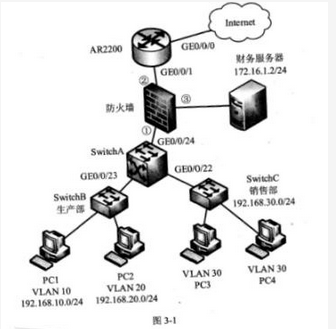
【问题1】(3分,每空1分)如图3-1所示,防火墙的接口①~③分别是(1)、(2)、(3)。【问题2】(8分,每空2分)常用的IP访问控制列表有基本访问控制列表和高级访问控制列表。基本访问控制列表的编号是(4);高级访问控制列表的编号为(5)。基本访问控制列表是依据IP报文的(6)、分片信息和生效时间段来定义规则;高级访问控制列表是依据IP报文的源IP地址、(7)、协议、TCP/UDP源/目的端口和生效时间段来定义规则。(4)~(5)备选项: (3)A.1~999 B.1000~1999 C.2000~2999 D.3000~3999【问题3】(9分,每空1分)为了便于管理,公司有生产部、销售部和财务部等部门,VLAN划分及IP地址规划如图3-1所示。为了安全起见,公司要求生产部不能够访问销售部的主机和财务服务器,销售部可以对公司网络自由访问。根据以上要求,网络管理员对SwitchA做了如下配置,请根据描述,将下面的配置代码补充完整。设备基本配置及VLAN配置略......[SwitchA] acl 3001[SwitchA-acl-adv-3001] rule permeit ip source 192.168.30.0 0.0.0.255 destination 192.168.10.0 0.0.0.255[SwitchA-acl-adv-3001] rule permeit ip source 192.168.30.0 0.0.0.255 destination 192.168.20.0 0.0.0.255[SwitchA-acl-adv-3001] rule permeit ip source 192.168.30.0 0.0.0.255 destination(8)0[SwitchA] acl 3002[SwitchA-acl-adv-3002] rule deny ip source 192.168.10.0 0.0.0.255 destination 192.168.30.0 0.0.0.255[SwitchA-acl-adv-3002] rule deny ip source 192.168.10.0 0.0.0.255 destination 172.16.1.2 0[SwitchA] acl 3003[SwitchA-acl-adv-3003] rule deny ip source 192.168.20.0 0.0.0.255 destination 192.168.30.0 0.0.0.255[SwitchA-acl-adv-3003] rule deny ip source 192.168.20.0 0.0.0.255 destination 172.16.1.2 0[SwitchA-acl-adv-3003] quit[SwitchA] traffic classifier tc1 // (9)[SwitchA-classifier-tc1] if-match acl (10) //将ACL与流分类关联[SwitchA] traffic classifier tc2[SwitchA-classifier-tc1] if-match acl 3002[SwitchA-classifier-tc1] if-match acl 3003[SwitchA-classifier-tc1] quit[SwitchA] traffic behavior tb1 // (11)[SwitchA-behavior-tb1] permit //配置流行为动作为允许报文通过[SwitchA] traffic behavior tb2[SwitchA-behavior-tb1] deny //配置流行为动作为拒绝报文通过[SwitchA-behavior-tb1] quit[SwitchA] traffic policy tp1 // (12)[SwitchA-trafficpolicy-tp1] classifier (13) behavior tb1[SwitchA] traffic policy tp2 //创建流策略[SwitchA-trafficpolicy-tp1] classifier (14) behavior tb2[SwitchA-trafficpolicy-tp1] quit[SwitchA] interface (15)[SwitchA-GigabitEthernet1/0/1] traffic-policy tp1 inbound //流策略应用在接口入方向[SwitchA-GigabitEthernet1/0/1] quit[SwitchA] interface (16)[SwitchA-GigabitEthernet1/0/2] traffic-policy tp2inbound //流策略应用在接口入方向[SwitchA-GigabitEthernet1/0/2] quit(8)~(16)备选项A.172.16.1.2 B.3001 C.创建流策略D.tc2 E.gigabitethernet 0/0/23 F.gigabitethernet 0/0/22 G. tc1H.创建流行为 I.创建流分类答案:解析:【问题1】
(1)内网接口 (2) 外网接口 (3)DMZ【问题2】
(4)C (5)D (6)源IP地址 (7)目标IP地址
【问题3】
(8)A (9)I(10)B(11) H (12)C (13)G (14)D(15)F (16)E
【解析】
【问题1】
基础概念,防火墙的三个接口分别接内网,外网和非军事化区,在华为设备中,这三个区域分别叫做trust区域,untrust区域 和DMZ区域。【问题2】
(华为设备的ACL基础概念。访问控制列表可以分为基本访问控制列表和高级访问控制列表和二层访问控制列表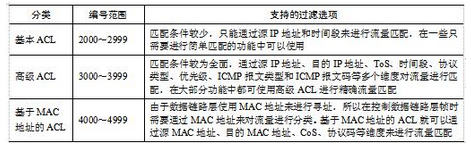
【问题3】
华为设备的基本配置填空,需要掌握aaa,端口连接,vlan,trunk,ACL等基本配置,本题是一个考查基本ACL应用的类型,考试中主要是能根据上下文找到关键词或者根据命令中的空,掌握参数。也可以根据备选项中的参数,逐个试验,找到正确的答案为止。 -
第2题:

管理员要求能确保Vlan10和Vlan20能互通,并且Vlan20的用户访问外网时,使用10.1.30.1作为出口,二Vlan10的用户访问外网时,使用10.1.20.1作为出口,因此考虑使用策略路由。具体配置如下:
[Switch] acl 3000
[Switch-acl-adv-3000] rule permit ip source 192.168.1.0 0.0.0.255 destination 192.168.2.0 0.0.0.255
[Switch-acl-adv-3000] rule permit ip source 192.168.2.0 0.0.0.255 destination 192.168.1.0 0.0.0.255
Switch-acl-adv-3000] quit
?
[Switch] acl 3001?//匹配内网192.168.1.0/24网段的数据流
[Switch-acl-adv-3001]?(1)
[Switch-acl-adv-3001] quit
[Switch] acl 3002?//匹配内网192.168.2.0/24网段的数据流
[Switch-acl-adv-3002] rule permit ip source 192.168.2.0 0.0.0.255
[Switch-acl-adv-3002] quit
?
[Switch] traffic classifier c0 operator or
[Switch-classifier-c0]?(2)
[Switch-classifier-c0] quit
[Switch]?(3)
[Switch-classifier-c1] if-match acl 3001
[Switch-classifier-c1] quit
[Switch] traffic classifier c2 operator or
[Switch-classifier-c2] if-match acl 3002
[Switch-classifier-c2] quit
[Switch] traffic behavior b0
[Switch-behavior-b0]?(4)
[Switch-behavior-b0] quit
[Switch] traffic behavior b1
[Switch-behavior-b1]?(5)
[Switch-behavior-b1] quit
[Switch] traffic behavior b2
[Switch-behavior-b2] redirect ip-nexthop 10.1.30.1
[Switch-behavior-b2] quit
?[Switch](6)
[Switch-trafficpolicy-p1]?(7)
[Switch-trafficpolicy-p1] classifier c1 behavior b1
[Switch-trafficpolicy-p1] classifier c2 behavior b2
[Switch-trafficpolicy-p1] quit
[Switch] interface gigabitethernet 1/0/3
[Switch-GigabitEthernet1/0/3]?(8)
问题1:简要叙述ACL3000在此配置中的作用是什么?
问题2:请完成(1)-(8)空的命令填空答案:解析:(1)rule permit ip source 192.168.1.0 0.0.0.255或者 rule? [数字编号] permit ip source 192.168.1.0 0.0.0.255
(2)if-match acl 3000
(3)traffic classifier c1 operator or
(4)permit
(5)redirect ip-nexthop 10.1.20.1
(6)traffic policy p1
(7)classifier c0 behavior b0
(8)traffic-policy p1 inbound
【解析】
试题分析:
传统的路由转发原理是首先根据报文的目的地址查找路由表,然后进行报文转发。但是目前越来越多的用户希望能够在传统路由转发的基础上根据自己定义的策略进行报文转发和选路。策略路由PBR(Policy-Based Routing)就是一种依据用户制定的策略进行数据转发的机制。在某些需要指定特定的数据流走特定的下一跳的场景下可以使用策略路由实现,例如使不同的数据流通过不同的链路进行发送,提高链路的利用效率;将数据流引流到防火墙等安全设备,进行安全过滤;在满足业务服务质量的前提下,选择费用较低的链路传输业务数据,从而降低企业数据服务的成本。策略路由主要配置在于如何利用ACL区分数据,然后再使用PBR设定对应的数据流使用redirect ip-nexthop命令或redirect ipv6-nexthop(对应IPv6数据)命令设置下一跳即可解决。具体配置过程如下:1. 创建VLAN并配置各接口,配置路由等,保证IP网络连通。2. 配置ACL规则,不同网段的数据流。3. 配置流分类,匹配规则为对应的ACL规则,使设备可以对报文进行区分。4. 配置流行为,使满足不同ACL规则的数据流走不同的链路,此时要特别注意的是:先把内网互访的数据流放行。5. 配置流策略,绑定上述流分类和流行为,并应用到对应设备接口的入方向,实现策略路由。本题不涉及基本IP网路连通的配置,因此只要从第2步开始即可。配置ACL规则# 在Switch上创建编码为3000、3001、3002的高级ACL。[Switch] acl 3000 //主要用于匹配内网两个网段之间互访的数据流,这部分数据流不需要做重定向,如果不配置这一步会导致内网之间互访的流量也被重定向,从而导致内网互访不通。[Switch-acl-adv-3000] rule permit ip source 192.168.1.0 0.0.0.255 destination 192.168.2.0 0.0.0.255[Switch-acl-adv-3000] rule permit ip source 192.168.2.0 0.0.0.255 destination 192.168.1.0 0.0.0.255Switch-acl-adv-3000] quit[Switch] acl 3001 //匹配内网192.168.1.0/24网段的数据流[Switch-acl-adv-3001] rule permit ip source 192.168.1.0 0.0.0.255[Switch-acl-adv-3001] quit[Switch] acl 3002 //匹配内网192.168.2.0/24网段的数据流[Switch-acl-adv-3002] rule permit ip source 192.168.2.0 0.0.0.255[Switch-acl-adv-3002] quit步骤3 配置流分类在Switch上创建流分类c0、c1、c2,匹配规则分别为ACL 3000、ACL 3001和ACL3002。[Switch] traffic classifier c0 operator or[Switch-classifier-c0] if-match acl 3000[Switch-classifier-c0] quit[Switch] traffic classifier c1 operator or[Switch-classifier-c1] if-match acl 3001[Switch-classifier-c1] quit[Switch] traffic classifier c2 operator or[Switch-classifier-c2] if-match acl 3002[Switch-classifier-c2] quit步骤4 配置流行为# 在Switch上创建流行为b0、b1、b2,对于b0只配置permit的动作,对于b1和b2分别指定重定向到10.1.20.1和10.1.30.1的动作。[Switch] traffic behavior b0[Switch-behavior-b0] permit[Switch-behavior-b0] quit[Switch] traffic behavior b1[Switch-behavior-b1] redirect ip-nexthop 10.1.20.1[Switch-behavior-b1] quit[Switch] traffic behavior b2[Switch-behavior-b2] redirect ip-nexthop 10.1.30.1[Switch-behavior-b2] quit步骤5 配置流策略并应用到接口上# 在Switch上创建流策略p1,将流分类和对应的流行为进行绑定。[Switch] traffic policy p1[Switch-trafficpolicy-p1] classifier c0 behavior b0[Switch-trafficpolicy-p1] classifier c1 behavior b1[Switch-trafficpolicy-p1] classifier c2 behavior b2[Switch-trafficpolicy-p1] quit# 将流策略p1应用到Switch的GE1/0/3的入方向上。[Switch] interface gigabitethernet 1/0/3[Switch-GigabitEthernet1/0/3] traffic-policy p1 inbound -
第3题:
The Cisco SDM will create a QoS policy that provides services to two types of traffic. Which two statements indicate the default QoS parameters that are created by SDM?()
- A、 Business-critical traffic will be sorted into two QoS classes.
- B、 Real-time traffic will be sorted into one QoS class.
- C、 Voice traffic will be considered real-time traffic while call signaling will be considered business-critical.
- D、 All traffic except real-time will be considered best-effort.
- E、 Routing, management, and transactional traffic will be considered business-critical.
- F、 Voice and call signaling traffic will be considered real-time.
正确答案:E,F -
第4题:
Which statement describes the behavior of a security policy?()
- A、The implicit default security policy permits all traffic.
- B、Traffic destined to the device itself always requires a security policy.
- C、Traffic destined to the device’s incoming interface does not require a security policy.
- D、The factory-default configuration permits all traffic from all interfaces.
正确答案:C -
第5题:
As an experienced network administrator, you are asked to troubleshoot a QoS problem. In which way might the Cisco NetFlow be helpful during the troubleshooting process?()
- A、NetFlow can discover the protocols in use and automatically adjust QoS traffic classes to meet policy-map requirements.
- B、NetFlow records can be used to understand traffic profiles per class of service for data, voice, and video traffic.
- C、NetFlow can be configured to identify voice and video traffic flows and place them into a low-latency queue for expedited processing.
- D、NetFlow can report on the number of traffic matches for each class map in a configured QoS policy configuration.
正确答案:B -
第6题:
Which two statements are true about trust boundaries?()
- A、Classifying and marking traffic should be done as close to the traffic source as possible.
- B、Classifying and marking traffic should be done at the distribution layer.
- C、Traffic is classified and marked as it travels through the network.
- D、If untrusted traffic enters a switch, it can be marked with a new QoS value appropriate for the policy in place.
- E、The trust boundary moves depending on the type of traffic entering the network.
正确答案:A,D -
第7题:
边缘路由器侧重执行以下几种QoS功能()
- A、复杂流分类
- B、访问控制
- C、拥塞管理
- D、流量监管和流量整形
正确答案:A,B,D -
第8题:
多选题Which two QoS statements are true about the use of the SDM QoS wizard? ()ABusiness-critical traffic includes VoIP and voice signaling packets.
BSDM can be used to configure a basic QoS policy for incoming traffic on WAN interfaces and IPsec tunnels.
CSDM can provide QoS for real-time traffic and business-critical traffic.
DSDM creates a custom-queuing (CQ) or a priority-queuing (PQ) policy.
ESDM creates a low latency queuing (LLQ) service policy with its associated classes.
FWhen allocating bandwidth, values can be entered in either bandwidth percentage or kilobytes per second (kBps).
正确答案: D,E解析: 暂无解析 -
第9题:
单选题How can Cisco NetFlow be used to aid in the operation and troubleshooting of QoS issues? ()ANetFlow can report on the number of traffic matches for each class map in a configured QoS policy configuration.
BNetFlow records can be used to understand traffic profiles per class of service for data, voice, and video traffic.
CNetFlow can discover the protocols in use and automatically adjust QoS traffic classes to meet policy-map requirements.
DNetFlow can be configured to identify voice and video traffic flows and place them into a lowlatency queue for expedited processing.
正确答案: A解析: 暂无解析 -
第10题:
单选题流分类和ACL的区别说法错误的是()。A在基于类的QoS中,流分类即traffic classifier,它是以ACL为基础的,但不同于ACL
B流分类只有分类匹配一个作用,而没有表明对符合分类的流做出什么动作
CACL本身是为了访问控制,所以附带有deny和permit的动作
D二者匹配的范围不同,就目前而言,流分类所能匹配的流范围小于等于ACL
正确答案: C解析: 暂无解析 -
第11题:
多选题基于类的QoS的命令行的三大部分是()。A流分类(traffic classifier)
B流动作(traffic behavior)
C流量策略(traffic policy)
D流量整形和监管
正确答案: A,D解析: 暂无解析 -
第12题:
多选题边缘路由器侧重执行以下几种QoS功能()A复杂流分类
B访问控制
C拥塞管理
D流量监管和流量整形
正确答案: A,B解析: 暂无解析 -
第13题:
某企业的网络结构如图 4-1 所示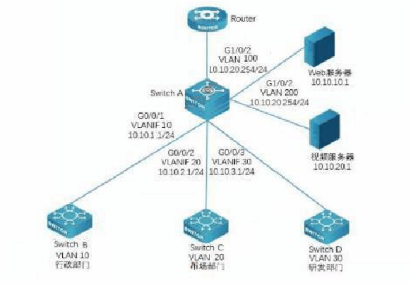
问题:4.1 (6 分) 根据 4-1 所示,完成交换机的基本配置,请根据描述,将以下配置代 码补充完整。
(1)
[HUAWEI] (2)
Switch [Switch]vlan(3)10 20 30 100 200 [Switch](4)gigabitethernet0/0/1
[Switch-GigabitEthernet0/0/1]port link-type(5)
[Switch-GigabitEthernet0/0/1]port trunk allow-pass vlan(6)
[Switch-GigabitEthernet0/0/1]quit [Switch]interface vlanif 10
[Switch-Vlanif10]ip address 10.10.1.1.255.255.255.0 [Switch-Vlanif10]quit
VLAN 20 30 100 200 配置略 ......
问 题 : 4.2 按 照 公 司 规 定 , 禁 止 市 场 部 和 研 发 部 工 作 日 每 天 8:00~18:00 访问公司视频服务器,其他部门和用户不受此限制。请根 据描述,将以下配置代码补充完整。 ......
[Switch] (7)satime 8:00 to 18:00 working-day
[Switch]acl 3002
[Switch-acl-adv-3002]rule deny ip source 10.10.2.0.0.0.0.255 destination 10.10.20.1 0.0.0.0 timc-range satime
[Switch-acl-adv-3002]quit
[Switch]acl 3003
[Switch-acl-adv-3003]rule deny ip source 10.10.3.0.0.0.0.255 destination 10.10.20.10.0.0.0 time-range satime
[Switch-acl-adv-3003]quit
[Switch-acl-adv-3003]rule deny ip source 10.10.3.0.0.0.0.255 destination 10.10.20.10.0.0.0 time-range satime
[Switch-acl-adv-3003]quit
[Switch]traffic classifier c_market //(8
[Switch-classifier-c_market](9)acl 3002 //将 ACL 与流分类关联
[Switch-classifier-c_market]quit
[Switch]traffic classifier c_rd
[Switch-classifier-c_rd]if-match acl 3003 //将 ACL 与流分类关联
[Switch-classifier-c_rd]quit
[Switch](10)b_market //创建流行为
[Switch-behavior-b_market] (11) //配置流行为动作为拒绝报文通过
[Switch-behavior-b market]quit
[Switch]traffic behavior b_rd
[Switch-behavior-b_rd]deny
[Switch-behavior-b_rd]quit
[Switch](12)p_market //创建流策略
[Switch-trafficpolicy-p_market]classifier c_market behavior b_market
[Switch-trafficpolicy-p_market]quit
[Switch]traffic policy p_rd //创建流策略
[Switch-trafficpolicy-p_rd]classifier c_rd behavior b_rd
[Switch-trafficpolicy-p_rd]quit
[Switch]interface(13)
[Switch-GigabitEthernet0/0/2]traffic-policy p_market(14)
[Switch-GigabitEthernet0/0/2]quit
[Switch]interface gigabitethernet 0/0/3
[Switch-GigabitEthernet0/0/3]traffic-policy(15)inbound
[Switch-GigabitEthernet0/0/3]quit答案:解析:1、 system-view 2、 sysname 3、 batch 4、 interface 5、 trunk 6、 all 或 10 7、 time-range 8、 创建一个 c_market 的流分类 9、 If-match 10、 traffic behavior 11、 Deny 12、 traffic policy 13、 gigabitethernet0/0/2 14、 inbound 15、 p_rd -
第14题:
骨干路由器侧重执行以下几种QoS功能()
- A、复杂流分类
- B、拥塞避免
- C、拥塞管理
- D、流量监管和流量整形
正确答案:B,C -
第15题:
配置基于类的QoS必须的步骤是()。
- A、配置流量类
- B、配置流量动作
- C、关联流量类和流量动作
- D、应用流量策略
正确答案:A,B,C,D -
第16题:
QoS管理的易用性体现在()
- A、通过命令行实现配置操作
- B、业务流量特征库,基于RFC4594和四层特征进行业务标准化分类
- C、基于预置QoS模板,提供常见业务流的快速部署和通用流的QoS快速部署
- D、支持图形化的QoS策略部署概览(展示队列、带宽等信息)
正确答案:B,C,D -
第17题:
基于类的QoS的命令行的三大部分是()。
- A、流分类(traffic classifier)
- B、流动作(traffic behavior)
- C、流量策略(traffic policy)
- D、流量整形和监管
正确答案:A,B,C -
第18题:
流分类和ACL的区别说法错误的是()。
- A、在基于类的QoS中,流分类即traffic classifier,它是以ACL为基础的,但不同于ACL
- B、流分类只有分类匹配一个作用,而没有表明对符合分类的流做出什么动作
- C、ACL本身是为了访问控制,所以附带有deny和permit的动作
- D、二者匹配的范围不同,就目前而言,流分类所能匹配的流范围小于等于ACL
正确答案:D -
第19题:
多选题配置基于类的QoS必须的步骤是()。A配置流量类
B配置流量动作
C关联流量类和流量动作
D应用流量策略
正确答案: D,A解析: 暂无解析 -
第20题:
多选题流动作可以包括()。A基于类的标记动作
B基于类的流量监管和整形动作
CCBQ动作
D基于类的WRED动作
正确答案: D,C解析: 暂无解析 -
第21题:
多选题骨干路由器侧重执行以下几种QoS功能()A复杂流分类
B拥塞避免
C拥塞管理
D流量监管和流量整形
正确答案: C,A解析: 暂无解析 -
第22题:
单选题As an experienced network administrator, you are asked to troubleshoot a QoS problem. In which way might the Cisco NetFlow be helpful during the troubleshooting process?()ANetFlow can discover the protocols in use and automatically adjust QoS traffic classes to meet policy-map requirements.
BNetFlow records can be used to understand traffic profiles per class of service for data, voice, and video traffic.
CNetFlow can be configured to identify voice and video traffic flows and place them into a low-latency queue for expedited processing.
DNetFlow can report on the number of traffic matches for each class map in a configured QoS policy configuration.
正确答案: A解析: 暂无解析 -
第23题:
多选题The Cisco SDM will create a QoS policy that provides services to two types of traffic. Which two statements indicate the default QoS parameters that are created by SDM?()ABusiness-critical traffic will be sorted into two QoS classes.
BReal-time traffic will be sorted into one QoS class.
CVoice traffic will be considered real-time traffic while call signaling will be considered business-critical.
DAll traffic except real-time will be considered best-effort.
ERouting, management, and transactional traffic will be considered business-critical.
FVoice and call signaling traffic will be considered real-time.
正确答案: A,E解析: 暂无解析 -
第24题:
多选题以下关于S8500的QoS功能的说法,正确的是()。A入端口支持基于流的速率限制和标记
B出端口支持基于物理端口、输出队列的流量整形
C入、出端口均可以同时配臵速率限制和流量整形
D不支持流量整形
E支持流镜像和端口镜像
正确答案: E,D解析: 暂无解析