
单选题_____ such a good chance, how could she let it slip away?A Having givenB GivingC Having been givenD Give
题目
Having given
Giving
Having been given
Give
相似考题
更多“_____ such a good chance, how could she let it slip away?”相关问题
-
第1题:
Rarely _______ so difficult a problem.A.she could have faced with
B.could have she faced with
C.she could have been faced with
D.could she have been faced with
参考答案:D
-
第2题:
She told me the kids how they could_______right now.A.make sense
B.make no difference
C.make no sense
D.make a difference
参考答案:D -
第3题:
Passage Five
Australia is nearly as large as the United States, but most of it is too dry for people to live in. Around
this dry part are large sheep and cow farms. A few of them are as large as the smallest states: of America.
Often the nearest neighbours are several hundred kilometers away.
The two-way radio is very important to people who live on these great Australian farms. It works much like a
telephone. A person can listen to someone else talk and then gives an answer. For example, people on
the large farms could talk to a doctor far away. They could tell the doctor about someone who was ill,
and the doctor could let them know how to look after the sick person.
As the large farms were so far from towns, the children could not go to school. Radio schools were
started for them in some places. At a certain time each day, boys and girls turn on their radios and
listen to teachers in cities far away.
Families on the large farms wanted to give news to their neighbours. The programme Round Robin
Talks by radio was started to keep families in touch with each other. They could talk about who was
going away and who was iii. The men could talk about their sheep and cows and how much money
the markets would pay for them. In many ways the radio became a newspaper for the farm people of Australia.
52. In the passage "the two-way radio" is______.
A. important to Americans
B. useful for children only
C. used as a telephone
D. only used by doctors
正确答案:C此题为细节题。文章的第二段内可以找到句子:It works much like a telephone。
-
第4题:
Erna Hart _______ a good swimmer; she swam across the English Channel when she was only fourteen years old!
A、must be
B、must have been
C、could be
D、should have been
正确答案:A
-
第5题:
She is a woman too conservative to ____ the times, however, she is good-natured and treats others sincerely.A. come up with
B. keep up with
C. keep away from
D. put up with
正确答案:B
-
第6题:
How much she looked without her glasses! A. well B. good C. best D. better
正确答案:D
-
第7题:
She was so angry that she rushed out into the rain__________I could stop her.A.before
B.off
C.from
D.away答案:A解析:该句意为她是如此地生气以致于冲进雨里——我能阻止她。before“在…之前”,符合句意,故选A。 -
第8题:
How could we judge if a person is outstanding or not merely by the number of the papers he or she has got published?A:distinguished
B:famous
C:scholarly
D:notorious答案:A解析:本句意思是:我们怎么能仅仅以他或她发表的论文数来判断此人杰出与否呢? 句中outstanding意为“杰出的”,如:The girl who won the scholarship was quite outstanding.得奖学金的女孩是相当杰出的。四个选项中distinguished意为“卓越的”,如:He was the progenitor of a family of distinguished actors.他是一个著名演艺世家的先辈。famous意为“出名的”。scholarly意为“学术性的”,如:He has gained a distinction in various fields of scholarly studies.他在多种科学的学术研究中享有盛名。notorious意为“臭名昭著的”,如:He was notorious as a gambler.他是臭名昭著的赌徒。只有选项A同句中画线词语含义接近。 -
第9题:
Lisa was running late.Lisa,25 ,had a lot to do at work,plus visitors on the way: her parents were coming in for Thanksgiving from her hometown.But as she hurried down the subway stairs, she started to feel uncomfortably warn.By the time she got to the platform, Lisa felt weak and tired-- maybe it hadn' t been a good idea to give blood the night before, she thought.She rested herself against a post close to the tracks.
Several yards away, Frank ,43, and his girlfriend, Jennifer,found a spot close to where the front of the train would stop.They were deep in discussion about a house they were thinking of buying.
But when he heard the scream, followed by someone yelling," Oh, my God, she fell in!" Frank didn' t hesitate.He jumped down to the tracks and ran some 40 feet toward the body lying on the rails."No ! Not you ! "his girlfriend screamed after him.
She was right to be alarmed.By the time Frank reached Lisa, he could feel the tracks shaking and see the light coming.The train was about 20 seconds from the station.
It was hard to lift her.She was just out.But he managed to raise her the four feet to the platform so that bystanders could hold her by the grins and drag her away from the edge.That was where Lisa briefly regained consciousness, felt herself being pulled along the ground, and saw someone else holding her purse.
Lisa thought she' d been robbed.A woman held her hand and a man gave his shirt to help stop the blood pouring from her head.And she tried to talk but she couldn' t, and that was when she realized how much pain she was in.
Police and fire officials soon arrived, and Frank told the story to an officer.Jennifer said her boyfriend was calm on their 40-minute train ride downtown--just as he had been seconds after the rescue,which made her think about her reaction at the time."I saw the train coming and I was thinking he was going to die."she explained.
How did Frank save Lisa?A.By lifting her to the platform.
B.By helping her rise to her feet.
C.By pulling her along the ground.
D.By dragging her away from the edge.答案:A解析:细节理解题。由倒数第三段“But he managed to raise her the four feet to the platform so that bystanders could hold her by the grins and drag her away from the edge”可知。 -
第10题:
Lisa was running late.Lisa,25,had a lot to do at work,plus visitors on the way:her parents were coming in for Thanksgiving from her hometown.But as she hurried down the subway stairs,she started to feel uncomfortably warm.By the time she got to the platform,Lisa felt weak and tired—maybe it hadn′t been a good idea to give blood the night before,she thought.She rested herself against a post close to the tracks.
Several yards away,Frank,43,and his girlfriend,Jennifer,found a spot close to where the front of the.train would stop.They were deep in discussion about a house they were thinking of buying.
But when he heard the scream,followed by someone yelling,"Oh,my God,she fell in!"Frank didn′t hesitate.He jumped down to the tracks and ran some 40 feet toward the body lying on the rails."No!Not you!"his girlfriend screamed after him.
She was right to be alarmed.By the time Frank reached Lisa,he could feel the tracks shaking and see the light coming.The train was about 20 seconds from the station.
It was hard to lift her.She was just out.But he managed to raise her the four feet to the platform so that bystanders could hold her by the arms and drag her away from the edge.That was where Lisa briefly regained consciousness,felt herself being pulled along the ground,and saw someone else holding her purse.
Lisa thought she′d been robbed.A woman held her hand and a man gave his shirt to help stop the blood pouring from her head.And she tried to talk but she couldn′t,and that was when she realized how much pain she was in.
Police and fire officials soon arrived,and Frank told the story to an officer.Jennifer said her boyfriend was calm on their 40-minute train ride downtown—just as he had been seconds after the rescue,which made her think about her reaction at the time."I saw the train coming and I was thinking he was going to die,"she explained.
How did Frank save Lisa?A.By lifting her to the platform.
B.By helping her rise to her feet.
C.By pulling her along the ground.
D.By dragging her away from the edge.答案:A解析:考情点拨:事实细节题。应试指导:从第五段第三句可知,Frank,把Lisa抱到了站台上。 -
第11题:
Literacy Volunteer Last summer I went through a training program and became a literacy volunteer (扫盲志愿者). The training I received, though excellent, did not tell me how it was to work with a real student, however. When I began to discover what other people's lives were like because they could not read, I realized the true importance of reading. My first student Jane was a 44-year-old single mother of three. In the first lesson, I found out she walked two miles to the nearest supermarket twice a week because she didn't know which bus to take. When I told her I would get her a bus schedule, she told me it would not help because she could not read it. She said she also had difficulty once she got to the supermarket because she couldn't always remember what she needed. Since she did not know words, she could not write out a shopping list. Also, she could only recognize items by their labels. As a result, if the product had a different label, she would not recognize it as the product she wanted. As we worked together, learning how to read built Jane's self-confidence, which encouraged her to continue in her studies. She began to make rapid progress and was even able to take the bus to the supermarket. After this successful trip, she reported how self-confident she felt. At the end of the program, she began helping her youngest son, Tony, a shy first grader, with his reading. She sat with him before he went to sleep and together they would read bedtime stories. When his eyes became wide with excitement as she read pride was written all over her face, and she began to see how her own hard work in learning to read paid off. As she described this experience, I was proud of myself, too. I found that helping Jane to build her self-confidence was more rewarding than anything I had ever done before. As a literacy volunteer, I learned a great deal about teaching and helping others. In fact, I may have learned more from the experience than Jane did. Jane could not recognize items by their labels.()
- A、True
- B、False
- C、Not Given
正确答案:B -
第12题:
单选题Jane was fairly good at English, but in mathematics she could not ______ the rest of the students in her class.Aput up with
Bdo away with
Ckeep up with
Drun away with
正确答案: C解析:
put up with忍受。do away with摆脱,去除,废除。keep up with赶上,跟上。run away with消耗,用掉,潜逃。 -
第13题:
Mary got good grades in school. _____ excited she is!
A. What B. What a C. How D. How a
正确答案:C
-
第14题:
--Could you look after my garden while I' m away?
--_______________
A. With pleasure.
B. Hold on please.
C. I agree with you.
D. That's a good idea.
正确答案:A
With pleasure我很乐意;Hold on please(接电话)请稍等;I agree with you我同意你(的说法等);That’s a good idea那是个好主意。根据句意应该选A。 -
第15题:
How do you know ________?A.how old she is
B.how old is she
C.how is she old
D.how is she old
参考答案:A
-
第16题:
I could see from her face that she had received some good news.()此题为判断题(对,错)。
参考答案:正确
-
第17题:
What could the girl in the ticket office do for the passengers without asking the computer?
A. She could sell a ticket.
B. She could write out a ticket.
C. She could answer the passengers' questions.
D. She could do nothing.
正确答案:D37.答案为D 根据文章中的对话:售票员不能卖机票,回答不出旅客提出的问题等等,可推知此题答案为D。
-
第18题:
Jean doesn′t want to work right away because she thinks that if she ___________ a job she probably wouldn′ t be able to see her friends very often.A.has to get
B.had got
C.were to get
D.could have got答案:C解析:考查虚拟语气。if后面的句子是虚拟语气,根据句意“Jean现在不想工作,因为她认为如果有了工作,就不能经常见到她的朋友了”及谓语动词wouldn’t be可知,从句表示对将来事实的假设,所以应该用表示将来的虚拟形式:did/were to do/should do,C项为正确答案。 -
第19题:
根据下列内容,回答191-195题。
Mrs.Janes gave music lessons at a school.She had a good voice and enjoyed singing,except that some of her high tones sounded like a gate that had been forgotten to oil.Mrs.Janes knew her weakness well,and took every chance she could to practice these high tones.As she lived in a small house,where she could not practice without disturbing the rest of the family,she usually went for long walks along the country roads whenever she had time and practiced her high tones there.Whenever she heard a car or a person coming along the road,she stopped and waited until she could no longer be heard before she started practicing again,because she was a shy person.
One afternoon,a fast,opened car came up behind her so silently and so fast that she didn’t hear it until it was only a few yards from her.She was singing some of her highest and most difficult tones at that time and as the car passed;she saw an anxious expression came over the driver’s face.
He stopped his car suddenly,jumped out and began to examine all the tyres carefully. Mrs.Janes didn’t dare to tell him what noise he had heard really was,so he got back into the car and drove off.
How did Mrs.Janes sing? __________A.She sang well,but she didn’t practice singing hard.
B.She enjoyed singin9,but she had a terrible voice.
C.She was a good singer,but she could not sing the high tones well.
D.She sang terribly,and she was not singer at all.答案:C解析:推断题。根据第一段“She had a good voice and enjoyed singing,except that some of herhigh tones sounded like a gate that had been forgotten to oil”可推知,她是一个好歌手,只是某些高音符唱不好。故答案为C。 -
第20题:

1.Greetings
2Use a tongue twister to warm up: How many cookies could a good cook cook if a good cook could cook cookies? A good cook could cook as much cookies as a good cook who could cook cookies.
Step 2: Presentation
1Listen to the tape for the first time and ask them to write down what are they listening to.
2Let students find out similarity between these words.
3Tell students how to pronounce “oo”, and summary the pronunciation of “oo” /u/,/u:/.
Step 3: Practice
1Let students find more words with the pronunciation of “oo” (such as: look, book, wood, cookery, classroom), and use these words to make sentence.(such as: I look at the good book. Mr. wood is a good cook. )
Step 4: Production
Dubbing contest: students work in pairs to imitate film clips; teacher will give them 8 minutes to prepare it and then invite some students make performance in the front.
Step 5: Summary & Homework
Summary: students look at the blackboard and summarize this class.
Homework: students find lyrics with the pronunciation of “oo”, and hold a singing contest in the next class.
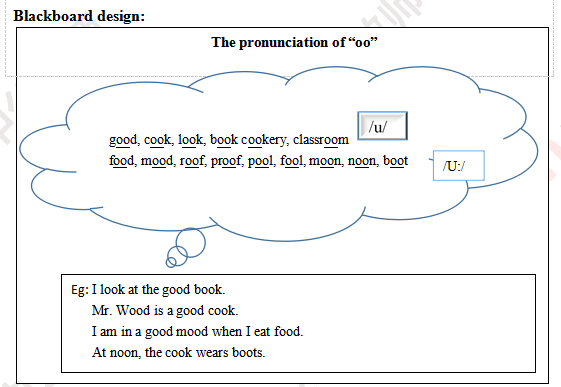 答案:解析:暂无解析
 -
第21题:
Lisa was running late.Lisa,25 ,had a lot to do at work,plus visitors on the way: her parents were coming in for Thanksgiving from her hometown.But as she hurried down the subway stairs, she started to feel uncomfortably warn.By the time she got to the platform, Lisa felt weak and tired-- maybe it hadn' t been a good idea to give blood the night before, she thought.She rested herself against a post close to the tracks.
Several yards away, Frank ,43, and his girlfriend, Jennifer,found a spot close to where the front of the train would stop.They were deep in discussion about a house they were thinking of buying.
But when he heard the scream, followed by someone yelling," Oh, my God, she fell in!" Frank didn' t hesitate.He jumped down to the tracks and ran some 40 feet toward the body lying on the rails."No ! Not you ! "his girlfriend screamed after him.
She was right to be alarmed.By the time Frank reached Lisa, he could feel the tracks shaking and see the light coming.The train was about 20 seconds from the station.
It was hard to lift her.She was just out.But he managed to raise her the four feet to the platform so that bystanders could hold her by the grins and drag her away from the edge.That was where Lisa briefly regained consciousness, felt herself being pulled along the ground, and saw someone else holding her purse.
Lisa thought she' d been robbed.A woman held her hand and a man gave his shirt to help stop the blood pouring from her head.And she tried to talk but she couldn' t, and that was when she realized how much pain she was in.
Police and fire officials soon arrived, and Frank told the story to an officer.Jennifer said her boyfriend was calm on their 40-minute train ride downtown--just as he had been seconds after the rescue,which made her think about her reaction at the time."I saw the train coming and I was thinking he was going to die."she explained.
The passage is intended toA.warn us of the danger in the subway
B.show us how to save people in the subway
C.tell us about a subway rescue
D.report a traffic accident答案:C解析:记叙文,没有主题句。本文按时间顺序,从Lisa晕倒到 Frank冒险将她救到站台上,全文只是告诉我们一个在地铁救人的事实。 -
第22题:
How was your final exam?()
- A、Take it easy.
- B、You are right away.
- C、I am not sure.
- D、Let's have a drink.
正确答案:C -
第23题:
单选题Which of the following contains an adverbial clause of concession?ANo matter how hard he tried, she could not change her mind.
BHe got up so early that he caught the first bus.
CNow that everybody has come, let’s begin our conference.
DGenerally, air will be heavily polluted where there are factories.
正确答案: A解析:
考查让步状语从句。A选项是no matter how引导的让步状语从句;B选项是so…that引导的结果状语从句;C选项是now that引导的原因状语从句;D选项是where引导的地点状语从句,故选A。