
单选题In the past year £4,000,000 was spent onA looking after old peopleB all the company projectsC education and training
题目
looking after old people
all the company projects
education and training
相似考题
更多“In the past year £4,000,000 was spent on”相关问题
-
第1题:
4 Assume today’s date is 5 February 2006.
Joanne is 37, she was born and until 2005 had lived all her life in Germany. She recently married Fraser, aged 38,
who is a UK resident, but who worked briefly in Germany. They have no children.
The couple moved to the UK to live permanently on 9 October 2005. Joanne was employed by an American company
in Germany, and she continued to work for them in the UK until the end of November 2005. Her earnings from the
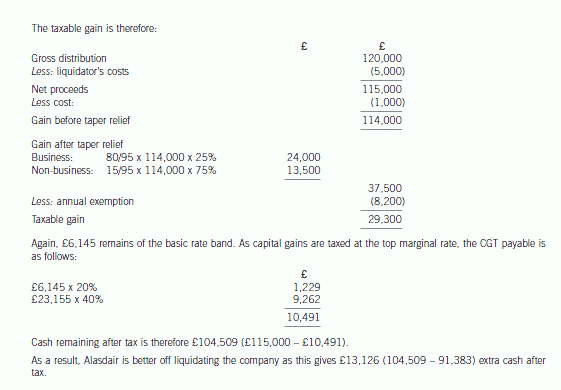
American company were £5,000 per month. Joanne has not remitted any of the income she earned in Germany prior
to her arrival in the UK.
Joanne resigned from her job at the end of November 2005. The company did not hold her to the three months notice
stipulated in her contract, but still paid her for that period. In total, Joanne paid £4,200 in UK income tax under PAYE
for the tax tear 2005/06.
Joanne also wishes to sell the shares she holds in a German listed company. The shareholding cost the equivalent of
£3,500 in September 1986, and its current value is £21,500. She intends to sell the shares in March 2006 and to
invest the proceeds from the sale in the UK. Joanne has made no other capital disposals in the year.
Prior to her leaving employment, Joanne investigated the possibility of starting her own business providing a German
translation service for UK companies, and took some advice on the matter. She paid consultancy fees of £5,000
(excluding value added tax (VAT)) and bought a computer for £2,000 (excluding VAT), both on 23 October 2005.
Joanne started trading on 1 December 2005. She made sales of £2,000 in December, and estimates that her sales
will rise by £1,000 every month to a maximum of £7,000 per month. Joanne believes that her monthly expenses of
£400 (excluding VAT) will remain constant. Her year end will be 31 March, and the first accounts will be drawn up
to 31 March 2006.
Although Joanne has registered her business for tax purposes with the Revenue, she has not registered for VAT and
is unsure what is required of her in this respect.
Required:
(a) State, giving reasons, whether Joanne will be treated as resident or non-resident in the UK for the year of
assessment 2005/06, together with the basis on which her income and gains of that year will be subject to
UK taxation. (3 marks)
正确答案:
(a) Joanne will be treated as UK resident from the day she arrives in the UK, as she has stated her intention to move permanently
to the UK. Her income from this point will be taxable in the UK, although she will receive a full personal allowance
(unapportioned) for the year. Income earned in the UK will be taxable, but income earned abroad in Germany will not be
taxed unless it is remitted to the UK.
Although Joanne is UK resident, she is not UK domiciled. Thus, while capital gains on UK assets will be taxable, gains on
assets held overseas are taxable only to the extent that the proceeds of the sale are remitted to the UK. As Joanne intends to
remit the proceeds from selling her shares in Germany, the gain will be taxable in the UK. -
第2题:
(b) Donald actually decided to operate as a sole trader. The first year’s results of his business were not as he had
hoped, and he made a trading loss of £8,000 in the year to 31 March 2007. However, trading is now improving,
and Donald has sufficient orders to ensure that the business will make profits of at least £30,000 in the year to
31 March 2008.
In order to raise funds to support his business over the last 15 months, Donald has sold a painting which was
given to him on the death of his grandmother in January 1998. The probate value of the painting was £3,200,
and Donald sold it for £8,084 (after deduction of 6% commission costs) in November 2006.
He also sold other assets in the year of assessment 2006/07, realising further chargeable gains of £8,775 (after
indexation of £249 and taper relief of £975).
Required:
(i) Calculate the chargeable gain on the disposal of the painting in November 2006. (4 marks)
正确答案: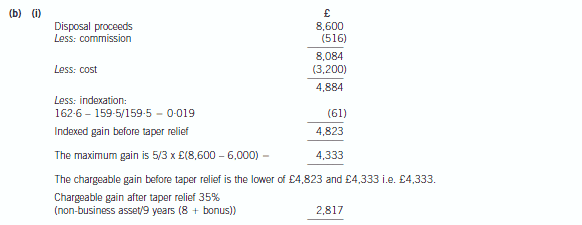
-
第3题:
3 Assume that today’s date is 10 May 2005.
You have recently been approached by Fred Flop. Fred is the managing director and 100% shareholder of Flop
Limited, a UK trading company with one wholly owned subsidiary. Both companies have a 31 March year-end.
Fred informs you that he is experiencing problems in dealing with aspects of his company tax returns. The company
accountant has been unable to keep up to date with matters, and Fred also believes that mistakes have been made
in the past. Fred needs assistance and tells you the following:
Year ended 31 March 2003
The corporation tax return for this period was not submitted until 2 November 2004, and corporation tax of £123,500
was paid at the same time. Profits chargeable to corporation tax were stated as £704,300.
A formal notice (CT203) requiring the company to file a self-assessment corporation tax return (dated 1 February
2004) had been received by the company on 4 February 2004.
A detailed examination of the accounts and tax computation has revealed the following.
– Computer equipment totalling £50,000 had been expensed in the accounts. No adjustment has been made in
the tax computation.
– A provision of £10,000 was made for repairs, but there is no evidence of supporting information.
– Legal and professional fees totalling £46,500 were allowed in full without any explanation. Fred has
subsequently produced the following analysis:
Analysis of legal & professional fees
£
Legal fees on a failed attempt to secure a trading loan 15,000
Debt collection agency fees 12,800
Obtaining planning consent for building extension 15,700
Accountant’s fees for preparing accounts 14,000
Legal fees relating to a trade dispute 19,000
– No enquiry has yet been raised by the Inland Revenue.
– Flop Ltd was a large company in terms of the Companies Act definition for the year in question.
– Flop Ltd had taxable profits of £595,000 in the previous year.
Year ended 31 March 2004
The corporation tax return has not yet been submitted for this year. The accounts are late and nearing completion,
with only one change still to be made. A notice requiring the company to file a self-assessment corporation tax return
(CT203) dated 27 July 2004 was received on 1 August 2004. No corporation tax has yet been paid.
1 – The computation currently shows profits chargeable to corporation tax of £815,000 before accounting
adjustments, and any adjustments for prior years.
– A company owing Flop Ltd £50,000 (excluding VAT) has gone into liquidation, and it is unlikely that any of this
money will be paid. The money has been outstanding since 3 September 2003, and the bad debt will need to
be included in the accounts.
1 Fred also believes there are problems in relation to the company’s VAT administration. The VAT return for the quarter
ended 31 March 2005 was submitted on 5 May 2005, and VAT of £24,000 was paid at the same time. The previous
return to 31 December 2004 was also submitted late. In addition, no account has been made for the VAT on the bad
debt. The VAT return for 30 June 2005 may also be late. Fred estimates the VAT liability for that quarter to be £8,250.
Required:
(a) (i) Calculate the revised corporation tax (CT) payable for the accounting periods ending 31 March 2003
and 2004 respectively. Your answer should include an explanation of the adjustments made as a result
of the information which has now come to light. (7 marks)
(ii) State, giving reasons, the due payment date of the corporation tax (CT) and the filing date of the
corporation tax return for each period, and identify any interest and penalties which may have arisen to
date. (8 marks)
正确答案:(a) Calculation of corporation tax
Year ended 31 March 2003
Corporation tax payable
There are three adjusting items:.
(i) The computers are capital items, as they have an enduring benefit. These need to be added back in the Schedule D
Case I calculation, and capital allowances claimed instead. The company is not small or medium by Companies Act
definitions and therefore no first year allowances are available. Allowances of £12,500 (50,000 x 25%) can be claimed,
leaving a TWDV of £37,500.
(ii) The provision appears to be general in nature. In addition there is insufficient information to justify the provision and it
should be disallowed until such times as it is released or utilised.
(iii) Costs relating to trading loan relationships are allowable, as are costs relating to the trade (debt collection, trade disputes
and accounting work). Costs relating to capital items (£5,700) are not allowable so will have to be added back.
Total profit chargeable to corporation tax is therefore £704,300 + 50,000 – 12,500 + 10,000 + 5,700 = 757,500. There are two associates, and therefore the 30% tax rate starts at £1,500,000/2 = £750,000. Corporation tax payable is 30% x£757,500 = £227,250.
Payment date
Although the rate of tax is 30% and the company ‘large’, quarterly payments will not apply, as the company was not large in the previous year. The due date for payment of tax is therefore nine months and one day after the end of the tax accounting period (31 March 2003) i.e. 1 January 2004.
Filing date
This is the later of:
– 12 months after the end of the period of account: 31 March 2004
– 3 months after the date of the notice requiring the return 1 May 2004
i.e. 1 May 2004.
-
第4题:
2 Clifford and Amanda, currently aged 54 and 45 respectively, were married on 1 February 1998. Clifford is a higher
rate taxpayer who has realised taxable capital gains in 2007/08 in excess of his capital gains tax annual exemption.
Clifford moved into Amanda’s house in London on the day they were married. Clifford’s own house in Oxford, where
he had lived since acquiring it for £129,400 on 1 August 1996, has been empty since that date although he and
Amanda have used it when visiting friends. Clifford has been offered £284,950 for the Oxford house and has decided
that it is time to sell it. The house has a large garden such that Clifford is also considering an offer for the house and
a part only of the garden. He would then sell the remainder of the garden at a later date as a building plot. His total
sales proceeds will be higher if he sells the property in this way.
Amanda received the following income from quoted investments in 2006/07:
£
Dividends in respect of quoted trading company shares 1,395
Dividends paid by a Real Estate Investment Trust out of tax exempt property income 485
On 1 May 2006, Amanda was granted a 22 year lease of a commercial investment property. She paid the landlord
a premium of £6,900 and also pays rent of £2,100 per month. On 1 June 2006 Amanda granted a nine year
sub-lease of the property. She received a premium of £14,700 and receives rent of £2,100 per month.
On 1 September 2006 Amanda gave quoted shares with a value of £2,200 to a registered charity. She paid broker’s
fees of £115 in respect of the gift.
Amanda began working for Shearer plc, a quoted company, on 1 June 2006 having had a two year break from her
career. She earns an annual salary of £38,600 and was paid a bonus of £5,750 in August 2006 for agreeing to
come and work for the company. On 1 August 2006 Amanda was provided with a fully expensed company car,
including the provision of private petrol, which had a list price when new of £23,400 and a CO2 emissions rate of
187 grams per kilometre. Amanda is required to pay Shearer plc £22 per month in respect of the private use of the
car. In June and July 2006 Amanda used her own car whilst on company business. She drove 720 business miles
during this two month period and was paid 34 pence per mile. Amanda had PAYE of £6,785 deducted from her gross
salary in the tax year 2006/07.
After working for Shearer plc for a full year, Amanda becomes entitled to the following additional benefits:
– The opportunity to purchase a large number of shares in Shearer plc on 1 July 2007 for £3·30 per share. It is
anticipated that the share price on that day will be at least £7·50 per share. The company will make an interestfree
loan to Amanda equal to the cost of the shares to be repaid in two years.
– Exclusive free use of the company sailing boat for one week in August 2007. The sailing boat was purchased by
Shearer plc in January 2005 for use by its senior employees and costs the company £1,400 a week in respect
of its crew and other running expenses.
Required:
(a) (i) Calculate Clifford’s capital gains tax liability for the tax year 2007/08 on the assumption that the Oxford
house together with its entire garden is sold on 31 July 2007 for £284,950. Comment on the relevance
to your calculations of the size of the garden; (5 marks)
正确答案: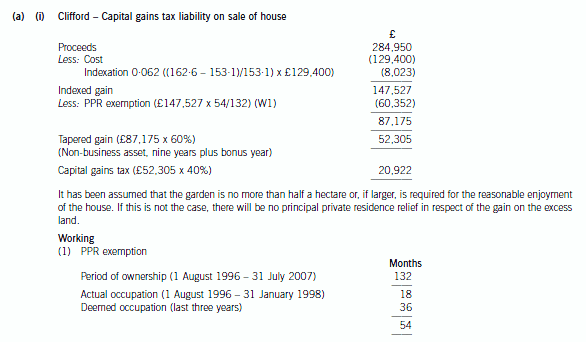
-
第5题:
3 Palm plc recently acquired 100% of the ordinary share capital of Nikau Ltd from Facet Ltd. Palm plc intends to use
Nikau Ltd to develop a new product range, under the name ‘Project Sabal’. Nikau Ltd owns shares in a non-UK
resident company, Date Inc.
The following information has been extracted from client files and from a meeting with the Finance Director of Palm
plc.
Palm plc:
– Has more than 40 wholly owned subsidiaries such that all group companies pay corporation tax at 30%.
– All group companies prepare accounts to 31 March.
– Acquired Nikau Ltd on 1 November 2007 from Facet Ltd, an unrelated company.
Nikau Ltd:
– UK resident company that manufactures domestic electronic appliances for sale in the European Union (EU).
– Large enterprise for the purposes of the enhanced relief available for research and development expenditure.
– Trading losses brought forward as at 1 April 2007 of £195,700.
– Budgeted taxable trading profit of £360,000 for the year ending 31 March 2008 before taking account of ‘Project
Sabal’.
– Dividend income of £38,200 will be received in the year ending 31 March 2008 in respect of the shares in Date
Inc.
‘Project Sabal’:
– Development of a range of electronic appliances, for sale in North America.
– Project Sabal will represent a significant advance in the technology of domestic appliances.
– Nikau Ltd will spend £70,000 on staffing costs and consumables researching and developing the necessary
technology between now and 31 March 2008. Further costs will be incurred in the following year.
– Sales to North America will commence in 2009 and are expected to generate significant profits from that year.
Shares in Date Inc:
– Nikau Ltd owns 35% of the ordinary share capital of Date Inc.
– The shares were purchased from Facet Ltd on 1 June 2003 for their market value of £338,000.
– The sale was a no gain, no loss transfer for the purposes of corporation tax.
– Facet Ltd purchased the shares in Date Inc on 1 March 1994 for £137,000.
Date Inc:
– A controlled foreign company resident in the country of Palladia.
– Annual chargeable profits arising out of property investment activities are approximately £120,000, of which
approximately £115,000 is distributed to its shareholders each year.
The tax system in Palladia:
– No taxes on income or capital profits.
– 4% withholding tax on dividends paid to shareholders resident outside Palladia.
Required:
(a) Prepare detailed explanatory notes, including relevant supporting calculations, on the effect of the following
issues on the amount of corporation tax payable by Nikau Ltd for the year ending 31 March 2008.
(i) The costs of developing ‘Project Sabal’ and the significant commercial changes to the company’s
activities arising out of its implementation. (8 marks)
正确答案:
(a) Nikau Ltd – Effect on corporation tax payable for the year ending 31 March 2008
(i) Project Sabal
Research and development expenditure
The expenditure incurred in respect of research and development will give rise to an enhanced deduction for the
purposes of computing the taxable trading profits of Nikau Ltd. The enhanced deduction is 125% of the qualifying
expenditure as Nikau Ltd is a large enterprise for this purpose.
The expenditure will reduce the profits chargeable to corporation tax of Nikau Ltd by £87,500 (£70,000 x 1·25) and
its corporation tax liability by £26,250 (£87,500 x 30%).
The budgeted expenditure will qualify for the enhanced deduction because it appears to satisfy the following conditions.
– It is likely to qualify as research and development expenditure within generally accepted accounting principles as
it will result in new technical knowledge and the production of a substantially improved device for use in the
industry.
– It exceeds £10,000 in Nikau Ltd’s accounting period.
– It relates to staff costs, consumable items or other qualifying expenditure as opposed to capital items.
– It will result in further trading activities for Nikau Ltd.
Use of brought forward trading losses
The development of products for the North American market is likely to represent a major change in the nature and
conduct of the trade of Nikau Ltd. This is because the company is developing new products and intends to sell them in
a new market. It is a major change as sales to North America are expected to generate significant additional profits.
Because this change will occur within three years of the change in the ownership of Nikau Ltd on 1 November 2007,
any trading losses arising prior to that date cannot be carried forward beyond that date.
Accordingly, the trading losses brought forward may only be offset against £158,958 ((£360,000 – £87,500) x 7/12)
of the company’s trading profits for the year. The remainder of the trading losses £36,742 (£195,700 – £158,958) will
be lost resulting in lost tax relief of £11,023 (£36,742 x 30%).
Tutorial note
The profits for the year ending 31 March 2008 will be apportioned to the periods pre and post 1 November 2007 on
either a time basis or some other basis that is just and reasonable. -
第6题:
The country has ______people and ______money ______spent on tobacco every year.
A. a large quantity of, a number of, are
B. plenty of, a great deal, are
C. a great deal of, plenty of, is
D. a large number of, a large amount of, is
正确答案:D
10.答案为D 参考译文:这个国家有很多人并且每年把大量的金钱花费在烟草上。此题考查名词的数。“人民”是可数名词,可以用a large number of或a number of修饰。“金钱”是不可数名词,作主语时为单数,可以用a large amount of或a great deal of以及a large quantity of和plenty of等短语修饰。 -
第7题:
Mr. Henley has acceleratedhis sale of shares over the past year.A:held
B:expected
C:offered
D:increased答案:D解析:本句意思:Mr.Henley在过去的几年里增加了他的售出股份。accelerate作及物动词,意 为“使增速”,increase与其意思最接近。 -
第8题:
泡点进料的表示方法有()
- A、£>1
- B、£=1
- C、0<£<1
- D、£=0
正确答案:B -
第9题:
单选题How much did the computer game cost?A£24
B£30
C£48
正确答案: C解析: 女士提到当天她买了两个电子游戏机共花了48英镑,因此一台电子游戏机是24英镑。
【录音原文】
Conversation Two
W: Hi, Mark. What are you doing?
M: Hi, Jenny. Shopping for a present for my little brother.
W: I bought my brother a computer game called City 2010. He plays with it for hours.
M: How old is he?
W: 10.
M: Oh, my brother is 12.
W: That’s Ok. This game is good for 8-13 year olds.
M: Great. Where did you buy it?
W: In Black’s PC shop. I looked everywhere in Cambridge and Peterstown. But in the end, I have to go to a shop in London.
M: Where is the shop?
W: In Marsden Street. You know Hunter Road? Turn left at the end, and its opposite worker’s department store at Number 30.
M: I can go there next Thursday.
W: That’s good. Next week from Monday to Friday, you get a second game free.
M: Great! How much was your brother’s game?
W: I bought two games that day and paid 48 pounds altogether. So my brother’s game was 24 pounds.
M: Oh, less than 30. That’s not bad. Thanks, Jenny. -
第10题:
判断题A Club member pays £2.5 for a year’s membership.A对
B错
正确答案: 错解析: 依据第三段第一句,两年的会费为五英镑,因此一年为2.5英镑。 -
第11题:
单选题How much must Michael pay a year to be a member of the sports center?A£14
B£30
C£50
正确答案: A解析:
在被问到收费标准时,女孩指出“15到18岁的人会费为一年50英镑,15岁以下的人会费为一年30英镑”,接着Michael提到”…that’s good because I’m still 14”,可见他若想成为该体育中心的会员,一年必须缴纳30英镑。 -
第12题:
单选题The management have spent the whole day discussing the schedule of the meeting______next year.Ahold
Bheld
Cto hold
Dto be held
正确答案: A解析: -
第13题:
(ii) Assuming that Donald operates through a company, advise Donald on the corporation tax (CT) that
would be payable for the year ended 31 March 2007 if he pays himself a gross salary of £31,000, plus
a net dividend of £10,000, instead of a gross salary of £42,648. (4 marks)
正确答案: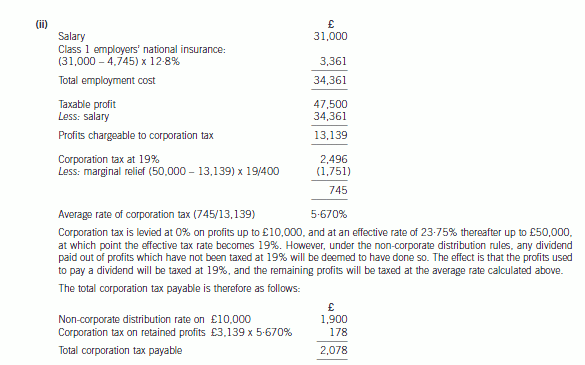
-
第14题:
6 Alasdair, aged 42, is single. He is considering investing in property, as he has heard that this represents a good
investment. In order to raise the funds to buy the property, he wants to extract cash from his personal company, Beezer
Limited, whose year end is 31 December.
Beezer Limited was formed on 1 May 1998 with £1,000 of capital issued as 1,000 £1 ordinary shares, and traded
until 1 January 2005 when Alasdair sold the trade and related assets. The company’s only asset is cash of
£120,000. Alasdair wants to extract this cash from the company with the minimum amount of tax payable. He is
considering either, paying himself a dividend of £120,000, on 31 March 2006, after which the company would have
no assets and be wound up or, leaving the cash in the company and then liquidating the company. Costs of liquidation
of £5,000 would then be incurred.
Since Beezer Limited ceased trading, Alasdair has been taken on as a partner at a marketing firm, Gallus & Co. He
estimates his profit share for the year of assessment 2005/06 will be £30,000. He has not made any capital disposals
in the current tax year.
Alasdair wishes to reinvest the cash extracted from Beezer Limited in property but is not sure whether he should invest
directly in residential or commercial property, or do so via some form. of collective investment. He is aware that Gallus
& Co are looking to rent a new warehouse which could be bought for £200,000. Alasdair thinks that he may be able
to buy the warehouse himself and lease it to his firm, but only if he can borrow the additional money to buy the
property.
Alasdair has a 25% shareholding in another company, Glaikit Limited, whose year end is 31 March. The remaining
shares in this company are held by his friend, Gill. Alasdair is considering borrowing £15,000 from Glaikit Limited
on 1 January 2006. He does not intend to pay any interest on the loan, which is likely to be written off some time
in 2007. Alasdair does not have any connection with Glaikit Limited other than his shareholding.
Required:
(a) Advise Alasdair whether or not a dividend payment will result in a higher after-tax cash sum than the
liquidation of Beezer Limited. Assume that either the dividend would be paid on 31 March 2006 or the
liquidation would take place on 31 March 2006. (9 marks)
Assume that Beezer Limited has always paid corporation tax at or above the small companies rate of 19%
and that the tax rates and allowances for 2004/05 apply throughout this part.
正确答案: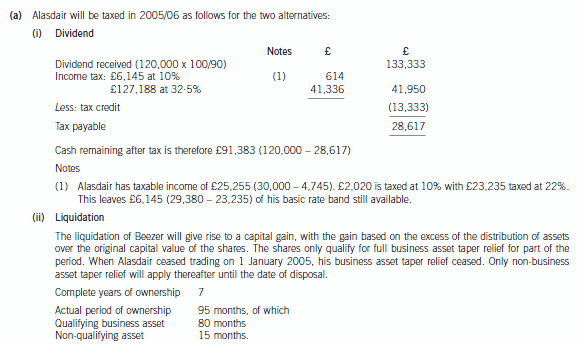
-
第15题:
3 On 1 January 2007 Dovedale Ltd, a company with no subsidiaries, intends to purchase 65% of the ordinary share
capital of Hira Ltd from Belgrove Ltd. Belgrove Ltd currently owns 100% of the share capital of Hira Ltd and has no
other subsidiaries. All three companies have their head offices in the UK and are UK resident.
Hira Ltd had trading losses brought forward, as at 1 April 2006, of £18,600 and no income or gains against which
to offset losses in the year ended 31 March 2006. In the year ending 31 March 2007 the company expects to make
further tax adjusted trading losses of £55,000 before deduction of capital allowances, and to have no other income
or gains. The tax written down value of Hira Ltd’s plant and machinery as at 31 March 2006 was £96,000 and
there will be no fixed asset additions or disposals in the year ending 31 March 2007. In the year ending 31 March
2008 a small tax adjusted trading loss is anticipated. Hira Ltd will surrender the maximum possible trading losses
to Belgrove Ltd and Dovedale Ltd.
The tax adjusted trading profit of Dovedale Ltd for the year ending 31 March 2007 is expected to be £875,000 and
to continue at this level in the future. The profits chargeable to corporation tax of Belgrove Ltd are expected to be
£38,000 for the year ending 31 March 2007 and to increase in the future.
On 1 February 2007 Dovedale Ltd will sell a small office building to Hira Ltd for its market value of £234,000.
Dovedale Ltd purchased the building in March 2005 for £210,000. In October 2004 Dovedale Ltd sold a factory
for £277,450 making a capital gain of £84,217. A claim was made to roll over the gain on the sale of the factory
against the acquisition cost of the office building.
On 1 April 2007 Dovedale Ltd intends to acquire the whole of the ordinary share capital of Atapo Inc, an unquoted
company resident in the country of Morovia. Atapo Inc sells components to Dovedale Ltd as well as to other
companies in Morovia and around the world.
It is estimated that Atapo Inc will make a profit before tax of £160,000 in the year ending 31 March 2008 and will
pay a dividend to Dovedale Ltd of £105,000. It can be assumed that Atapo Inc’s taxable profits are equal to its profit
before tax. The rate of corporation tax in Morovia is 9%. There is a withholding tax of 3% on dividends paid to
non-Morovian resident shareholders. There is no double tax agreement between the UK and Morovia.
Required:
(a) Advise Belgrove Ltd of any capital gains that may arise as a result of the sale of the shares in Hira Ltd. You
are not required to calculate any capital gains in this part of the question. (4 marks)
正确答案:
(a) Capital gains that may arise on the sale by Belgrove Ltd of shares in Hira Ltd
Belgrove Ltd will realise a capital gain on the sale of the shares unless the substantial shareholding exemption applies. The
exemption will be given automatically provided all of the following conditions are satisfied.
– Belgrove Ltd has owned at least 10% of Hira Ltd for a minimum of 12 months during the two years prior to the sale.
– Belgrove Ltd is a trading company or a member of a trading group during that 12-month period and immediately after
the sale.
– Hira Ltd is a trading company or the holding company of a trading group during that 12-month period and immediately
after the sale.
Hira Ltd will no longer be in a capital gains group with Belgrove Ltd after the sale. Accordingly, a capital gain, known as a
degrouping charge, may arise in Hira Ltd. A degrouping charge will arise if, at the time it leaves the Belgrove Ltd group, Hira
Ltd owns any capital assets which were transferred to it at no gain, no loss within the previous six years by a member of the
Belgrove Ltd capital gains group. -
第16题:
6 Sergio and Gerard each inherited a half interest in a property, ‘Hilltop’, in October 2005. ‘Hilltop’ had a probate value
of £124,000, but in November 2005 it was badly damaged by fire. In January 2006 the insurance company made
a payment of £81,700 each to Sergio and Gerard. In February 2006 Sergio and Gerard each spent £55,500 of the
insurance proceeds on restoring the property. ‘Hilltop’ was worth £269,000 following the restoration work. In July
2006, Sergio and Gerard sold ‘Hilltop’ for £310,000.
Sergio is 69 years old and a widower with three adult children and seven grandchildren. His annual income consists
of a pension of £9,900 and interest of £300 on savings of £7,600 in a bank deposit account. Sergio owns his home
but no other significant assets. He plans to buy a domestic rental property with the proceeds from the sale of ‘Hilltop’,
such that on his death he will have a significant asset which can be sold and divided between the members of his
family.
Gerard is 34 years old. He is employed by Fizz plc on a salary of £66,500 per year together with a performance
related bonus. Gerard estimates that he will receive a bonus in December 2007 of £4,500, in line with previous
years, and that his taxable benefits in the tax year 2007/08 will amount to £7,140. He also expects to receive
dividends from UK companies of £1,935 and bank interest of £648 in the tax year 2007/08. Gerard intends to set
up a personal pension plan in August 2007. He has not made any pension contributions in the past and proposes to
use part of the proceeds from the sale of ‘Hilltop’ to make the maximum possible tax allowable contribution.
Fizz plc has announced that it intends to replace the performance related bonus scheme with a share incentive plan,
also linked to performance, with effect from 6 April 2008. Gerard estimates that Fizz plc will award him free shares
worth £2,100 each year. He will also purchase partnership shares worth £700 each year and, as a result, will be
awarded matching shares (further free shares) worth £1,400.
Required:
(a) Calculate the chargeable gains arising on the receipt of the insurance proceeds in January 2006 and the sale
of ‘Hilltop’ in July 2006. You should assume that any elections necessary to minimise the gain on the receipt
of the insurance proceeds have been submitted. (4 marks)
正确答案: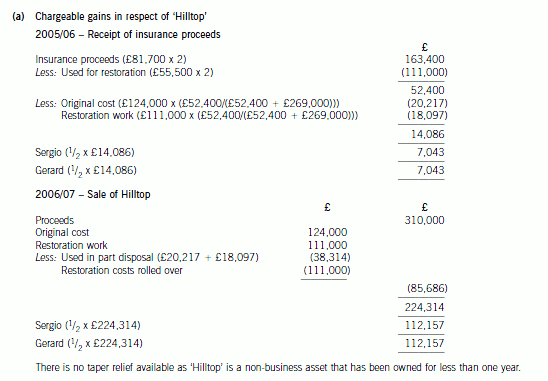
-
第17题:
5 Crusoe has contacted you following the death of his father, Noland. Crusoe has inherited the whole of his father’s
estate and is seeking advice on his father’s capital gains tax position and the payment of inheritance tax following his
death.
The following information has been extracted from client files and from telephone conversations with Crusoe.
Noland – personal information:
– Divorcee whose only other relatives are his sister, Avril, and two grandchildren.
– Died suddenly on 1 October 2007 without having made a will.
– Under the laws of intestacy, the whole of his estate passes to Crusoe.
Noland – income tax and capital gains tax:
– Has been a basic rate taxpayer since the tax year 2000/01.
– Sales of quoted shares resulted in:
– Chargeable gains of £7,100 and allowable losses of £17,800 in the tax year 2007/08.
– Chargeable gains of approximately £14,000 each tax year from 2000/01 to 2006/07.
– None of the shares were held for long enough to qualify for taper relief.
Noland – gifts made during lifetime:
– On 1 December 1999 Noland gave his house to Crusoe.
– Crusoe has allowed Noland to continue living in the house and has charged him rent of £120 per month
since 1 December 1999. The market rent for the house would be £740 per month.
– The house was worth £240,000 at the time of the gift and £310,000 on 1 October 2007.
– On 1 November 2004 Noland transferred quoted shares worth £232,000 to a discretionary trust for the benefit
of his grandchildren.
Noland – probate values of assets held at death: £
– Portfolio of quoted shares 370,000
Shares in Kurb Ltd 38,400
Chattels and cash 22,300
Domestic liabilities including income tax payable (1,900)
– It should be assumed that these values will not change for the foreseeable future.
Kurb Ltd:
– Unquoted trading company
– Noland purchased the shares on 1 December 2005.
Crusoe:
– Long-standing personal tax client of your firm.
– Married with two young children.
– Successful investment banker with very high net worth.
– Intends to gift the portfolio of quoted shares inherited from Noland to his aunt, Avril, who has very little personal
wealth.
Required:
(a) Prepare explanatory notes together with relevant supporting calculations in order to quantify the tax relief
potentially available in respect of Noland’s capital losses realised in 2007/08. (4 marks)
正确答案: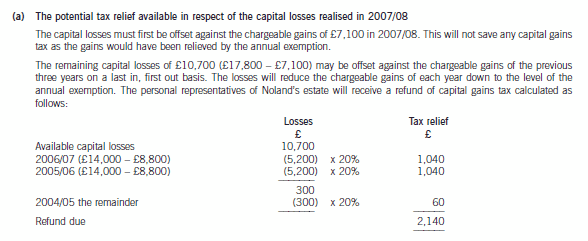
-
第18题:
Mr. Henley has accelerated his sale of shares over the past year.A: held
B: increased
C: expected
D: offered答案:B解析:题干意为“在过去的一年,亨利先生快速地抛售了他的股票。” 句中划线词意为“加速”。B项increase意为“增加”。例句:Rising prices neutralized in-creased wages.上涨的物价抵消了增加的工资。A项意为“拥有”,C项expect意为“预料”。 D项offer意为“提供”。故选B。 -
第19题:
The beautiful mountain village__________ we spent our holiday last year is locatedin __________ is now part of Guangxi.A.which ; where
B.where; what
C.that ; what
D.when ; which答案:B解析:where在此充当地点状语,what既充当located in的宾语又充当is的主语,本题考查定语从句和名词性从句。mountain village在定语从句we spent our holiday last year作地点状语,故用关系副词where:第二个考查宾语从句,从句中缺少主语,故用what作主语。故选B。 -
第20题:
单选题A£7.5.
B£6.
C£12.
D£15.
正确答案: A解析:
对话中提到Guitarrini的票每张7.5英镑。他们一共需要买两张票,因此他们共需要出15英镑。 -
第21题:
单选题The management has spent the whole day discussing the schedule of the meeting _____ next year.Ahold
Bheld
Cto hold
Dto be held
正确答案: D解析:
句意:管理层花了一整天讨论明年举行会议的时间。考查非谓语动词的被动语态。to be held表示“将要被举行”。to do表示将来发生的动作,会议与举行这个动作是被动的关系,因此要用被动态,答案选D。 -
第22题:
填空题Tom spent 4 hours buying New Year gifts.→ It ____ Tom 4 hours buying New Year gifts.正确答案: took解析:
本题为语义转换题,要求考生将“sb.+ spend+ sth.+(in)doing sth.”结构转换成“it+ take+ sb.+ sth.+ doing sth.”结构。转换后的结构中,it作形式主语放在句首,take表示“花费”。原句中的spent是spend的一般过去式,因此也应使用take的一般过去式took。 -
第23题:
单选题How much should you at least pay if your family (five persons, including an elderly person, two adults and the ten-year-old twins) visit the park? ______A£24.50.
B£25.50.
C£26.50.
D£27.50.
正确答案: D解析:
逻辑计算题。本题需要简单计算。题目中问的是最少付多少钱。根据表格内容可知,他们可以买家庭票(两个大人+两个小孩),20英镑,然后再买一张老年人票5.5英镑,因此他们最少只需付25.5英镑,故选B项。