
The population decreased from the 1840s until about 1970,largely because of().A、a low birth rateB、a high death rateC、a low employment rateD、a high emigration rate
题目
The population decreased from the 1840s until about 1970,largely because of().
- A、a low birth rate
- B、a high death rate
- C、a low employment rate
- D、a high emigration rate
相似考题
更多“The population decreased from the 1840s until about 1970,largely because of().A、a low birth rateB、a high death rateC、a low employment rateD、a high emigration rate”相关问题
-
第1题:
According to the text, which benefit CANNOT Wal-Mart bring to the society?( )
[A] Low paying jobs.
[B] Low prices.
[C] High profits.
[D] High employment insurance enrollment.
正确答案:D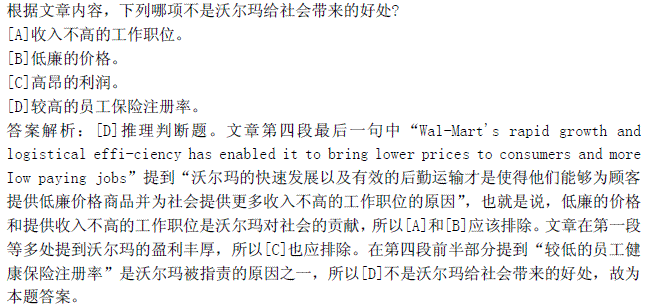
-
第2题:
The meaning of ebb tide is that ______.
A.tide is falling from high water to low water
B.tide is rising from low water to high water
C.tide is reaching to a highest level
D.tide is reaching to a lowest level
正确答案:A
-
第3题:
在INTELSAT的SSOG308中R就是()。A.INFORMATION RATE
B.OVERHEAD RATE
C.COMPOSITE RATE
D.TANSMISSION RATE
参考答案:D
-
第4题:
共用题干
第二篇
In many of the developinlg countries in Africa and Asia,the population is growing fast.The reason for this is simple:Women in these countries have a high birth rate一from 3.0 to 7.0 children per woman.The majority of these women are poor,without the food or resources to care for their families.Why do they have so many children?Why don't they limit the size of the family?The answer may be that they often have no choice.There are several reasons for this.
One reason is economic.In a traditional agricultural economy,large families are helpful.Having more children means having more workers in the fields and someone to take care of the parents in old age.In an industrial economy,the situation is different. Many children do not help a family;instead,they are an expense.Thus,industrialization has generally brought down the birth rate.This was the case in Italy,which was industrialized quite recently and rapidly.In the early part of the twentieth century,Italy was a poor,largely agricultural country with a high birth rate.After World War Ⅱ,Italy's economy was rapidly modernized and industrialized.By the end of the century,the birth rate had dropped to 1.3 children per woman,the world's lowest.
However,the economy is not the only important factor that influences birth rate.Saudi Arabia, for example,does not have an agriculture-based economy,and it has one of the highest per capita incomes in the world.Nevertheless,it also has a very high birth rate(7.0).Mexico and Indonesia, on the other hand,are poor countries,with largely agricultural economies,but they have recently reduced their population growth.
Clearly,other factors are involved.The most important of these is the condition of women.A high birth rate almost always goes together with lack of education and low status for women.This would explain the high birth rate of Saudi Arabia.There,the traditional culture gives women little education or independence and few possibilities outside the home.On the other hand,the improved condition of womnen in Mexico,Thailand,and Indonesia explains the decline in birth rates in these countries.Their governments have taken measures to provide more education and opportunities for women.
Another key factor in the birth rate is birth control.Women may want to limit their families but have no way to do so. In countries where governments have made birth control easily available and inexpensive ,birth rates have gone down.This is the case in Singapore,Sri Lanka,and India,as well as in Indonesia,Thailand,Mexico,and Brazil.In these countries,women have also been provided with health care and help in planning their families.
These trends show that an effective programn to reduce population growth does not have to depend on better economic conditions. It can be effective if it aims to help women and meet theii needs.Only then,in fact,does it have any real chance of success.In a traditional agricultural economy,a large family_________.
A:can be an advantage
B:may limit income
C:isn't necessary
D:is expensive答案:A解析:根据文章第二段我们知道“在传统的农业经济中,家庭成员多是十分有利的。孩子多就意味着田里的劳动力多,而且有人给父母养老”。因此选项A是正确的。
文章第二段以意大利为例证明了国家工业化以后,人口出生率就会降低的观点。因此只有选项B是正确的。
文章第二段的叙述说明如今的意大利是一个工业化、低出生率的国家。因此选项C是正确的。
文章第三段第一句话告诉我们经济并不是唯一影响出生率的重要因素,这暗示了接下来会讲一些其他影响出生率的因素。文章以沙特阿拉伯为例就是为了证明这一点。因此选项B是正确的。
文章第四段后半部分讲到这些国家的政府采取措施为妇女提供更多的教育和机会来改善妇女的生活状况。因此选项D是正确的。 -
第5题:
共用题干
第一篇
Why So Many Children
In many of the developing countries in Africa and Asia,the population is growing fast.The reason for
this is simple.Women in these countries have a high birth rate一from 3.0 to 7.0 children per woman.The
majority of these women are poor,without the food or resources to care for their families.Why do they have so
many children?Why don't they limit the size of their families?There are several reasons for this.
One reason is economic.In a traditional agricultural economy,large families are helpful.Having more
children means having more workers in the fields and someone to take care of the parents in old age.In an
industrial economy,the situation is different.Many children do not help a family;instead,they are an ex-
pense.Thus,industrialization has generally brought down the birth rate.This was the case in Italy,which was
industrialized quite recently and rapidly.In the early part of the twentieth century,Italy was a poor,largely
agricultural country with a high birth rate.After World War II,Italy's economy was rapidly modernized and
industrialized. By the end of the century,the birth rate had dropped to 1.3 children per woman,the world's lowest.
However,the economy is not the only important factor that influences birth rate.Saudi Arabia,for exam-
pie,does not have an agriculture-based economy,and it has one of the highest per capita incomes in the
world.Nevertheless,it also has a very high birth rate(7.0).Mexico and Indonesia,on the other hand,are
poor countries,with largely agricultural economies,but they have recently reduced their population growth.
Clearly,other factors are involved.The most important of these is the condition of women.A high birth
rate almost always goes together with lack of education and low status for women.This would explain the high
birth rate of Saudi Arabia.There,the traditional culture gives women little education or independence and few
possibilities outside the home.On the other hand,the improved condition of women in Mexico,Thailand,and
indonesia explains the decline in birth rates in these countries.Their governments have taken measures to
provide more education and opportunities for women.
Another key factor in the birth rate is birth control.Women may want to limit their families but have no
way to do so.In countries where governments have made birth control easily available and inexpensive,birth
rates have gone down.This is the case in Singapore,Sri Lanka,and India,as well as in Indonesia,Thailand,
Mexico,and Brazil.In these countries,women have also been provided with health care and help in planning
their families.These trends show that an effective program to reduce population growth does not have to de-
pend on better economic conditions.When countries become industrialized,_________.
A:the birth rate generally goes down
B:families often become larger
C:women usually decide not to have a family
D:the population generally grows rapidly答案:A解析:由文章第二段第二、三句话“In a traditional agricultural economy, large families are help-ful.Having more children means having more workers in the fields and someone to take care of theparents in old age.”可知,在传统的农业经济中,家庭成员多是一种优势。故选B。
由文章第二段第六句话“Thus , industrialization has generally brought down the birth rate.”可知,当一个国家工业化后,其人口出生率就降低了。故选A。
由文章第二段的内容可知,意大利工业化后,其人口出生率就降低了,是低人口出生率的工业化国家的一个例子。故选C。
文章第三段的第一句提到“However, the economy is not the only important factor thatinfluences birth rate.",下面以沙特阿拉伯为例介绍了除经济以外影响出生率的因素。故选D。
由文章第四段后半部分“On the other hand, the improved condition of women in Mexico, Thailand,and Indonesia explains the decline in birth rates in these countries.Their governments have taken measures to provide more education and opportunities for women.”可知,墨西哥、泰国和 印度尼西亚的政府都已采取措施改善女性的境况。 -
第6题:
共用题干
第一篇
Why So Many Children
In many of the developing countries in Africa and Asia,the population is growing fast.The reason for
this is simple.Women in these countries have a high birth rate一from 3.0 to 7.0 children per woman.The
majority of these women are poor,without the food or resources to care for their families.Why do they have so
many children?Why don't they limit the size of their families?There are several reasons for this.
One reason is economic.In a traditional agricultural economy,large families are helpful.Having more
children means having more workers in the fields and someone to take care of the parents in old age.In an
industrial economy,the situation is different.Many children do not help a family;instead,they are an ex-
pense.Thus,industrialization has generally brought down the birth rate.This was the case in Italy,which was
industrialized quite recently and rapidly.In the early part of the twentieth century,Italy was a poor,largely
agricultural country with a high birth rate.After World War II,Italy's economy was rapidly modernized and
industrialized. By the end of the century,the birth rate had dropped to 1.3 children per woman,the world's lowest.
However,the economy is not the only important factor that influences birth rate.Saudi Arabia,for exam-
pie,does not have an agriculture-based economy,and it has one of the highest per capita incomes in the
world.Nevertheless,it also has a very high birth rate(7.0).Mexico and Indonesia,on the other hand,are
poor countries,with largely agricultural economies,but they have recently reduced their population growth.
Clearly,other factors are involved.The most important of these is the condition of women.A high birth
rate almost always goes together with lack of education and low status for women.This would explain the high
birth rate of Saudi Arabia.There,the traditional culture gives women little education or independence and few
possibilities outside the home.On the other hand,the improved condition of women in Mexico,Thailand,and
indonesia explains the decline in birth rates in these countries.Their governments have taken measures to
provide more education and opportunities for women.
Another key factor in the birth rate is birth control.Women may want to limit their families but have no
way to do so.In countries where governments have made birth control easily available and inexpensive,birth
rates have gone down.This is the case in Singapore,Sri Lanka,and India,as well as in Indonesia,Thailand,
Mexico,and Brazil.In these countries,women have also been provided with health care and help in planning
their families.These trends show that an effective program to reduce population growth does not have to de-
pend on better economic conditions.In Mexico,as in Thailand and Indonesia,the government_________.
A:is not concerned about the status of women
B:has tried to improve the condition of women
C:has tried to industrialize the country rapidly
D:does not allow women to work outside the home答案:B解析:由文章第二段第二、三句话“In a traditional agricultural economy, large families are help-ful.Having more children means having more workers in the fields and someone to take care of theparents in old age.”可知,在传统的农业经济中,家庭成员多是一种优势。故选B。
由文章第二段第六句话“Thus , industrialization has generally brought down the birth rate.”可知,当一个国家工业化后,其人口出生率就降低了。故选A。
由文章第二段的内容可知,意大利工业化后,其人口出生率就降低了,是低人口出生率的工业化国家的一个例子。故选C。
文章第三段的第一句提到“However, the economy is not the only important factor thatinfluences birth rate.",下面以沙特阿拉伯为例介绍了除经济以外影响出生率的因素。故选D。
由文章第四段后半部分“On the other hand, the improved condition of women in Mexico, Thailand,and Indonesia explains the decline in birth rates in these countries.Their governments have taken measures to provide more education and opportunities for women.”可知,墨西哥、泰国和 印度尼西亚的政府都已采取措施改善女性的境况。 -
第7题:
The population decreased from the 1840s until about 1970,largely because of().
Aa low birth rate
Ba high death rate
Ca low employment rate
Da high emigration rate
D
略 -
第8题:
Consolidation can benefit all concerned.For exporters and shippers, they get the benefit of()than they would have normally paid to the carrier.
- A、a lower rate
- B、a wholesale rate
- C、a low rate
- D、an inexpensive rate
正确答案:A -
第9题:
单选题The population decreased from the 1840s until about 1970,largely because of().Aa low birth rate
Ba high death rate
Ca low employment rate
Da high emigration rate
正确答案: D解析: 暂无解析 -
第10题:
单选题Passage1 In many of the developing countries in Africaand Asia, the population is growing fast. The reason for this is simple: Womenin these countries have a high birth rate - from 3.0 to 7.0 children per woman.The majority of these women are poor, without the food or resources to care fortheir families. Why do they have so many children? Why don't they limit thesize of their families? The answer may be that they often have no choice. Thereare several reasons for this. Onereason is economiIn atraditional agricultural economy, large families are helpful. Having morechildren means having more workers in the fields and someone to take care ofthe parents in old age. In an industrial economy, the situation is different.Many children, do not help a family; instead, they are an expense. Thus,industrialization has generally brought down the birth rate. This was the casein Italy, which was industrialized quite recently and rapidly. In the earlypart of the twentieth century, Italy was a poor, largely agricultural countrywith a high birth rate. After World WarⅡ, Italy's economy was rapidly modernized and industrializeBy theend of the century, the birth rate had dropped to 1. 3 children per woman, theworld's lowest.However,the economy is not the only important factor that influences birth rate. SaudiArabia, for example, does not have an agriculture-based economy, and it has oneof the highest per capita incomes in the worlNevertheless,it also has a very high birth rate. Mexico and Indonesia, on the other hand,are poor countries, with largely agricultural economies, but they have recentlyreduced their population growth. Clearly,other factors are involveThemost important of these is the condition of women. A high birth rate almostalways goes together with lack of education and low status for women. Thiswould explain the high birth rate of Saudi Arabia. There, the traditionalculture gives women little education or independence and few possibilitiesoutside the home. On the other hand, the improved condition of women in Mexico,Thailand, and Indonesia explains the decline in birth rates in these countries.Their governments have taken measures to provide more education andopportunities for women. Anotherkey factor in the birth rate is birth control. Women may want to limit theirfamilies but have no way to do so. In countries where governments have madebirth control easily available and inexpensive, birth rates have gone down.This is the case in Singapore, Sri Lanka, and India, as well as in Indonesia,Thailand, Mexico, and Brazil. In these countries, women have also been providedwith health care and help in planning their families. Thesetrends show that an effective program to reduce population growth does not haveto depend on better economic conditions.3 It can be effective if it aims tohelp women and meet their needs. Only then, in fact, does it have any realchance of success. (495 words) According to this passage, Italy today is an example of an _______.Aagricultural country with a high birth rate
Bagricultural country with a low birth rate
Cindustrialized country with a low birth rate
Dindustrialized country with a high birth rate
正确答案: B解析: -
第11题:
单选题Passage1 In many of the developing countries in Africaand Asia, the population is growing fast. The reason for this is simple: Womenin these countries have a high birth rate - from 3.0 to 7.0 children per woman.The majority of these women are poor, without the food or resources to care fortheir families. Why do they have so many children? Why don't they limit thesize of their families? The answer may be that they often have no choice. Thereare several reasons for this. Onereason is economiIn atraditional agricultural economy, large families are helpful. Having morechildren means having more workers in the fields and someone to take care ofthe parents in old age. In an industrial economy, the situation is different.Many children, do not help a family; instead, they are an expense. Thus,industrialization has generally brought down the birth rate. This was the casein Italy, which was industrialized quite recently and rapidly. In the earlypart of the twentieth century, Italy was a poor, largely agricultural countrywith a high birth rate. After World WarⅡ, Italy's economy was rapidly modernized and industrializeBy theend of the century, the birth rate had dropped to 1. 3 children per woman, theworld's lowest.However,the economy is not the only important factor that influences birth rate. SaudiArabia, for example, does not have an agriculture-based economy, and it has oneof the highest per capita incomes in the worlNevertheless,it also has a very high birth rate. Mexico and Indonesia, on the other hand,are poor countries, with largely agricultural economies, but they have recentlyreduced their population growth. Clearly,other factors are involveThemost important of these is the condition of women. A high birth rate almostalways goes together with lack of education and low status for women. Thiswould explain the high birth rate of Saudi Arabia. There, the traditionalculture gives women little education or independence and few possibilitiesoutside the home. On the other hand, the improved condition of women in Mexico,Thailand, and Indonesia explains the decline in birth rates in these countries.Their governments have taken measures to provide more education andopportunities for women. Anotherkey factor in the birth rate is birth control. Women may want to limit theirfamilies but have no way to do so. In countries where governments have madebirth control easily available and inexpensive, birth rates have gone down.This is the case in Singapore, Sri Lanka, and India, as well as in Indonesia,Thailand, Mexico, and Brazil. In these countries, women have also been providedwith health care and help in planning their families. Thesetrends show that an effective program to reduce population growth does not haveto depend on better economic conditions.3 It can be effective if it aims tohelp women and meet their needs. Only then, in fact, does it have any realchance of success. (495 words) When countries become industrialized, _______.Afamilies often become larger
Bthe birth rate generally goes down
Cwomen usually decide not have a family
Dthe population generally grows rapidly
正确答案: A解析: -
第12题:
单选题The direction of the surface wind is().Adirectly from high pressure toward low pressure
Bdirectly from low pressure toward high pressure
Cfrom high pressure toward low pressure deflected by the earth's rotation
Dfrom low pressure toward high pressure deflected by the earth's rotation
正确答案: C解析: 暂无解析 -
第13题:
A high rate of separation between oil and water is favored by ______.
A.large size of oil globule(小球)
B.low temperature
C.high viscosity
D.high flow rate
正确答案:A
-
第14题:
Every vent system outlet to atmosphere from a valve shall be located as high and at the furthest distance from a source of ignition as is practicable ______.
A.low and at the shortest distance
B.low and at the furthest distance
C.high and at the shortest distance
D.high and at the furthest distance
正确答案:D
-
第15题:
共用题干
第二篇
In many of the developinlg countries in Africa and Asia,the population is growing fast.The reason for this is simple:Women in these countries have a high birth rate一from 3.0 to 7.0 children per woman.The majority of these women are poor,without the food or resources to care for their families.Why do they have so many children?Why don't they limit the size of the family?The answer may be that they often have no choice.There are several reasons for this.
One reason is economic.In a traditional agricultural economy,large families are helpful.Having more children means having more workers in the fields and someone to take care of the parents in old age.In an industrial economy,the situation is different. Many children do not help a family;instead,they are an expense.Thus,industrialization has generally brought down the birth rate.This was the case in Italy,which was industrialized quite recently and rapidly.In the early part of the twentieth century,Italy was a poor,largely agricultural country with a high birth rate.After World War Ⅱ,Italy's economy was rapidly modernized and industrialized.By the end of the century,the birth rate had dropped to 1.3 children per woman,the world's lowest.
However,the economy is not the only important factor that influences birth rate.Saudi Arabia, for example,does not have an agriculture-based economy,and it has one of the highest per capita incomes in the world.Nevertheless,it also has a very high birth rate(7.0).Mexico and Indonesia, on the other hand,are poor countries,with largely agricultural economies,but they have recently reduced their population growth.
Clearly,other factors are involved.The most important of these is the condition of women.A high birth rate almost always goes together with lack of education and low status for women.This would explain the high birth rate of Saudi Arabia.There,the traditional culture gives women little education or independence and few possibilities outside the home.On the other hand,the improved condition of womnen in Mexico,Thailand,and Indonesia explains the decline in birth rates in these countries.Their governments have taken measures to provide more education and opportunities for women.
Another key factor in the birth rate is birth control.Women may want to limit their families but have no way to do so. In countries where governments have made birth control easily available and inexpensive ,birth rates have gone down.This is the case in Singapore,Sri Lanka,and India,as well as in Indonesia,Thailand,Mexico,and Brazil.In these countries,women have also been provided with health care and help in planning their families.
These trends show that an effective programn to reduce population growth does not have to depend on better economic conditions. It can be effective if it aims to help women and meet theii needs.Only then,in fact,does it have any real chance of success.Saudi Arabia is mentioned in the passage because it shows that________.
A:the most important factor influencing birth rate is the economy
B:factors other than the economy influence birth rate
C:women who have a high income usually have few children
D:the birth rate depends on per capita income答案:B解析:根据文章第二段我们知道“在传统的农业经济中,家庭成员多是十分有利的。孩子多就意味着田里的劳动力多,而且有人给父母养老”。因此选项A是正确的。
文章第二段以意大利为例证明了国家工业化以后,人口出生率就会降低的观点。因此只有选项B是正确的。
文章第二段的叙述说明如今的意大利是一个工业化、低出生率的国家。因此选项C是正确的。
文章第三段第一句话告诉我们经济并不是唯一影响出生率的重要因素,这暗示了接下来会讲一些其他影响出生率的因素。文章以沙特阿拉伯为例就是为了证明这一点。因此选项B是正确的。
文章第四段后半部分讲到这些国家的政府采取措施为妇女提供更多的教育和机会来改善妇女的生活状况。因此选项D是正确的。 -
第16题:
共用题干
第二篇
In many of the developinlg countries in Africa and Asia,the population is growing fast.The reason for this is simple:Women in these countries have a high birth rate一from 3.0 to 7.0 children per woman.The majority of these women are poor,without the food or resources to care for their families.Why do they have so many children?Why don't they limit the size of the family?The answer may be that they often have no choice.There are several reasons for this.
One reason is economic.In a traditional agricultural economy,large families are helpful.Having more children means having more workers in the fields and someone to take care of the parents in old age.In an industrial economy,the situation is different. Many children do not help a family;instead,they are an expense.Thus,industrialization has generally brought down the birth rate.This was the case in Italy,which was industrialized quite recently and rapidly.In the early part of the twentieth century,Italy was a poor,largely agricultural country with a high birth rate.After World War Ⅱ,Italy's economy was rapidly modernized and industrialized.By the end of the century,the birth rate had dropped to 1.3 children per woman,the world's lowest.
However,the economy is not the only important factor that influences birth rate.Saudi Arabia, for example,does not have an agriculture-based economy,and it has one of the highest per capita incomes in the world.Nevertheless,it also has a very high birth rate(7.0).Mexico and Indonesia, on the other hand,are poor countries,with largely agricultural economies,but they have recently reduced their population growth.
Clearly,other factors are involved.The most important of these is the condition of women.A high birth rate almost always goes together with lack of education and low status for women.This would explain the high birth rate of Saudi Arabia.There,the traditional culture gives women little education or independence and few possibilities outside the home.On the other hand,the improved condition of womnen in Mexico,Thailand,and Indonesia explains the decline in birth rates in these countries.Their governments have taken measures to provide more education and opportunities for women.
Another key factor in the birth rate is birth control.Women may want to limit their families but have no way to do so. In countries where governments have made birth control easily available and inexpensive ,birth rates have gone down.This is the case in Singapore,Sri Lanka,and India,as well as in Indonesia,Thailand,Mexico,and Brazil.In these countries,women have also been provided with health care and help in planning their families.
These trends show that an effective programn to reduce population growth does not have to depend on better economic conditions. It can be effective if it aims to help women and meet theii needs.Only then,in fact,does it have any real chance of success.According to this passage,Italy today is an example of an__________.
A:agricultural country with a high birth rate
B:agricultural country with a low birth rate
C:industrialized country with a low birth rate
D:industrialized country with a high birth rate答案:C解析:根据文章第二段我们知道“在传统的农业经济中,家庭成员多是十分有利的。孩子多就意味着田里的劳动力多,而且有人给父母养老”。因此选项A是正确的。
文章第二段以意大利为例证明了国家工业化以后,人口出生率就会降低的观点。因此只有选项B是正确的。
文章第二段的叙述说明如今的意大利是一个工业化、低出生率的国家。因此选项C是正确的。
文章第三段第一句话告诉我们经济并不是唯一影响出生率的重要因素,这暗示了接下来会讲一些其他影响出生率的因素。文章以沙特阿拉伯为例就是为了证明这一点。因此选项B是正确的。
文章第四段后半部分讲到这些国家的政府采取措施为妇女提供更多的教育和机会来改善妇女的生活状况。因此选项D是正确的。 -
第17题:
共用题干
第一篇
Why So Many Children
In many of the developing countries in Africa and Asia,the population is growing fast.The reason for
this is simple.Women in these countries have a high birth rate一from 3.0 to 7.0 children per woman.The
majority of these women are poor,without the food or resources to care for their families.Why do they have so
many children?Why don't they limit the size of their families?There are several reasons for this.
One reason is economic.In a traditional agricultural economy,large families are helpful.Having more
children means having more workers in the fields and someone to take care of the parents in old age.In an
industrial economy,the situation is different.Many children do not help a family;instead,they are an ex-
pense.Thus,industrialization has generally brought down the birth rate.This was the case in Italy,which was
industrialized quite recently and rapidly.In the early part of the twentieth century,Italy was a poor,largely
agricultural country with a high birth rate.After World War II,Italy's economy was rapidly modernized and
industrialized. By the end of the century,the birth rate had dropped to 1.3 children per woman,the world's lowest.
However,the economy is not the only important factor that influences birth rate.Saudi Arabia,for exam-
pie,does not have an agriculture-based economy,and it has one of the highest per capita incomes in the
world.Nevertheless,it also has a very high birth rate(7.0).Mexico and Indonesia,on the other hand,are
poor countries,with largely agricultural economies,but they have recently reduced their population growth.
Clearly,other factors are involved.The most important of these is the condition of women.A high birth
rate almost always goes together with lack of education and low status for women.This would explain the high
birth rate of Saudi Arabia.There,the traditional culture gives women little education or independence and few
possibilities outside the home.On the other hand,the improved condition of women in Mexico,Thailand,and
indonesia explains the decline in birth rates in these countries.Their governments have taken measures to
provide more education and opportunities for women.
Another key factor in the birth rate is birth control.Women may want to limit their families but have no
way to do so.In countries where governments have made birth control easily available and inexpensive,birth
rates have gone down.This is the case in Singapore,Sri Lanka,and India,as well as in Indonesia,Thailand,
Mexico,and Brazil.In these countries,women have also been provided with health care and help in planning
their families.These trends show that an effective program to reduce population growth does not have to de-
pend on better economic conditions.Saudi Arabia is mentioned because it shows that_________.
A:the most important factor influencing birth rate is the economy
B:women who have a high income usually have few children
C:the birth rate depends on per capita income
D:factors other than the economy influence birth rate答案:D解析:由文章第二段第二、三句话“In a traditional agricultural economy, large families are help-ful.Having more children means having more workers in the fields and someone to take care of theparents in old age.”可知,在传统的农业经济中,家庭成员多是一种优势。故选B。
由文章第二段第六句话“Thus , industrialization has generally brought down the birth rate.”可知,当一个国家工业化后,其人口出生率就降低了。故选A。
由文章第二段的内容可知,意大利工业化后,其人口出生率就降低了,是低人口出生率的工业化国家的一个例子。故选C。
文章第三段的第一句提到“However, the economy is not the only important factor thatinfluences birth rate.",下面以沙特阿拉伯为例介绍了除经济以外影响出生率的因素。故选D。
由文章第四段后半部分“On the other hand, the improved condition of women in Mexico, Thailand,and Indonesia explains the decline in birth rates in these countries.Their governments have taken measures to provide more education and opportunities for women.”可知,墨西哥、泰国和 印度尼西亚的政府都已采取措施改善女性的境况。 -
第18题:
共用题干
第一篇
Why So Many Children
In many of the developing countries in Africa and Asia,the population is growing fast.The reason for
this is simple.Women in these countries have a high birth rate一from 3.0 to 7.0 children per woman.The
majority of these women are poor,without the food or resources to care for their families.Why do they have so
many children?Why don't they limit the size of their families?There are several reasons for this.
One reason is economic.In a traditional agricultural economy,large families are helpful.Having more
children means having more workers in the fields and someone to take care of the parents in old age.In an
industrial economy,the situation is different.Many children do not help a family;instead,they are an ex-
pense.Thus,industrialization has generally brought down the birth rate.This was the case in Italy,which was
industrialized quite recently and rapidly.In the early part of the twentieth century,Italy was a poor,largely
agricultural country with a high birth rate.After World War II,Italy's economy was rapidly modernized and
industrialized. By the end of the century,the birth rate had dropped to 1.3 children per woman,the world's lowest.
However,the economy is not the only important factor that influences birth rate.Saudi Arabia,for exam-
pie,does not have an agriculture-based economy,and it has one of the highest per capita incomes in the
world.Nevertheless,it also has a very high birth rate(7.0).Mexico and Indonesia,on the other hand,are
poor countries,with largely agricultural economies,but they have recently reduced their population growth.
Clearly,other factors are involved.The most important of these is the condition of women.A high birth
rate almost always goes together with lack of education and low status for women.This would explain the high
birth rate of Saudi Arabia.There,the traditional culture gives women little education or independence and few
possibilities outside the home.On the other hand,the improved condition of women in Mexico,Thailand,and
indonesia explains the decline in birth rates in these countries.Their governments have taken measures to
provide more education and opportunities for women.
Another key factor in the birth rate is birth control.Women may want to limit their families but have no
way to do so.In countries where governments have made birth control easily available and inexpensive,birth
rates have gone down.This is the case in Singapore,Sri Lanka,and India,as well as in Indonesia,Thailand,
Mexico,and Brazil.In these countries,women have also been provided with health care and help in planning
their families.These trends show that an effective program to reduce population growth does not have to de-
pend on better economic conditions.italy today is an example of an_________.
A:agricultural country with a high birth rate
B:agricultural country with a low birth rate
C:industrialized country with a low birth rate
D:industrialized country with a high birth rate答案:C解析:由文章第二段第二、三句话“In a traditional agricultural economy, large families are help-ful.Having more children means having more workers in the fields and someone to take care of theparents in old age.”可知,在传统的农业经济中,家庭成员多是一种优势。故选B。
由文章第二段第六句话“Thus , industrialization has generally brought down the birth rate.”可知,当一个国家工业化后,其人口出生率就降低了。故选A。
由文章第二段的内容可知,意大利工业化后,其人口出生率就降低了,是低人口出生率的工业化国家的一个例子。故选C。
文章第三段的第一句提到“However, the economy is not the only important factor thatinfluences birth rate.",下面以沙特阿拉伯为例介绍了除经济以外影响出生率的因素。故选D。
由文章第四段后半部分“On the other hand, the improved condition of women in Mexico, Thailand,and Indonesia explains the decline in birth rates in these countries.Their governments have taken measures to provide more education and opportunities for women.”可知,墨西哥、泰国和 印度尼西亚的政府都已采取措施改善女性的境况。 -
第19题:
在INTELSAT的SSOG308中R就是()。
- A、INFORMATION RATE
- B、OVERHEAD RATE
- C、COMPOSITE RATE
- D、TANSMISSION RATE
正确答案:D -
第20题:
单选题Passage1 In many of the developing countries in Africaand Asia, the population is growing fast. The reason for this is simple: Womenin these countries have a high birth rate - from 3.0 to 7.0 children per woman.The majority of these women are poor, without the food or resources to care fortheir families. Why do they have so many children? Why don't they limit thesize of their families? The answer may be that they often have no choice. Thereare several reasons for this. Onereason is economiIn atraditional agricultural economy, large families are helpful. Having morechildren means having more workers in the fields and someone to take care ofthe parents in old age. In an industrial economy, the situation is different.Many children, do not help a family; instead, they are an expense. Thus,industrialization has generally brought down the birth rate. This was the casein Italy, which was industrialized quite recently and rapidly. In the earlypart of the twentieth century, Italy was a poor, largely agricultural countrywith a high birth rate. After World WarⅡ, Italy's economy was rapidly modernized and industrializeBy theend of the century, the birth rate had dropped to 1. 3 children per woman, theworld's lowest.However,the economy is not the only important factor that influences birth rate. SaudiArabia, for example, does not have an agriculture-based economy, and it has oneof the highest per capita incomes in the worlNevertheless,it also has a very high birth rate. Mexico and Indonesia, on the other hand,are poor countries, with largely agricultural economies, but they have recentlyreduced their population growth. Clearly,other factors are involveThemost important of these is the condition of women. A high birth rate almostalways goes together with lack of education and low status for women. Thiswould explain the high birth rate of Saudi Arabia. There, the traditionalculture gives women little education or independence and few possibilitiesoutside the home. On the other hand, the improved condition of women in Mexico,Thailand, and Indonesia explains the decline in birth rates in these countries.Their governments have taken measures to provide more education andopportunities for women. Anotherkey factor in the birth rate is birth control. Women may want to limit theirfamilies but have no way to do so. In countries where governments have madebirth control easily available and inexpensive, birth rates have gone down.This is the case in Singapore, Sri Lanka, and India, as well as in Indonesia,Thailand, Mexico, and Brazil. In these countries, women have also been providedwith health care and help in planning their families. Thesetrends show that an effective program to reduce population growth does not haveto depend on better economic conditions.3 It can be effective if it aims tohelp women and meet their needs. Only then, in fact, does it have any realchance of success. (495 words) In Mexico, Thailand, and Indonesia, the government _______.Ais not concerned about the status of women
Bhas tried to industrialize the country rapidly
Cdoes not allow women to work outside the home
Dhas tried to improve the condition of women
正确答案: A解析: -
第21题:
单选题One of the causes of ocean currents is density differences in the water. This is true because ().Ain an area of high density the water's surface is lower than in an area of low density
Bsurface water flows from an area of high density to one of low density
Cthe lesser the density gradient the freer the water is to move
Dit is the density differences that cause the currents to stay in the troughs
正确答案: B解析: 暂无解析 -
第22题:
单选题The meaning of ebb tide is that().Atide is falling from high water to low water
Btide is rising from low water to high water
Ctide is reaching to a highest level
Dtide is reaching to a lowest level
正确答案: B解析: 暂无解析 -
第23题:
单选题Passage1 In many of the developing countries in Africaand Asia, the population is growing fast. The reason for this is simple: Womenin these countries have a high birth rate - from 3.0 to 7.0 children per woman.The majority of these women are poor, without the food or resources to care fortheir families. Why do they have so many children? Why don't they limit thesize of their families? The answer may be that they often have no choice. Thereare several reasons for this. Onereason is economiIn atraditional agricultural economy, large families are helpful. Having morechildren means having more workers in the fields and someone to take care ofthe parents in old age. In an industrial economy, the situation is different.Many children, do not help a family; instead, they are an expense. Thus,industrialization has generally brought down the birth rate. This was the casein Italy, which was industrialized quite recently and rapidly. In the earlypart of the twentieth century, Italy was a poor, largely agricultural countrywith a high birth rate. After World WarⅡ, Italy's economy was rapidly modernized and industrializeBy theend of the century, the birth rate had dropped to 1. 3 children per woman, theworld's lowest.However,the economy is not the only important factor that influences birth rate. SaudiArabia, for example, does not have an agriculture-based economy, and it has oneof the highest per capita incomes in the worlNevertheless,it also has a very high birth rate. Mexico and Indonesia, on the other hand,are poor countries, with largely agricultural economies, but they have recentlyreduced their population growth. Clearly,other factors are involveThemost important of these is the condition of women. A high birth rate almostalways goes together with lack of education and low status for women. Thiswould explain the high birth rate of Saudi Arabia. There, the traditionalculture gives women little education or independence and few possibilitiesoutside the home. On the other hand, the improved condition of women in Mexico,Thailand, and Indonesia explains the decline in birth rates in these countries.Their governments have taken measures to provide more education andopportunities for women. Anotherkey factor in the birth rate is birth control. Women may want to limit theirfamilies but have no way to do so. In countries where governments have madebirth control easily available and inexpensive, birth rates have gone down.This is the case in Singapore, Sri Lanka, and India, as well as in Indonesia,Thailand, Mexico, and Brazil. In these countries, women have also been providedwith health care and help in planning their families. Thesetrends show that an effective program to reduce population growth does not haveto depend on better economic conditions.3 It can be effective if it aims tohelp women and meet their needs. Only then, in fact, does it have any realchance of success. (495 words) Saudi Arabia is mentioned in the passage because it shows that _______.Athe most important factor influencing birth rate is the economy
Bfactors other than the economy influence birth rate
Cwomen who have a high income usually have few children
Dthe birth rate depends on per capita income
正确答案: C解析: