
(b) How could pursuing a corporate environmental strategy both add to CFS’s competitive advantage and besocially responsible? (5 marks)
题目
(b) How could pursuing a corporate environmental strategy both add to CFS’s competitive advantage and be
socially responsible? (5 marks)
相似考题
参考答案和解析
(b) Increasingly, firms are becoming aware of their social responsibility and their need to develop strategies that are designed to
meet this responsibility. Such responsibility can take many forms and is not a new phenomenon – many 19th century firms
looked after the housing, education and health needs of the communities where they were located. Michael Porter and Claas
van der Linde in their article ‘Green and competitive’ show how the traditional view that there is ‘an inherent and fixed tradeoff:
ecology versus economy’ is incorrect. This traditional view sees the benefits of government imposed environmental
standards, causing industry’s private costs of prevention and clean up – ‘costs that cause higher prices and reduced
competitiveness’. Porter and Linde argue that with properly designed and implemented environmental standards, firms will
be encouraged to produce innovations that use a range of inputs more efficiently, e.g. energy, labour, raw materials, and in
so doing increase resource productivity and in offsetting the costs of environmental improvement make industry more not less
competitive. All too often in their opinion, companies resort to fighting environmental control through the courts rather than
using innovation to increase resource productivity and meet environmental standards – ‘environmental strategies must
become an issue for general managers’.
CFS are, therefore, correct in seeing environmental standards as a positive step towards becoming more not less competitive.
Key stakeholders in the form. of both government and customers are looking to their suppliers to become more ‘green’. These
challenges are increasingly international and global. Building in positive environmental strategies can help CFS differentiate
itself and through improved resource productivity become more competitive. Clearly, they will need the environmental
scanning devices to become aware of environmental legislation and change. Awareness then can lead to analysis in the
monitoring of macro environmental challenges and the development of a SWOT analysis to match the company’s strengths
and weaknesses against the threats and opportunities created by environmental standards. Tools of strategic analysis such as
PEST, five forces and value chain analysis lend themselves to understanding the significance of the environmental change
and how it can stimulate innovation and, through innovation, competitive advantage.
更多“(b) How could pursuing a corporate environmental strategy both add to CFS’s competitive advantage and besocially responsible? (5 marks)”相关问题
-
第1题:
Roy Crawford has argued for a reduction in both the product range and customer base to improve company
performance.
(b) Assess the operational advantages and disadvantages to Bonar Paint of choosing such a strategy.
(15 marks)
正确答案:
(b) Divestment of products or parts of the business is one of the most difficult strategic decisions. As apparent in Bonar Paint a
reduction in the products and customers served by the firm is likely to cause significant changes to the firm’s value chain and
system. Currently Bonar Paint supplies its customers, regardless of size, directly and this inevitably means that their
distribution costs are increased. The reduction in products and customers may allow a choice to be made about the costs of
supplying customers directly as against using distributors to handle the smaller customers.
In using the value chain one is looking to identify the significant cost activities and how those costs behave. Some costs may
be affected by the overall size of the firm e.g. advertising while others affected by the batch size being processed. The changeto fewer products will lead to a bigger batch size and a number of positive consequences for costs. The value chain’s major
benefit is in identifying and quantifying the links that exist between various activities within the firm and between the firm
and its customers and suppliers. In Bonar Paint’s case does a reduction in product range lead to less product failures and
consequent warranty claims? Does simplifying the product range lead to shorter lead times and better delivery time
performance for its customers? Above all, a good understanding of its value chain will let it know if it changes an activity what
are the consequences for other parts of the system.
In terms of reducing the product range, before such a decision is taken Bonar Paint must carry out a thorough analysis of the
pattern of customer demand for each paint type. In all probability it will find that 80% of its sales come from 20% of its
product range. Having given this qualification, reducing the product range can have a number of beneficial results on other
parts of the value chain. The immediate effect is likely to be that Bonar Paint produces fewer batches over a given time period
but produces them in larger quantities. This will bring cost savings but the impact on other parts of the value chain is equally
important. The beneficial effects are:
– With a smaller product range the control of raw materials and finished inventory will be simplified affecting inbound and
outbound logistics. This will improve the inventory turn and make for better product availability.
– With an improved inventory turn this will reduce the firm’s working capital needs and release significant amounts of
cash.
– A simpler operations process should facilitate staff savings and support more automation.
– Warranty claims and support costs could be reduced.
– Bonar Paint will be purchasing fewer raw materials but in greater volume and on a more regular basis. This will lead to
improved price and delivery terms from its suppliers.
– Bonar Paint can offer improved product reliability and better delivery to its customers and should improve its market
share.
In terms of operational disadvantages, these therefore are largely in terms of the impact on customer service levels seen in
terms of product range availability. Once again it is important to have accurate information on the sales and profitability of
each product so informed divestment decisions could be taken. Care must be taken to identify any paints, which though
ordered infrequently, and in small quantities are a pre-cursor for customers ordering other paints. Some important customers
may require that the full range of their paint needs are met in order to continue buying from Bonar Paint.
Reduction of the product range and customer base is an important strategic decision. Eliminating non-contributors or ‘dog’
products both in terms of paints and customers is a key part of managing the product portfolio. However, inertia both in terms
of products and customers is a real strategic weakness. In terms of the three tests of suitability, acceptability and feasibility
the analysis suggests that only acceptability is likely to be an issue. Tony Edmunds needs to be convinced that it is an
appropriate strategy to adopt. It is the lack of accurate sales analysis that lies at the heart of the problem and that is his areaof responsibility! -
第2题:
(b) Analyse how effective project management could have further improved both the process and the outcomes
of the website re-design project. (10 marks)
正确答案:(b) Effective project management could have improved the conduct of the website re-design project in the following ways:
Detailed planning
During the delivery of the project the lack of a formal detailed plan means that there is no baseline for review and control.
The absence of monitoring progress against that plan is also very evident. The meetings are events where, although progress
appears to have been made, it is unclear how much progress has been made towards the delivery of the final re-designed
website. Effective project management would have mandated the production of a detailed plan. There is no mention of a
project plan, a critical path analysis, a Gantt chart or supporting project management software.
Effective monitoring and control
The board were not kept up to date about progress and were only alerted to potential issue when the finance director became
concerned about spiralling costs. This is a failure of monitoring and control, aggravated by the fact that there is no project
plan to monitor against. Effective project management would have required formal progress to the sponsor (in this case the
board). Such monitoring should lead to project control, where suggested actions are considered and implemented to deal with
project slippage. The planning, monitoring and controlling aspects of project management are completely absent from the
scenario and so none of the usual project management monitoring and reporting structures were in place to alert the board.
Mandating of substitutes
Initial progress is hampered by the absence of key personnel at meetings 3 and 4 and the inappropriate sign-off by the RP
(already discussed above) of the technical design. The requirement for the TD to produce a technical report also slows
progress. These problems could have been addressed by ensuring that substitutes were available for these meetings who
understood their role and the scope of their authority. Effective project management would have ensured that progress would
not have been delayed by the absence of key personnel from the progress meetings.
Standards for cost-benefit analysis
The cost-benefit analysis provided by the MM is flawed in two ways. Firstly, the assumptions underpinning the benefits are
not explained. There is no supporting documentation and it appears, at face value, that year four and five benefits have been
greatly inflated to justify the project. Secondly, it would be usual to discount future costs and benefits using an agreed discount
rate. This has not been done, so the time value of money has not been taken into account. Effective project management
would have defined standards for the cost-benefit analysis based on accepted practice.
Estimating, risks and quality
The reaction of the board to the cost-benefit analysis also appears unrealistic. They appear to have suggested a budget and
a timescale which does not take into account the complexity of the remaining work or the resources available to undertake
it. The estimating part of the project management framework appears to be lacking. It is clear at the final meeting that the
website will not be ready for launch. However, the MM decides to take the risk and achieve the imposed deadline and take
a chance on the quality of the software. This decision is made against the advice of his TD and without any information about
the quality of the software. Effective project management would have mandated a framework for considering the balance
between risk and quality.The MM does not inform. the board of the TD’s advice. The MM, like many project managers (because the MM now appears
to have adopted this role) finds it politically more acceptable to deliver a poor quality product on time than a better quality
product late. Unfortunately the product quality is so poor that the decision proves to be the wrong one and the removal of the
software (and the resignation of the MM) ends the project scenario. -
第3题:
(b) Explain how the process of developing scenarios might help John better understand the macro-environmental
factors influencing Airtite’s future strategy. (8 marks)
正确答案:(b) Carrying out a systematic PESTEL analysis is a key step in developing alternative scenarios about the future. Johnson and
Scholes define scenarios as ‘detailed and plausible views of how the business environment of an organisation might develop
in the future based on groupings of key environmental influences and drivers of change about which there is a high level of
uncertainty’. In developing scenarios it is necessary to isolate the key drivers of change, which have the potential to have a
significant impact on the company and are associated with high levels of uncertainty. Development of scenarios enables
managers to share assumptions about the future and the key variables shaping that future. This provides an opportunity for
real organisational learning. They are then in a position to monitor these key variables and amend strategies accordingly. It
is important to note that different stakeholder groups will have different expectations about the future and each may provide
a key input to the process of developing scenarios. By their very nature scenarios should not attempt to allocate probabilities
to the key factors and in so doing creating ‘spurious accuracy’ about those factors. A positive scenario is shown below and
should provide a shared insight into the external factors most likely to have a significant impact on Airtite‘s future strategy.
For most companies operating in global environments the ability to respond flexibly and quickly to macro-environmental
change would seem to be a key capability.
The scenario as illustrated below, clearly could have a major impact on the success or otherwise of Airtite’s strategy for the
future. The key drivers for change would seem to be the link between technology and global emissions, fuel prices and the
stability of the global political environment. Through creating a process which considers the drivers which will have most
impact on Airtite and which are subject to the greatest uncertainty, Airtite will have a greater chance of its strategy adaptingto changing circumstances.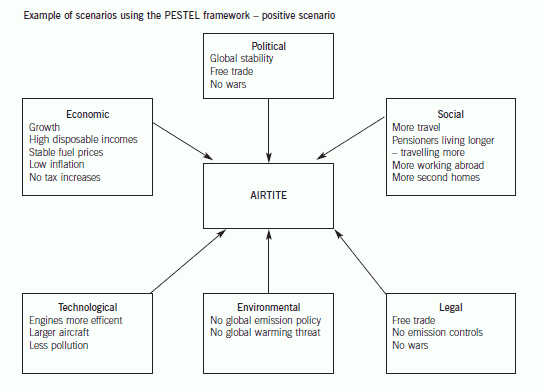
-
第4题:
4 Graham Smith is Operations Director of Catering Food Services (CFS) a £1·5 billion UK based distributor of foods to
professional catering organisations. It has 30 trading units spread across the country from which it can supply a
complete range of fresh, chilled and frozen food products. Its customers range from major fast food chains, catering
services for the armed forces down to individual restaurants and cafes. Wholesale food distribution is very much a
price driven service, in which it is very difficult to differentiate CFS’s service from its competitors.
Graham is very aware of the Government’s growing interest in promoting good corporate environmental practices and
encouraging companies to achieve the international quality standard for environmentally responsible operations. CFS
operates a fleet of 1,000 lorries and each lorry produces the equivalent of its own weight in pollutants over the course
of a year without the installation of expensive pollution control systems. Graham is also aware that his larger
customers are looking to their distributors to become more environmentally responsible and the ‘greening’ of their
supply chain is becoming a real issue. Unfortunately his concern with developing a company-wide environmental
management strategy is not shared by his fellow managers responsible for the key distribution functions including
purchasing, logistics, warehousing and transportation. They argued that time spent on corporate responsibility issues
was time wasted and simply added to costs.
Graham has decided to propose the appointment of a project manager to develop and implement a company
environmental strategy including the achievement of the international quality standard. The person appointed must
have the necessary project management skills to see the project through to successful conclusion.
You have been appointed project manager for CFS’s ‘environmentally aware’ project.
Required:
(a) What are the key project management skills that are necessary in achieving company-wide commitment in
CFS to achieve the desired environmental strategy? (15 marks)
正确答案:(a) Simply defined, a project is ‘activity that has a start, a middle and an end and consumes resources’ – it is therefore a discrete
activity aimed at achieving a specific objective or range of objectives. Graham is intent on using the ‘environmentally aware’
project to achieve a specific objective – the attainment of the international environmental standard. He is, however, aware
that there are a number of internal stakeholders inside the company who question the significance of such a project.
Externally, he can point to significant stakeholders, including customers and government who are looking for CFS to become
more environmentally aware. The project is likely to have strategic and not simply operational or administrative significance
and the person appointed into the role of project manager, ideally, should have both the traditional skills associated with
project management plus those of strategic management. Grundy and Brown list the traditional project management
techniques as:
Clearly, the project manager must have the technical project management skills, being able to manage the project through its
life cycle, which involves defining the project in terms of project objectives and scope as defined by time, cost and quality.
Planning the project in terms of breaking the overall project down into separate activities, estimating the resources required
and linking activities to resources in terms of time and priorities. Implementing the plan, including reviewing the progress in
meeting time and cost objectives and taking corrective action where and when necessary. Finally, reviewing the outcomes of
the project in terms of what was delivered to the customer and the extent to which client expectations were met.
The strategic nature of the project means that the project manager must have significant leadership skills, not only of the
project team, who are likely to come from different functions and parts of the company, but also influential stakeholders inside
and outside the company. This implies they should have good ‘political’ and communication skills as the project is of strategic
significance to the company. The ability to show how this particular project fits with the overall strategy of the firm is
important. The project is an important part in the achievement of the company strategy and in CFS’s case may help it
differentiate itself from its competitors. However, the project manager must recognise that there will be resistance from existing
managers reluctant to see resources committed to projects outside of the traditional value chain of the company. Certainly,
the project manager for the ‘environmentally aware’ project will themselves need to be aware of the external environmental
pressures prompting the firm to set itself specific environmental objectives and be able to link into supportive networks and
alliances. Finally, Grundy and Brown argue that the project manager will be the key to reviewing and learning from the project,
assessing whether defined objectives were achieved, the effectiveness or otherwise of the implementation process and how
key stakeholders were managed. The danger is that projects are seen as ‘one-off’ rather than contributing to the knowledge
and learning of the organisation. There may be a significant ‘learning curve’ that the firm has to go down and look tocontinuously improve its project management process. -
第5题:
(iii) How items not dealt with by an IFRS for SMEs should be treated. (5 marks)
正确答案:
(iii) The treatment of items not dealt with by an IFRS for SMEs
IFRSs for SMEs would not necessarily deal with all the recognition and measurement issues facing an entity but the key
issues should revolve around the nature of the recognition, measurement and disclosure of the transactions of SMEs. In
the case where the item is not dealt with by the standards there are three alternatives:
(a) the entity can look to the full IFRS to resolve the issue
(b) management’s judgement can be used with reference to the Framework and consistency with other IFRSs for SMEs
(c) existing practice could be used.
The first approach is more likely to result in greater consistency and comparability. However, this approach may also
increase the burden on SMEs as it can be argued that they are subject to two sets of standards.
An SME may wish to make a disclosure required by a full IFRS which is not required by the SME standard, or a
measurement principle is simplified or exempted in the SME standard, or the IFRS may give a choice between two
measurement options and the SME standard does not allow choice. Thus the issue arises as to whether SMEs should
be able to choose to comply with a full IFRS for some items and SME standards for other items, allowing an SME to
revert to IFRS on a principle by principle basis. The problem which will arise will be a lack of consistency and
comparability of SME financial statements.
-
第6题:
4 Whilst acknowledging the importance of high quality corporate reporting, the recommendations to improve it are
sometimes questioned on the basis that the marketplace for capital can determine the nature and quality of corporate
reporting. It could be argued that additional accounting and disclosure standards would only distort a market
mechanism that already works well and would add costs to the reporting mechanism, with no apparent benefit. It
could be said that accounting standards create costly, inefficient, and unnecessary regulation. It could be argued that
increased disclosure reduces risks and offers a degree of protection to users. However, increased disclosure has several
costs to the preparer of financial statements.
Required:
(a) Explain why accounting standards are needed to help the market mechanism work effectively for the benefit
of preparers and users of corporate reports. (9 marks)
正确答案:
(a) It could be argued that the marketplace already offers powerful incentives for high-quality reporting as it rewards such by
easing or restricting access to capital or raising or lowering the cost of borrowing capital depending on the quality of the entity’s
reports. However, accounting standards play an important role in helping the market mechanism work effectively. Accounting
standards are needed because they:
– Promote a common understanding of the nature of corporate performance and this facilitates any negotiations between
users and companies about the content of financial statements. For example, many loan agreements specify that a
company provide the lender with financial statements prepared in accordance with generally accepted accounting
principles or International Financial Reporting Standards. Both the company and the lender understand the terms and
are comfortable that statements prepared according to those standards will meet certain information needs. Without
standards, the statements would be less useful to the lender, and the company and the lender would have to agree to
create some form. of acceptable standards which would be inefficient and less effective.
– Assist neutral and unbiased reporting. Companies may wish to portray their past performance and future prospects in
the most favourable light. Users are aware of this potential bias and are sceptical about the information they receive.
Standards build credibility and confidence in the capital marketplace to the benefit of both users and companies.
– Improve the comparability of information across companies and national boundaries. Without standards, there would be
little basis to compare one company with others across national boundaries which is a key feature of relevant
information.
– Create credibility in financial statements. Auditors verify that information is reported in accordance with standards and
this creates public confidence in financial statements
– Facilitate consistency of information by producing data in accordance with an agreed conceptual framework. A consistent
approach to the development and presentation of information assists users in accessing information in an efficient
manner and facilitates decision-making. -
第7题:
(d) Corporate annual reports contain both mandatory and voluntary disclosures.
Required:
(i) Distinguish, using examples, between mandatory and voluntary disclosures in the annual reports of
public listed companies. (6 marks)
正确答案:
(d) (i) Mandatory and voluntary disclosures
Mandatory disclosures
These are components of the annual report mandated by law, regulation or accounting standard.
Examples include (in most jurisdictions) statement of comprehensive income (income or profit and loss statement),
statement of financial position (balance sheet), cash flow statement, statement of changes in equity, operating segmental
information, auditors’ report, corporate governance disclosure such as remuneration report and some items in the
directors’ report (e.g. summary of operating position). In the UK, the business review is compulsory.
Voluntary disclosures
These are components of the annual report not mandated in law or regulation but disclosed nevertheless. They are
typically mainly narrative rather than numerical in nature.
Examples include (in most jurisdictions) risk information, operating review, social and environmental information, and
the chief executive’s review. -
第8题:
(ii) An evaluation of the environmental and sustainability implications of the Giant Dam Project; (8 marks)
正确答案:
(ii) Environmental and sustainability implications of the Giant Dam Project
In our preparation for the bid to act as principal contractor for the Giant Dam Project, we established that there were
two prominent negative implications of the project but these are, in our view, more than offset by two major
environmental positives.
The environmental arguments against the Giant Dam Project both concern the flooding of the valley behind the dam.
Regrettably, it seems that there will be some loss of important habitats. This, in turn, may mean the removal of balanced
environmental conditions for certain animal and plant species. In addition, the flooding of the valley will result in the
loss of productive farmland. This will mean reduced capacity for the host country to grow food and thus support citizens
such as the members of First Nation. From our point of view, as the board of R&M, however, we would remind
shareholders and other observers that the decisions involving the size and positioning of the Giant Dam were taken by
the client, the government. It is R&M’s job, having won the contract as principal contractor, to now carry out the plans,
regardless of our own views.
Happily, however, there are two very powerful environmental arguments in favour of the Giant Dam Project. It will create
a large source of clean energy for economic development that will be sustainable, as it will create no carbon emissions
nor will it consume any non-renewable resources as it does so (compared to, for example, fossil fuels).
At a time when people are becoming very concerned about greenhouse gases produced from conventional power
generation, the Giant Dam Project will contribute to the East Asian country’s internationally agreed carbon reduction
targets. This, in turn, will contribute to the reduction of greenhouse gases in the environment.
It is clear that the construction of the Giant Dam Project is an environmental conundrum with strong arguments on both
sides. The deciding factor may be the opinion that we each have of the desirability of economic growth in the East Asian
country (which the energy from the dam is intended to support). It seems that Stop-the-dam values the preservation of
the original environment more than the economic growth that the energy from the dam would support. The client does
not agree with this assessment and we are happy to be involved with a project that will create such a useful source of
renewable and non-polluting energy. -
第9题:
(b) Explain the major benefits of pursuing a policy of internal development. (4 marks)
正确答案:
(b) The major benefits of pursuing a policy of internal development that may accrue to Taliesin Ltd are as follows:
– By confining their activities to its internal environment the company avoids the need to manage the integration of
businesses which is necessitated by an acquisition. Management teams, when considering the acquisition of another
organisation, very often underestimate the costs of integration.
– There is no need for the board of directors of Taliesin Ltd to familiarise itself with different organisational and national
cultures, values etc, thereby avoiding many potential problems.
– The board of directors of Taliesin Ltd is better able to control the activities of the business and the need for more complex
supply chains and strategic alliances with foreign organisations is rendered unnecessary.
– All investments are made at market price whereas if the board of directors was to attempt to grow the business
acquisition then significant outlays would probably be made in respect of purchased goodwill.
– As the organisation develops and expands, staff are provided with development and learning activities that may
precipitate an increase in the level of their commitment to the organisation. -
第10题:
(c) State any reliefs Bob could claim regarding the fall in value of his shares in Willis Ltd, and describe how the
operation of any such reliefs could reduce Bob’s taxable income. (4 marks)
Relevant retail price index figures are:
September 1990 129·3
April 1998 162·6
December 2004 189·9
正确答案:
(c) Claims for capital losses
Where the value of shares (a chargeable asset) has become negligible (defined as <5% of the original cost), a claim can be
made to treat the asset as though it was sold and then immediately reacquired for its current market value. This is known as
a negligible value claim.
The sale and reacquisition is treated as taking place at the time that the claim is made or at a specified time (up to 2 years
before the start of the tax year in which the claim was made) if the asset was of negligible value at that time.
As the loss is on unquoted shares, a further relief (s.574 ICTA 1988) allows the loss to be relieved against the total income
of the taxpayer for the year in which the loss arose, and/or against the total income of the previous year.
Losses are first relieved against current year income, with any excess being available for offset against the prior year’s income.
Bob can therefore make a negligible value claim as at 1 December 2004. This will give rise to a loss of £14,500
(£500 – £15,000) which will be deemed to arise in the year 2004/05. By doing so, his taxable income for that year will be
reduced from £36,875 to £22,375. -
第11题:
(b) State the immediate tax implications of the proposed gift of the share portfolio to Avril and identify an
alternative strategy that would achieve Crusoe’s objectives whilst avoiding a possible tax liability in the
future. State any deadline(s) in connection with your proposed strategy. (5 marks)
正确答案:
(b) Gift of the share portfolio to Avril
Inheritance tax
The gift would be a potentially exempt transfer at market value. No inheritance tax would be due at the time of the gift.
Capital gains tax
The gift would be a disposal by Crusoe deemed to be made at market value for the purposes of capital gains tax. No gain
would arise as the deemed proceeds will equal Crusoe’s base cost of probate value.
Stamp duty
There is no stamp duty on a gift of shares for no consideration.
Strategy to avoid a possible tax liability in the future
Crusoe should enter into a deed of variation directing the administrators to transfer the shares to Avril rather than to him. This
will not be regarded as a gift by Crusoe. Instead, provided the deed states that it is intended to be effective for inheritance tax
purposes, it will be as if Noland had left the shares to Avril in a will.
This strategy is more tax efficient than Crusoe gifting the shares to Avril as such a gift would be a potentially exempt transfer
and inheritance tax may be due if Crusoe were to die within seven years.
The deed of variation must be entered into by 1 October 2009, i.e. within two years of the date of Noland’s death. -
第12题:
The new teller could not ______ how to use her calculator until the boss explained.
A:amount to
B:figure out
C:add up to
D:consult from
正确答案:B -
第13题:
(c) Identify and evaluate other strategic options ONA could consider to address the airline’s current financial and
operational weaknesses.
Note: requirement (c) includes 2 professional marks (10 marks)
正确答案:(c) Within the strategy clock, ONA might consider both differentiation and focus. A differentiation strategy seeks to provide
products or services that offer different benefits from those offered by competitors. These benefits are valued by customers
and so can lead to increased market share and, in the context of ONA, higher seat utilisation. Differentiation is particularly
attractive when it provides the opportunity of providing a price premium. In other words, margins are enhanced through
differentiation. Air travellers may be willing to pay more to travel with an airline that offers seat allocation and free in-flight
food and drinks.
However, such a broad-based differentiation strategy may be inappropriate for ONA because of the need to service both
business and leisure travellers. Consequently, the potential strategy also has to be considered in the context of the two sectors
that the company perceives that it services. In the regional sector a focused differentiation strategy looks particularly attractive.
Here, the strategy focuses on a selected niche or market segment. The most obvious focus is on business travel and building
the company’s strengths in this sector. This focus on the business traveller might be achieved through:
– Ensuring that flight times are appropriate for the business working day. This is already a perceived strength of the
company. This needs to be built on.
– Providing more space in the aircraft by changing the seating configuration – and the balance between business and
standard class. ONA currently has a low seat occupancy rate and a reduction in seat capacity could be borne.
– Fewer passengers in the aircraft may also lead to improved throughput times. Loading and unloading aircraft is quicker,
minimising the delays encountered by the traveller.
– Providing supporting business services – lounges with fax and internet facilities.
– Speeding the process of booking and embarkation (through electronic check-in), so making the process of booking and
embarkation easier and faster.
– Providing loyalty schemes that are aimed at the business traveller.
Although this focused differentiation is aimed at the business customer it is also likely that particular aspects of it will be
valued by certain leisure travellers. Given the strong regional brand (people from Oceania are likely to travel ONA) and the
nature of the leisure travel in this sector (families visiting relatives) it seems unlikely that there will be a significant fall off in
leisure travel in the regional sector.
In the international sector, the strategic customer is less clear. This sector is serving both the leisure and business market and
is also competing with strong ‘no frills’ competitors. The nature of customer and competition is different. A strategy of
differentiation could still be pursued, although perhaps general differentiation (without a price premium) may be more effective
with the aim of increasing seat occupancy rate. This sector would also benefit from most of the suggested improvements of
the regional sector – providing more space in aircraft, faster passenger throughput, electronic check-in etc. However, these
small changes will not address the relatively low flight frequency in this sector. This could be addressed through seeking
alliances with established airlines in the continental countries that it services. Simple code share agreements could double
ONA’s frequencies overnight. Obviously, ONA would be seeking a good cultural fit – the ‘no frills’ low-cost budget airlineswould not be candidates for code shares.ONA’s perception of market segmentation, reflected in splitting regional from international travel and distinguishing leisure
from business appears to be a sensible understanding of the marketplace. However, it might also be useful for them to
consider on-line customers and commission customers (travel agents) as different segments. Perceiving travel agents as the
strategic customer would lead to a different strategic focus, one in which the amount and structure of commission played an
important part.
Finally, whichever strategy ONA adopts, it must continue to review its operational efficiency. An important strategic capability
in any organisation is to ensure that attention is paid to cost-efficiency. It can be argued that a continual reduction in costs
is necessary for any organisation in a competitive market. Management of costs is a threshold competence for survival. ONA
needs to address some of the weaknesses identified earlier in the question. Specific points, not covered elsewhere, include:
– Improved employee productivity to address the downward decline in efficiency ratios.
– Progressive standardisation of the fleet to produce economies of scale in maintenance and training. This should reduce
the cost base.
– Careful monitoring of expenditure, particularly on wages and salaries, to ensure that these do not exceed revenue
increases.
Candidates may address this question in a number of ways. In the model answer given above, the strategy clock is used –
as it uses the term ‘no frills’ in its definition and so it seems appropriate to look at other options within this structure. However,
answers that use other frameworks (such as Ansoff’s product/market matrix) are perfectly acceptable. Furthermore, answerswhich focus on the suitability, acceptability and feasibility of certain options are also acceptable. -
第14题:
(b) Good Sports Limited has successfully followed a niche strategy to date.
Assess the extent to which an appropriate e-business strategy could help support such a niche strategy.
(8 marks)
正确答案:
(b) Good Sports has pursued a conscious niche or focus differentiation strategy, seeking to serve a local market in a way that
isolates it from the competition of the large national sports good retailers competing on the basis of supplying famous brands
at highly competitive prices. Does it make strategic sense for Good Sports to make the heavy investment necessary to supply
goods online? Will this enhance its ability to supply their chosen market?
In terms of price, e-business is bringing much greater price transparency – the problem for companies like Good Sports is
that customers may use their expertise to research into a particular type and brand of sports equipment and then simply
search the Internet for the cheapest supply. Porter in an article examining the impact of the Internet argues that rather than
making strategy obsolete it has in fact made it more important. The Internet has tended to weaken industry profitability and
made it more difficult to hold onto operational advantages. Choosing which customers you serve and how are even more
critical decisions.
However the personal advice and performance side of the business could be linked to new ways of promoting the product
and communicating with the customer. The development of customer communities referred to above could be a real way of
increasing customer loyalty. The partners are anxious to avoid head-on competition with the national retailers. One way of
increasing the size and strength of the niche they occupy is to use the Internet as a means of targeting their particular
customers and providing insights into the use and performance of certain types of equipment by local clubs and users. There
is considerable scope for innovation that enhances the service offered to their customers. As always there is a need to balance
the costs and benefits of time spent. The Internet can provide a relatively cost effective way of providing greater service to
their customers. There is little in the scenario to suggest they have reached saturation point in their chosen niche market.
Overall there is a need for Good Sports to decide what and where its market is and how this can be improved by the use ofe-business. -
第15题:
Matthew Black is well aware that the achievement of the growth targets for the 2005 to 2007 period will depend on
successful implementation of the strategy, affecting all parts of the company’s activities.
(c) Explain the key issues affecting implementation and the changes necessary to achieve Universal’s ambitious
growth strategy. (15 marks)
正确答案:
(c) Matthew has set ambitious growth goals for the 2005–7 period in his quest to become ‘unquestioned leader’ in their region
and to roll out the model nationally. Clearly there are choices to be made in terms of implementing the strategy and much of
the success of the strategy will depend on the extent to which appropriate resources, structure and systems are in place to
facilitate growth. Many alternative models consider how strategy is implemented, but one of the most popular is the McKinsey
7S model in which the 7S’s are strategy, structure, systems (the so called ‘hard’ or tangible variables) and staff, style, skills
and shared values (the ‘soft’ or less tangible variables). The 7S model has a number of key assumptions built into it. Normally
we tend to think of strategy being the first variable in the strategic management process, with all other variables dependent
on the chosen strategy. However, Peters and Waterman argue that the assertion, for instance, that a firm’s structure follows
from its strategy ignores the fact that a particular structure may equally influence the strategy chosen. If we have a simple
functional structure, this may severely limit the ability of the firm to move or diversify into other areas of business. Equally
important is to understand the linkages between the variables, just as with the value chain, recognising if you change one of
the variables you then have to see the consequences for each of the other variables.
Our earlier analysis will have provided us with an understanding of the strategy being pursued by Universal. It is now looking
to offer its service to other parts of the country and become a national provider. In strategy terms, this is a process of growth
by way of market development, with the same service in different regions or markets. Universal’s experience is dominated by
operating in one region and the consequences of moving into new regions should not be underestimated. There are interesting
examples of companies having conspicuous success in their home territory but finding competition and customer relationships
very different outside their home market, even in the same country.
Matthew has already recognised the need to create a new structure to handle the growth strategy. This is ‘growth by
geographic expansion’ and while it may be the most simple growth strategy to control and co-ordinate, the creation of regional
centres managing the sales and installations in the region will add an additional level of administration and complexity.
This structural change will have significant implications for the systems employed by the company. Development of a national
operation will necessitate new methods of communication and reporting. Customer service levels depend on the management
information systems available. There is an opportunity for the new regions to benchmark themselves against the home region.
Efficient systems lie at the heart of Universal’s ability to offer a higher value added service to the customer. Standardised
processes have allowed a ‘no surprises’ policy to be successfully implemented. The extent to which the same business models
can be simply repeated in region after region will have to be tested. There is little mention of IT systems, but the pace of
expansion should be closely linked to the system’s ability to cope with increased demands.
Staff – reference has been made earlier to Universal being a people business, able to deliver a better quality of service to the
customer. The heavy reliance on self-employed staff means that a very active recruitment and training process will have to
be in place as Universal moves into different regions. New layers and levels of management will have implications for the
recruitment and development of both managers and staff reporting to them. The degrees of autonomy given to each of the
regions will materially affect the way they operate. Reward systems clearly link both staff and systems dimensions and there
is need to ensure that the right number and calibre of staff are recruited to expand the market coverage. Does Universal have
a staffing model that is easily ‘rolled’ out into other regions?
Equally important are any changes to the skill set needed by staff to operate nationally. Matthew feels that the model is
relatively lowly skilled with staff controlled through standardised systems. However, change is inevitable and the recruitment
and retention of staff in a labour intensive service will be key to success.
Universal is very much a family business dominated by the two founding brothers. Even with expansion being entirely within
their local region the rate of growth to a £6 million turnover business predicted to treble in size over the next three years, will
necessitate changes in the style. of management. Time management issues amongst the owner-managers have already begun
to emerge and a move from involvement with day-to-day management to a more strategic role is needed. Certainly growth to
date has been more emergent than planned, but vision and planning will be equally necessary as the firm operates nationally.
There are tensions for Matthew in making sure that his change in role and responsibilities does not result in him becoming
remote from his management and staff. Communication of the core values of the company will become even more necessary
and communication is key to managing the growth process.
The 7S’s is not the only model that will be useful in understanding the problems of implementing the growth strategy.
Greiner’s growth model has merit in drawing attention to the stages a growing business following an organic growth strategy
can expect to go through. Johnson and Scholes now refer to strategic implementation as ‘strategy in action’ made up of three
key activities, structuring an organisation to support successful performance. Universal’s move from a regional to a national
company will call for different structures and relationships. Enabling links the particular strengths and competences, built
round separate resource areas, to be combined to support the strategy – which in turn recognises and builds on identified
strengths. Finally, growth strategies will involve change and the management of the change process. They argue that change
will involve the need to change day-to-day routines and cultural aspects of the firm, together with overcoming resistance to
change.
All too often, a company grows at a rate which exceeds the capacity to implement the necessary change. This can expose
the firm to high levels of risk. Growth pressures can stimulate positive change and innovation, but in companies such as
Universal where considerable stress is placed on performance, targets and quality may be a casualty. Equally concerning is
if the rate of growth exceeds the capacity to invest in more people and technology. Growing the people and the systems isalmost a prerequisite to growing the business. -
第16题:
(ii) How existing standards could be modified to meet the needs of SMEs. (6 marks
正确答案:
(ii) The development of IFRSs for SMEs as a modification of existing IFRSs
Most SMEs have a narrower range of users than listed entities. The main groups of users are likely to be the owners,
suppliers and lenders. In deciding upon the modifications to make to IFRS, the needs of the users will need to be taken
into account as well as the costs and other burdens imposed upon SMEs by the IFRS. There will have to be a relaxation
of some of the measurement and recognition criteria in IFRS in order to achieve the reduction in the costs and the
burdens. Some disclosure requirements, such as segmental reports and earnings per share, are intended to meet the
needs of listed entities, or to assist users in making forecasts of the future. Users of financial statements of SMEs often
do not make such kinds of forecasts. Thus these disclosures may not be relevant to SMEs, and a review of all of the
disclosure requirements in IFRS will be required to assess their appropriateness for SMEs.
The difficulty is determining which information is relevant to SMEs without making the information disclosed
meaningless or too narrow/restricted. It may mean that measurement requirements of a complex nature may have to be
omitted.
There are, however, rational grounds for justifying different treatments because of the different nature of the entities and
the existence of established practices at the time of the issue of an IFRS.
-
第17题:
(b) Discuss how management’s judgement and the financial reporting infrastructure of a country can have a
significant impact on financial statements prepared under IFRS. (6 marks)
Appropriateness and quality of discussion. (2 marks)
正确答案:
(b) Management judgement may have a greater impact under IFRS than generally was the case under national GAAP. IFRS
utilises fair values extensively. Management have to use their judgement in selecting valuation methods and formulating
assumptions when dealing with such areas as onerous contracts, share-based payments, pensions, intangible assets acquired
in business combinations and impairment of assets. Differences in methods or assumptions can have a major impact on
amounts recognised in financial statements. IAS1 expects companies to disclose the sensitivity of carrying amounts to the
methods, assumptions and estimates underpinning their calculation where there is a significant risk of material adjustment
to their carrying amounts within the next financial year. Often management’s judgement is that there is no ‘significant risk’
and they often fail to disclose the degree of estimation or uncertainty and thus comparability is affected.
In addition to the IFRSs themselves, a sound financial reporting infrastructure is required. This implies effective corporate
governance practices, high quality auditing standards and practices, and an effective enforcement or oversight mechanism.
Therefore, consistency and comparability of IFRS financial statements will also depend on the robust nature of the other
elements of the financial reporting infrastructure.
Many preparers of financial statements will have been trained in national GAAP and may not have been trained in the
principles underlying IFRS and this can lead to unintended inconsistencies when implementing IFRS especially where the
accounting profession does not have a CPD requirement. Additionally where the regulatory system of a country is not well
developed, there may not be sufficient market information to utilise fair value measurements and thus this could lead to
hypothetical markets being created or the use of mathematical modelling which again can lead to inconsistencies because of
lack of experience in those countries of utilising these techniques. This problem applies to other assessments or estimates
relating to such things as actuarial valuations, investment property valuations, impairment testing, etc.
The transition to IFRS can bring significant improvement to the quality of financial performance and improve comparability
worldwide. However, there are issues still remaining which can lead to inconsistency and lack of comparability with those
financial statements. -
第18题:
(c) Critically evaluate Vincent Viola’s view that corporate governance provisions should vary by country.
(8 marks)
正确答案:
(c) Corporate governance provisions varying by country
There is a debate about the extent to which corporate governance provisions (in the form. of either written codes, laws or
general acceptances) should be global or whether they should vary to account for local differences. In this answer, Vincent
Viola’s view is critically evaluated.
In general terms, corporate governance provisions vary depending on such factors as local business culture, businesses’
capital structures, the extent of development of capital funding of businesses and the openness of stock markets. In Germany,
for example, companies have traditionally drawn much of their funding from banks thereby reducing their dependence on
shareholders’ equity. Stock markets in the Soviet Union are less open and less liquid than those in the West. In many
developing countries, business activity is concentrated among family-owned enterprises.
Against Vincent’s view
Although business cultures vary around the world, all business financed by private capital have private shareholders. Any
dilution of the robustness of provisions may ignore the needs of local investors to have their interests adequately represented.
This dilution, in turn, may allow bad practice, when present, to exist and proliferate.
Some countries suffer from a poor reputation in terms of endemic corruption and fraud and any reduction in the rigour with
which corporate governance provisions are implemented fail to address these shortcomings, notwithstanding the fact that they
might be culturally unexpected or difficult to implement.
In terms of the effects of macroeconomic systems, Vincent’s views ignore the need for sound governance systems to underpin
confidence in economic systems. This is especially important when inward investment needs are considered as the economic
wealth of affected countries are partly underpinned by the robustness, or not, of their corporate governance systems.
Supporting Vincent’s view
In favour of Vincent’s view are a number of arguments. Where local economies are driven more by small family businesses
and less by public companies, accountability relationships are quite different (perhaps the ‘family reasons’ referred to in the
case) and require a different type of accounting and governance.
There is a high compliance and monitoring cost to highly structured governance regimes that some developing countries may
deem unnecessary to incur.
There is, to some extent, a link between the stage of economic development and the adoption of formal governance codes.
It is generally accepted that developing countries need not necessarily observe the same levels of formality in governance as
more mature, developed economies.
Some countries’ governments may feel that they can use the laxity of their corporate governance regimes as a source of
international comparative advantage. In a ‘race to the bottom’, some international companies seeking to minimise the effects
of structured governance regimes on some parts of their operations may seek countries with less tight structures for some
operations.
-
第19题:
(b) Using the TARA framework, construct four possible strategies for managing the risk presented by Product 2.
Your answer should describe each strategy and explain how each might be applied in the case.
(10 marks)
正确答案:
(b) Risk management strategies and Chen Products
Risk transference strategy
This would involve the company accepting a portion of the risk and seeking to transfer a part to a third party. Although an
unlikely possibility given the state of existing claims, insurance against future claims would serve to limit Chen’s potential
losses and place a limit on its losses. Outsourcing manufacture may be a way of transferring risk if the ourtsourcee can be
persuaded to accept some of the product liability.
Risk avoidance strategy
An avoidance strategy involves discontinuing the activity that is exposing the company to risk. In the case of Chen this would
involve ceasing production of Product 2. This would be pursued if the impact (hazard) and probability of incurring an
acceptable level of liability were both considered to be unacceptably high and there were no options for transference or
reduction.
Risk reduction strategy
A risk reduction strategy involves seeking to retain a component of the risk (in order to enjoy the return assumed to be
associated with that risk) but to reduce it and thereby limit its ability to create liability. Chen produces four products and it
could reconfigure its production capacity to produce proportionately more of Products 1, 3 and 4 and proportionately less of
Product 2. This would reduce Product 2 in the overall portfolio and therefore Chen’s exposure to its risks. This would need
to be associated with instructions to other departments (e.g. sales and marketing) to similarly reconfigure activities to sell
more of the other products and less of Product 2.
Risk acceptance strategy
A risk acceptance strategy involves taking limited or no action to reduce the exposure to risk and would be taken if the returns
expected from bearing the risk were expected to be greater than the potential liabilities. The case mentions that Product 2 is
highly profitable and it may be that the returns attainable by maintaining and even increasing Product 2’s sales are worth the
liabilities incurred by compensation claims. This is a risk acceptance strategy. -
第20题:
(c) Explain how absolutist (dogmatic) and relativist (pragmatic) ethical assumptions would affect the outcome
of Anne’s decision. (6 marks)
正确答案:
(c) Absolutism and relativism
Absolutism and relativism represent two extreme positions of ethical assumptions.
Definitions
An absolutist assumption is one that believes that there are ‘eternal’ rules that should guide all ethical and moral decision
making in all situations. Accordingly, in any given situation, there is likely to be one right course of action regardless of the
outcome. An absolutist believes that this should be chosen regardless of the consequences or the cost. A dogmatic approach
to morality is an example of an absolutist approach to ethics. A dogmatic assumption is one that is accepted without
discussion or debate.
Relativist assumptions are ‘situational’ in nature. Rather than arguing that there is a single right choice, a relativist will tend
to adopt a pragmatic approach and decide, in the light of the situation being considered, which is the best outcome. This will
involve a decision on what outcome is the most favourable and that is a matter of personal judgment.
Outcomes
If Anne were to adopt absolutist/dogmatic assumptions, she would be likely to decide that she would need to pursue what
she perceives is the right course of action regardless of cost to herself or the relationship with the client or her manager. Given
that she unearthed a suspect and unaccounted-for payment, and that she received an inadequate explanation from the client,
she would probably recommend extension to the audit beyond the weekend.
If Ann were to adopt relativist or pragmatic assumptions, she would have a potentially much more complicated decision to
make. She would have to decide whether it was more important, ethically, to yield to the pressure from Zachary in the
interests of her short-term career interests or ‘hold out’ to protect the interests of the shareholders. Anne could recommend
sign off and trust the FD’s explanation but she is more likely to seek further evidence or assurance from the company before
she does so. -
第21题:
(c) Explain how the introduction of an ERPS could impact on the role of management accountants. (5 marks)
正确答案:
(c) The introduction of ERPS has the potential to have a significant impact on the work of management accountants. The use of
ERPS causes a substantial reduction in the gathering and processing of routine information by management accountants.
Instead of relying on management accountants to provide them with information, managers are able to access the system to
obtain the information they require directly via a suitable electronic access medium.
ERPS integrate separate business functions in one system for the entire organisation and therefore co-ordination is usually
undertaken centrally by information management specialists who have a dual responsibility for the implementation and
operation of the system.
ERPS perform. routine tasks that not so long ago were seen as an essential part of the daily routines of management
accountants, for example perpetual inventory valuation. Therefore if the value of the role of management accountants is not
to be diminished then it is of necessity that management accountants should seek to expand their roles within their
organisations.
The management accountant will also control and audit the ERPS data input and analysis. Hence the implementation of ERPS
provides the management accountant with an opportunity to change the emphasis of their role from information gathering
and processing to that of the role of advisers and internal consultants to their organisations. This new role will require
management accountants to be involved in interpreting the information generated from the ERPS and to provide business
support for all levels of management within an organisation. -
第22题:
(b) (i) Explain, by reference to Coral’s residence, ordinary residence and domicile position, how the rental
income arising in respect of the property in the country of Kalania will be taxed in the UK in the tax year
2007/08. State the strategy that Coral should adopt in order to minimise the total income tax suffered
on the rental income. (7 marks)
正确答案:
(b) (i) UK tax on the rental income
Coral is UK resident in 2007/08 because she is present in the UK for more than 182 days. Accordingly, she will be
subject to UK income tax on her Kalanian rental income.
Coral is ordinarily resident in the UK in 2007/08 as she is habitually resident in the UK.
Coral will have acquired a domicile of origin in Kalania from her father. She has not acquired a domicile of choice in the
UK as she has not severed her ties with Kalania and does not intend to make her permanent home in the UK.
Accordingly, the rental income will be taxed in the UK on the remittance basis.
Any rental income remitted to the UK will fall into the basic rate band and will be subject to income tax at 22% on the
gross amount (before deduction of Kalanian tax). Unilateral double tax relief will be available in respect of the 8% tax
suffered in Kalania such that the effective rate of tax suffered by Coral in the UK on the grossed up amount of income
remitted will be 14%.
In order to minimise the total income tax suffered on the rental income Coral should ensure that it is not brought into or
used in the UK such that it will not be subject to income tax in the UK.
Coral should retain evidence, for example bank statements, to show that the rental income has not been removed from
Kalania. Coral can use the money whilst she is on holiday in Kalania with no UK tax implications. -
第23题:
(c) You have just been advised of management’s intention to publish its yearly marketing report in the annual report
that will contain the financial statements for the year ending 31 December 2005. Extracts from the marketing
report include the following:
‘Shire Oil Co sponsors national school sports championships and the ‘Shire Ward’ at the national teaching
hospital. The company’s vision is to continue its investment in health and safety and the environment.
‘Our health and safety, security and environmental policies are of the highest standard in the energy sector. We
aim to operate under principles of no-harm to people and the environment.
‘Shire Oil Co’s main contribution to sustainable development comes from providing extra energy in a cleaner and
more socially responsible way. This means improving the environmental and social performance of our
operations. Regrettably, five employees lost their lives at work during the year.’
Required:
Suggest performance indicators that could reflect the extent to which Shire Oil Co’s social and environmental
responsibilities are being met, and the evidence that should be available to provide assurance on their
accuracy. (6 marks)
正确答案:
(c) Social and environmental responsibilities
Performance indicators
■ Absolute ($) and relative (%) level of investment in sports sponsorship, and funding to the Shire Ward.
■ Increasing number of championship events and participating schools/students as compared with prior year.
■ Number of medals/trophies sponsored at events and/or number awarded to Shire sponsored schools/students.
■ Number of patients treated (successfully) a week/month. Average bed occupancy (daily/weekly/monthly and cumulative
to date).
■ Staffing levels (e.g. of volunteers for sports events, Shire Ward staff and the company):
? ratio of starters to leavers/staff turnover;
? absenteeism (average number of days per person per annum).
1 Withdrawal of the new licence would not create a going concern issue.
2 May also be described as ‘exploration and evaluation’ costs or ‘discovery and assessment’.
■ Number of:
– breaches of health and safety regulations and environmental regulations;
– oil spills;
– accidents and employee fatalities;
– insurance claims.
Evidence
Tutorial note: As there is a wide range of performance indicators that candidates could suggest, there is always a wide range
of possible sources of audit evidence. As the same evidence may contribute to providing assurance on more than one
measure they are not tabulated here, to avoid duplication. However, candidates may justifiably adopt a tabular layout. Also
note, that where measures may be expressed as evidence (e.g. trophies awarded) marks should be awarded only once.
■ Actual level of investment ($) compared with budget and budget compared with prior period.
Tutorial note: Would expect actual to be at least greater than prior year if performance in these areas (health and
safety) has improved.
■ Physical evidence of favourable increases on prior year, for example:
? medals/cups sponsored;
? number of beds available.
■ Increase in favourable press coverage/reports of sponsored events. (Decrease in adverse press about
accidents/fatalities.)
■ Independent surveys (e.g. by marine conservation organisations, welfare groups, etc) comparing Shire favourably with
other oil producers.
■ A reduction in fines paid compared with budget (and prior year).
■ Reduction in legal fees and claims being settled as evidenced by fee notes and correspondence files.
■ Amounts settled on insurance claims and level of insurance cover as compared with prior period.